0%

Choosing an Aluminium Entrance Door is not simply a matter of selecting a colour and handle. It affects security, weather protection, energy performance, accessibility, and the character of your home. A beautifully finished door can still disappoint if its frame twists, seals compress poorly, or its threshold drains water toward the hallway.

Nigel Fisher, a respected aluminium fenestration specialist, says, “The best entrance door is the one that performs quietly, every day.” That principle keeps the decision practical. Look closely at the alloy grade, thermal break, glazing specification, locking system, hinge strength, drainage design, and installation quality. Ask how the door performs during heavy rain, cold mornings, and repeated daily use. Small details matter.

Not just appearance.

This guide explores seven useful checks before you buy an Aluminium Entrance Door. It considers measurement accuracy, frame durability, U-values, security testing, maintenance, accessibility, and the installer’s experience. A powder-coated finish may look flawless in a showroom, yet colour, texture, and seal quality can appear different outdoors. That is easy to overlook.

There is no perfect door for every property. A coastal home may need stronger corrosion protection, while a shaded entrance may require a different glazing choice. Budget also changes the outcome. Cheaper hardware can create future repairs, although the most expensive option is not automatically the wisest one. Careful comparison, clear questions, and realistic expectations usually lead to a more dependable entrance.
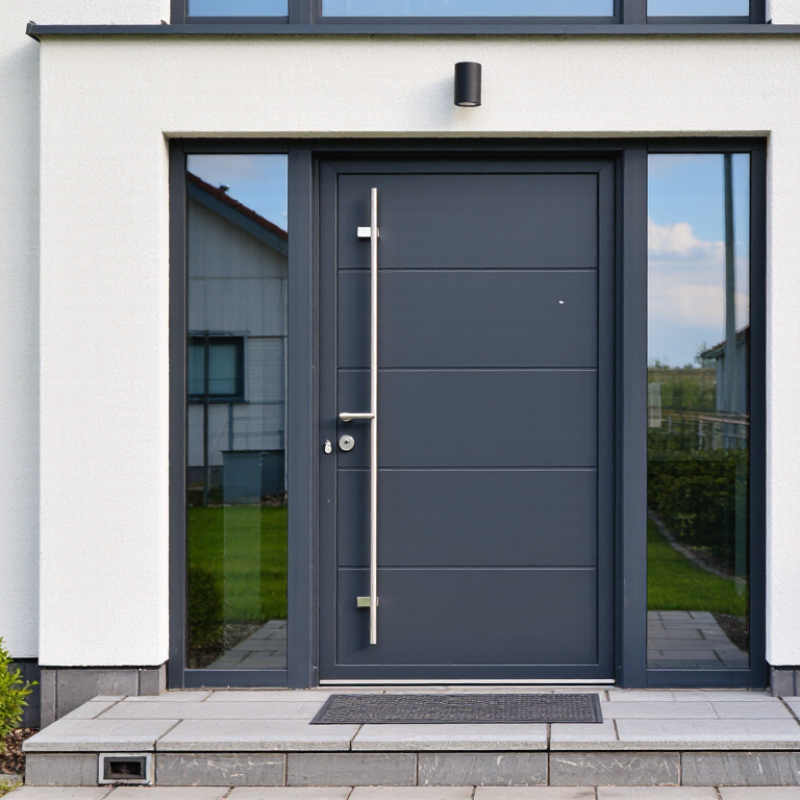
7 Tips for Choosing an Aluminium Entrance Door

Set Energy Targets: Specify Uw ≤1.4 W/m²K Under EN 14351-1

7 Tips for Choosing an Aluminium Entrance Door

Set Energy Targets: Specify Uw ≤1.4 W/m²K Under EN 14351-1

A low Uw value reduces heat flow through the complete door assembly. Specify Uw ≤1.4 W/m²K as a design target, not merely a panel value. EN 14351-1 supports performance declaration and conformity assessment for external pedestrian doorsets. It does not automatically impose this exact thermal limit. Ask for test evidence covering the frame, leaf, glazing, seals, and threshold.

Look beyond the catalogue number. Request the declared Uw value, test method, specimen size, and boundary conditions. A narrow laboratory door may perform better than a wider entrance with sidelights. Check whether the calculation follows EN ISO 10077-1 or an accredited test follows EN ISO 12567-1. Installation matters too. Poor perimeter sealing can create a cold strip around the frame.

This target is practical in energy-conscious projects. The International Energy Agency reported that buildings consumed about 30% of global final energy in 2022. The same report linked building operations to approximately 26% of energy-related emissions. A thermally improved entrance can reduce local surface cooling and draught complaints. Still, one door will not fix an inefficient envelope. That is an easy claim to overstate. Review the wall junction, threshold, and opening orientation with the installer. Measure carefully.

Choose Profiles: Compare 6063-T5 Aluminium and Thermally Broken Frames

7 Tips for Choosing an Aluminium Entrance Door

Choose Profiles: Compare 6063-T5 Aluminium and Thermally Broken Frames

A strong entrance door begins with the correct aluminium profile. 6063-T5 aluminium offers good strength, clean surfaces, and reliable corrosion resistance. It is widely used for frames, sashes, and architectural sections. However, 6063-T5 describes the alloy and temper, not the door’s thermal performance. A solid metal frame can still transfer outdoor cold indoors.

Tip 1: Ask how the profile manages heat. Thermally broken frames use an insulating barrier between the exterior and interior aluminium sections. This reduces thermal bridging and helps limit condensation around the frame. Look for tested U-value data, not vague claims. Glass quality, seals, installation, and wall connections also affect the final result.

Tip 2: Inspect the profile details closely. A deeper section may improve stiffness, but it can reduce the clear opening. Check the corner joints, drainage paths, gasket contact, and hardware reinforcement. During site checks, I have seen attractive doors fail because water collected beneath the threshold. Small details matter.

Tip 3: Match the profile to your climate and usage. A sheltered apartment entrance may need less protection than a wind-exposed coastal doorway. Consider frequent opening, heavy glass, salt air, and daily impact. Thermal breaks are valuable, but they are not magic. Poor installation can still create drafts, movement, or cold spots. Ask for cross-section drawings and performance evidence before choosing.

7 Tips for Choosing an Aluminium Entrance Door - Choose Profiles: Compare 6063-T5 Aluminium and Thermally Broken Frames

Selection Tip Conventional 6063-T5 Aluminium Frame Thermally Broken Aluminium Frame Practical Evaluation
1. Identify the profile material 6063-T5 aluminium is a commonly extruded architectural alloy. Its minimum yield strength is typically about 110 MPa under ASTM B221, although the exact value depends on the applicable standard and section. The frame may also use 6063-T5 aluminium, but it includes a low-conductivity polyamide or similar insulating strip between the interior and exterior aluminium sections. A thermal break is a frame construction method rather than a separate aluminium alloy. Confirm both the alloy temper and the thermal-break material before comparing quotations.
2. Compare thermal performance Aluminium conducts heat efficiently, with typical thermal conductivity around 200 W/m·K. Conventional frame U-values are often approximately 5.0–6.5 W/m²·K, depending on profile geometry and glazing. The insulating strip reduces heat transfer. Typical frame U-values may be approximately 1.5–2.5 W/m²·K when the system is correctly designed and tested. Lower U-values generally mean less heat flow through the frame. Always request tested or calculated Uf/Ucw values because glass, spacers, door size and installation can significantly affect the final result.
3. Assess condensation risk The interior frame surface can become colder in winter, increasing the possibility of condensation when indoor humidity is high. The warmer interior frame surface generally reduces condensation risk, provided the thermal break is continuous and the door is installed correctly. For cold or humid climates, prioritize a continuous thermal barrier, insulated thresholds and suitable low-temperature surface performance.
4. Check structural capacity Rigid aluminium profiles can provide good dimensional stability. Capacity depends on profile depth, wall thickness, reinforcement, door size and hardware loading. Thermal-break frames can also provide good strength, but the polyamide connection must be properly crimped or mechanically secured and designed for the intended loads. For large or heavy entrance doors, request deflection calculations and hardware-load data rather than selecting a profile based only on alloy grade.
5. Review weather resistance Air, water and wind performance depends mainly on seals, drainage paths, corners, threshold design and installation quality, not only on the aluminium alloy. Thermal breaks improve insulation but do not automatically guarantee better weather sealing. The complete door system still requires suitable gaskets, drainage and tested joints. Ask for laboratory test results or project specifications covering air permeability, watertightness and wind resistance. Test classifications vary by local standard.
6. Consider glazing and threshold details A conventional frame can be paired with double or triple glazing, but the frame may remain a significant thermal bridge compared with insulated glass. A thermally broken frame works best with insulated glazing, warm-edge spacers and an insulated or thermally improved threshold. Evaluate the complete door U-value, not only the profile. A high-performance frame cannot compensate for unsuitable glass or an uninsulated threshold.
7. Balance cost and service life Usually has a simpler construction and may have a lower initial purchase cost. It can be suitable for mild climates or locations where thermal performance is less critical. Usually costs more because of the insulating strips, additional assembly steps and more complex testing requirements. Compare total value over the expected service life, including energy use, condensation control, comfort, maintenance, hardware replacement and local climate requirements.

Note: Performance figures are typical indicative ranges for comparison only. Actual results depend on profile geometry, wall thickness, thermal-break dimensions, glazing, seals, door size, hardware and installation conditions.

Check Weather Resistance: Apply EN 12207, EN 12208, and EN 12210 Classes

When choosing an aluminium entrance door, weather resistance deserves careful attention. Ask for test evidence under EN 12207, EN 12208, and EN 12210. These standards measure different risks, so one high class cannot replace another.

EN 12207 evaluates air permeability. A stronger class means less uncontrolled air leakage around the closed door.

EN 12208 measures watertightness, using pressure and water spray to reveal leakage paths. Its classes, often shown from 1A to 9A, help compare protection levels.

EN 12210 assesses resistance to wind load. It considers pressure, deflection, and repeated safety performance. Higher exposure usually requires a stronger classification.

Look beyond the certificate. Check whether the test covered the complete door set, including frame, threshold, seals, glazing, and hardware. A well-rated slab may perform poorly after careless installation. Watch the threshold closely. Rain can collect there during storms. The wall opening also needs correct drainage and sealing.

Ask for the test report, not only a sales claim. Confirm the tested door size and opening direction. A larger entrance may perform differently from the sample. Local wind, driving rain, building height, and coastal exposure should guide the target classes. This part is easy to underestimate. I have seen attractive specifications fail because installers ignored alignment and seal compression. Standards improve decisions, but they cannot repair poor fitting or weak site drainage.

Specify Security: Require EN 1627 RC2/RC3 and Multipoint Locking

An aluminium entrance door should be specified as a complete security system, not judged by its frame alone. EN 1627:2021 classifies doorsets from RC1 to RC6. For most homes, RC2 or RC3 offers a meaningful specification target. RC2 addresses opportunistic attacks using simple tools. RC3 considers longer attacks with additional tools and greater force.

Ask for test evidence covering the full doorset, including the frame, hinges, cylinder, glazing, and installation method. A strong lock on a weak frame is not enough. It is an easy mistake to make. Multipoint locking should engage several points along the door edge, rather than relying on one central latch. Check the handle, cylinder, keeps, and locking hooks in the test documentation. The door should close firmly without excessive lifting or slamming.

The UK Office for National Statistics recorded about 191,000 domestic burglary offences in England and Wales in the year ending March 2024. That figure shows why visible resistance still matters, even though no door can promise absolute protection. Police guidance from Secured by Design also links tested doorsets and certified installation with stronger residential security practice. However, certification details can be misunderstood. RC2 or RC3 performance may depend on approved hardware, glazing, and installation conditions. Request the test report number, scope, and installer instructions before ordering. Then inspect the threshold, hinges, and locking points on site. Small gaps often reveal larger specification problems.

Validate Glazing and Installation: Confirm CE Marking and Low-E Double Glazing

When choosing an aluminium entrance door, glazing and installation deserve close attention. A CE mark should not be treated as decoration. It indicates that the product meets applicable European requirements, where harmonised standards apply. Ask for the Declaration of Performance and product test details. Check that the documents match the exact door, glass unit, and configuration.

Low-E double glazing Low-E double glazing can reduce heat loss through the entrance area. Its coated inner surface reflects warmth back into the room. The sealed cavity should contain the specified gas and use a suitable spacer. Look for the glass unit’s U-value, safety classification, and visible identification mark. A low price can hide ordinary glass or weak seals. That matters.

Installation affects performance just as much as the frame. The opening should be measured accurately, with insulation around the frame and continuous weather sealing outside. Check the threshold, drainage paths, hinges, and locking points before final payment. Poor fitting can create cold edges, rattling, or water penetration. Small gaps matter. It is easy to focus on the door’s appearance and overlook the installer’s workmanship. A careful buyer should request installation instructions, warranty conditions, and photographs of concealed sealing. Some paperwork may look convincing but remain incomplete, so verify every detail with the supplier and installer.

FAQS

What does 6063-T5 aluminium tell me about an entrance door?

It describes the alloy and temper. It suggests good strength, clean surfaces, and corrosion resistance. It does not prove thermal performance.

Why are thermally broken frames useful?

They place an insulating barrier between exterior and interior aluminium sections. This reduces heat transfer and may limit condensation. Thermal breaks are not magic.

What profile details should I inspect?

Check section depth, corner joints, drainage paths, gaskets, and hardware reinforcement. A deeper profile may improve stiffness but reduce the clear opening.

How should I match the door to my location?

Consider wind, salt air, heavy glass, frequent opening, and daily impact. A sheltered entrance needs different protection from a coastal doorway.

What security specification should I request?

Ask for a complete doorset tested to EN 1627, commonly RC2 or RC3 for homes. The evidence should cover the frame, hinges, glazing, hardware, and installation.

Why is multipoint locking important?

It engages several points along the door edge. Check the handle, cylinder, keeps, and locking hooks. The door should close firmly without slamming.

What should I check about the glazing?

Request low-emissivity double glazing with its U-value and safety classification. Confirm the spacer, sealed cavity, gas specification, and identification marks.

How can I judge installation quality?

Check accurate measurements, insulated frame gaps, continuous weather sealing, drainage, hinges, and threshold details. Ask for photographs of concealed sealing. Small gaps matter.

Which documents should I request before ordering?

Ask for performance reports, the Declaration of Performance, installation instructions, warranty terms, and test scope. Some paperwork looks convincing but remains incomplete.

Can a high-quality frame prevent every problem?

No. Poor fitting can still cause drafts, movement, cold edges, rattling, or water entry. I might focus too much on appearance. That is worth reconsidering.

Conclusion

Choosing the right Aluminium Entrance Door requires more than comparing appearance and price. Start by setting clear energy targets, such as a Uw value of 1.4 W/m²K or lower under EN 14351-1, to support indoor comfort and reduce heat loss. Compare 6063-T5 aluminium profiles with thermally broken frame systems, paying attention to insulation performance, structural strength, and long-term durability.

Weather resistance and security should also be verified through recognized standards. Check air permeability under EN 12207, watertightness under EN 12208, and wind resistance under EN 12210. For safety, specify EN 1627 RC2 or RC3 performance together with a reliable multipoint locking system. Finally, confirm that the glazing and installation meet the required specifications, including valid CE marking and energy-efficient Low-E double glazing. Professional fitting, accurate sealing, and careful adjustment are essential to ensure the door performs as intended throughout its service life.

Olivia

Olivia

Olivia is a professional marketing specialist who helps make the company’s products and expertise clear, useful, and accessible to customers. With a strong understanding of the product range, she turns technical details and practical benefits into engaging information that supports confident......