Choosing the best Aluminum Entry Door for global buyers requires more than comparing showroom photographs. A reliable choice must balance security, thermal performance, weather resistance, design, and long-term service. A door that performs well in a mild coastal city may struggle in freezing winters or intense desert heat. Regional conditions matter.
Experienced buyers usually examine the complete door system, not the aluminum frame alone. They check alloy quality, powder-coating durability, hardware strength, glass specifications, drainage design, and installation tolerances. Small details matter. A weak threshold can invite water. Poor seals can create drafts. Inconsistent hinges may cause alignment problems after repeated use. Product samples, factory records, test reports, and clear warranty terms help confirm whether a supplier deserves trust. Independent inspection can also reveal issues that polished catalogs hide.
No door is perfect. That is worth remembering. Some high-security models feel heavy and may cost more to install. Slim profiles look elegant, yet they may offer fewer insulation options. Buyers should question attractive claims and request measurable performance data. Climate exposure, building style, maintenance expectations, delivery distance, and replacement-part access should guide the decision. This article outline examines these practical factors from a professional purchasing perspective, helping architects, distributors, contractors, and homeowners compare options with greater confidence. The strongest decision is not always the cheapest or most luxurious. It is the one supported by suitable specifications, proven manufacturing experience, dependable communication, and realistic expectations about performance over time.
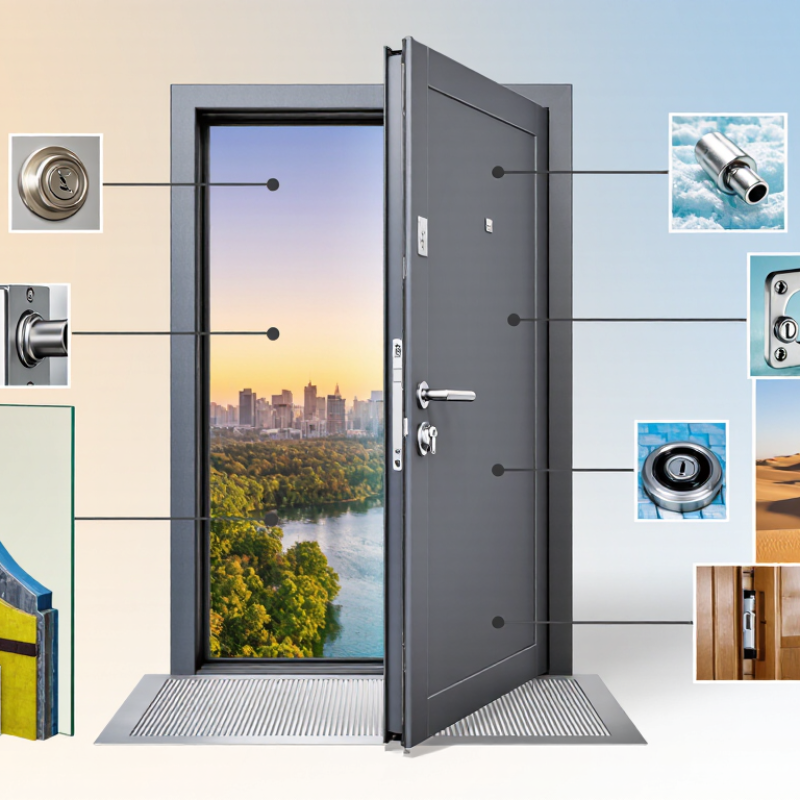
A high-quality aluminum entry door is more than a sturdy frame. Look for a suitable aluminum alloy, reinforced corner joints, and a thermal break that limits heat transfer through the frame. The exact performance depends on the full assembly, including the glass, seals, threshold, and installation. A thick door alone does not guarantee better insulation or security. Fit matters.
Tips: Check the stated air, water, and wind performance, and ask how it was tested. Inspect the weather seals and locking points. Confirm that the finish suits the local climate, especially where sun, rain, or salty air may cause faster wear. Clear product documents make comparisons easier.
For global buyers, confirm dimensions, handing, opening direction, and installation details before ordering. Ask whether replacement hardware and care instructions will be available later. A well-made door should close evenly, without scraping, and its seals should meet consistently around the frame. Still, paperwork cannot reveal every issue on site; poor installation can undermine a good product. I would compare complete door systems, not just frame prices, and allow time to verify samples or specifications. No single design fits every building.
Strength is one material consideration, not a complete measure of door quality. A well-built entry door also depends on a suitable thermal break, reliable weather seals, durable hardware, and verified air, water, and structural performance. Values shown are approximate typical tensile strengths; actual properties vary by specification and product.
What Is the Best Aluminum Entry Door for Global Buyers?
How Aluminum Door Designs Compare for Different Global Markets
The best choice depends on climate, building style, and installation quality. In hot, sunny regions, buyers should compare durable finishes, insulated cores, and effective weather seals. Coastal projects need finishes and hardware suited to salt exposure. Cold regions benefit from thermally broken frames and tight perimeter seals. Details matter.
The International Energy Agency’s 2023 Global Status Report for Buildings and Construction estimates that buildings used 34% of global energy in 2022 and produced 37% of energy- and process-related CO₂ emissions. That makes door insulation relevant, though a door alone cannot determine a building’s energy performance. Compare tested whole-door thermal ratings, air leakage, and water resistance, using criteria applicable to the destination market. Local installation practices matter too. A well-rated door can still underperform if the sill is poorly sealed.
Tips: Ask for test results for the complete door assembly, not just its glass or frame. Check finish, hardware, and replacement-part availability locally. There is no perfect specification; a technically strong door may still feel out of place in its architectural setting.
For cold regions, choose an aluminum frame with a well-designed thermal break, continuous weather seals, and insulated glazing. Double glazing may suit many homes, while triple glazing can help where winters are severe. Check the whole door’s tested performance, not just the glass rating. Small gaps matter.
In hot, sunny climates, low-emissivity glass and a suitable solar-control coating can reduce heat gain without making the entry feel gloomy. Coastal and humid settings need durable finishes, effective drainage, and corrosion-resistant hardware, such as stainless-steel components. Salt spray still takes a toll. Regular cleaning helps, but it cannot fix poor detailing.
Match the glass to the doorway’s exposure and privacy needs. Laminated glass can help hold fragments together if broken, while textured glass admits light with less visibility. For heavy doors, hinges and multipoint locks should be rated for the panel’s weight and used with a rigid frame. A specification can look perfect on paper yet disappoint at the threshold. Confirm that the installer can seal the sill correctly and accommodate local wind and rain exposure. The smallest detail is often the one people notice after the first storm.
What Is the Best Aluminum Entry Door for Global Buyers?
Security, energy efficiency, and durability should be evaluated together, not separately. A strong aluminum door begins with a tested frame, reinforced hinges, and a multi-point locking system. EN 1627 resistance classes provide a useful benchmark for forced-entry testing. RC2 may suit many homes, while higher-risk properties may require RC3 or above. Certification matters more than impressive hardware descriptions.
Energy performance depends on the complete door assembly. The U.S. Department of Energy reports that windows account for roughly 25–30% of residential heating and cooling energy use. A poorly insulated entry door can add to that loss. Choose thermally broken aluminum, low-emissivity glazing, and continuous weather seals. Check the whole-door U-factor, air leakage, and water resistance, rather than the glass alone. A lower U-factor is not automatically better if installation is careless.
Durability needs evidence.
Ask for testing under EN 12207, EN 12208, and EN 12210, or comparable regional standards. These evaluate air permeability, watertightness, and wind resistance. Coastal buyers should request corrosion-resistant finishes and inspect drainage paths carefully. Powder coating can look excellent, but surface preparation still controls long-term performance. I have seen attractive doors fail around unsealed corners. That detail is easy to miss. Also review maintenance instructions, replacement-part availability, and warranty conditions in the destination country. Door performance is partly a product issue, but installation quality remains the uncomfortable variable.
Global buyers should verify standards before comparing finishes or prices. The U.S. Department of Energy reports that windows and doors can represent about 25–30% of residential heating and cooling energy use. Therefore, request tested U-values, air leakage, and water resistance, not only attractive product photographs.
In North America, check performance evidence linked to FGIA/AAMA requirements, including ASTM E283 for air leakage, ASTM E330 for structural performance, and ASTM E331 for water penetration. European projects may require EN 14351-1 documentation and thermal calculations under EN ISO 10077-1. These references help compare products across markets, but certification scope matters. A test for one size may not represent a larger door.
Installation deserves equal attention. Confirm wall opening dimensions, sill drainage, flashing, compatible sealants, and local wind-load requirements. A high-performance door can still leak through an uneven threshold. I have seen installers measure only the frame, ignoring finished flooring. That mistake creates rubbing, drafts, and expensive adjustments. Coastal buyers should request corrosion testing, while cold-region projects need thermal-break details and condensation guidance.
Ask for installation drawings, maintenance instructions, test dates, and declared tolerances. Check whether hardware, glazing, and thresholds were included in the tested assembly. Small details matter. No report replaces a careful site inspection.
Choose thermally broken aluminum, continuous weather seals, and insulated glazing. Double glazing suits many homes; severe winters may call for triple glazing. Small gaps matter.
Low-emissivity glass with a suitable solar-control coating can reduce heat gain. Check daylight needs, since some coatings may make an entry feel gloomy.
Look for corrosion-resistant hardware, durable finishes, and clear drainage paths. Salt spray still takes a toll. Cleaning helps, but poor detailing remains a problem.
Laminated glass can help hold fragments together if broken. Textured glass lets daylight in while limiting visibility, though it does not provide complete privacy.
Use reinforced hinges and a multi-point lock rated for the panel’s weight. A rigid frame matters too. Check tested resistance ratings, not just hardware descriptions.
Check the complete door’s U-factor, air leakage, and water resistance, not only the glass rating. A lower U-factor cannot fix careless installation.
Request documented air, water, and wind-resistance testing under relevant regional standards. Also review maintenance instructions, replacement-part availability, and warranty terms in the destination country.
Confirm that the installer can seal the sill for local wind and rain exposure. I still find this easy to overlook. The first storm may reveal it.
Choosing the best Aluminum Entry Door for global buyers requires more than comparing appearance and price. A high-quality door should combine precise construction, stable frames, reliable seals, corrosion resistance, and finishes suited to long-term use. Design choices should reflect the target market, from minimalist styles for modern buildings to stronger thermal or weather-protection features for demanding environments. Materials, glazing, and hardware must also match local climate conditions, including heat, cold, humidity, wind, and coastal exposure.
Buyers should evaluate security through reinforced structures, dependable locking systems, and impact-resistant options where appropriate. Energy efficiency depends on thermal breaks, insulated panels, quality glass, and properly sealed joints, while durability is influenced by coating performance and maintenance requirements. Before ordering, purchasers should verify applicable product standards, testing documentation, dimensions, opening direction, drainage, and installation details. Correct site measurement and professional installation are essential because even a well-made door may perform poorly if it is incorrectly fitted or inadequately sealed.