0%

A front door does more than welcome guests. It faces rain, sun, daily use, and the occasional muddy shoe. Choosing an Aluminum Front Door means weighing appearance against insulation, security, durability, and installation quality. The details matter.

The U.S. Department of Energy reports that heat gain and loss through windows account for about 25%–30% of residential heating and cooling energy use. That figure applies to windows, not specifically to front doors, but it highlights why the performance of exterior openings deserves attention. For a door, compare the whole-unit U-factor and air-leakage information, rather than judging insulation by the frame alone. Look for clear product documentation, and check whether ratings reflect the complete door assembly.

Aluminum is strong, resists rust, and supports slim, modern profiles. Yet performance varies with design. Thermal breaks, glazing choices, weatherstripping, finish, and installation can all affect comfort and upkeep. A beautifully finished frame cannot fix a poor seal. Nor does a low price guarantee long-term value. Small details count.

This guide’s seven tips will help you assess construction, energy ratings, hardware, security, maintenance, sizing, and warranty coverage. Ask suppliers for specifications, not just showroom claims. Compare like with like. Some choices involve trade-offs, and that can be frustrating. A careful decision starts with your climate, entryway, and budget—not a trend.
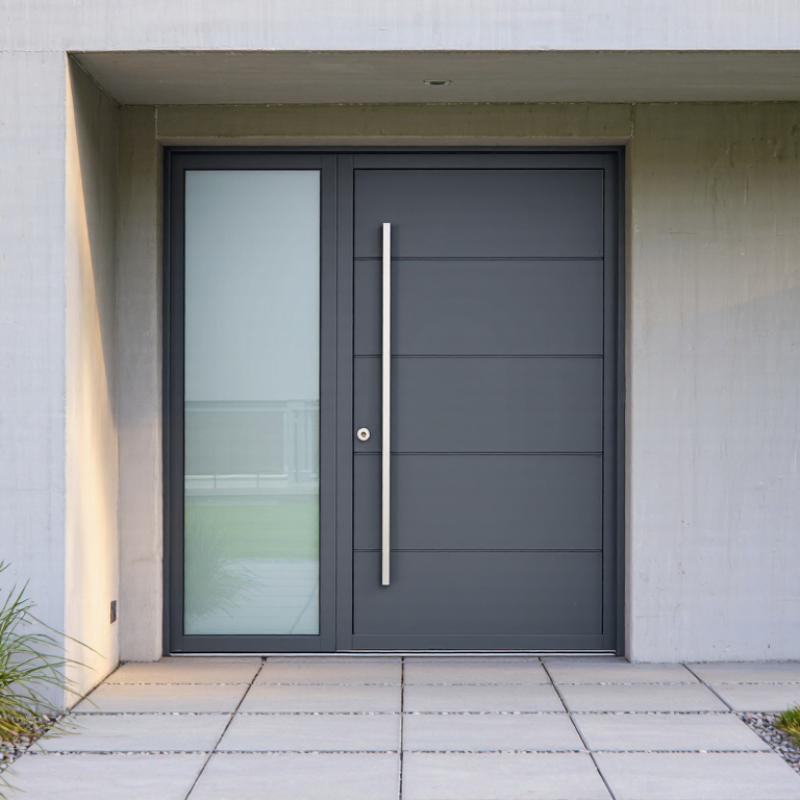
7 Tips for Choosing the Best Aluminum Front Door

Identify Your Entryway Needs and Door Requirements

Choosing an aluminum front door starts with understanding how your entryway actually works. Measure the opening, frame depth, threshold, and surrounding wall space. Measure twice. Check the door swing against furniture, steps, and delivery paths. A beautiful door can become inconvenient if it blocks a hallway or narrows wheelchair access. Consider whether your home needs one panel, sidelights, or a wider opening for moving large items.

Your local climate also affects the door requirements. In coastal areas, salt exposure demands careful surface protection and regular cleaning. Cold regions benefit from insulated panels and thermally improved frames. Ask about water drainage, weather seals, and air leakage. Security needs equal attention. Choose a strong locking system, sturdy hinges, and glazing that suits your privacy level. Clear glass may brighten a dark foyer, but frosted or textured glass can feel safer. Local building rules may also control fire performance, emergency access, and installation details.

I once saw a homeowner focus on color and overlook the uneven masonry around the opening. The installation took longer than expected. Do not choose by photograph alone. Inspect frame samples, hardware operation, glass visibility, and finish quality in natural light. Consider who will maintain the door. Dust, fingerprints, and rain marks appear quickly on dark surfaces. Confirm measurements with an experienced installer, especially when replacing an old frame. A small error can affect sealing, alignment, and long-term comfort. Your budget should include delivery, removal, preparation, and fitting, not only the door itself.

Compare Aluminum Door Materials, Cores, and Construction

7 Tips for Choosing the Best Aluminum Front Door

Compare Aluminum Door Materials, Cores, and Construction

Aluminum is light, corrosion-resistant, and highly recyclable. The International Aluminium Institute reports that recycling aluminum uses about 5% of the energy required for primary production. That matters when material selection includes long-term environmental impact. However, aluminum conducts heat quickly. Choose a frame with a continuous thermal break, not a hollow profile alone. Do not guess.

Core construction affects comfort and durability. Polyurethane foam usually provides stronger insulation than basic honeycomb cores, but performance depends on thickness and installation. Mineral wool may support better fire resistance, yet it can add weight and cost. Ask for the door’s tested U-factor, not only an insulation claim. The U.S. Department of Energy links lower U-factors with reduced heat transfer, while NFRC procedures evaluate U-factor and air leakage separately.

Inspect the corners closely. Mechanically fastened joints need accurate alignment and durable seals. Welded construction can improve rigidity, but poor finishing may create visible distortion. Look for compression weatherstripping, a sill with drainage, and sealed glazing edges. Measure the opening before ordering. A well-made door can still leak air through an uneven frame. In field checks, I often find installation errors outweigh small material differences. I may be wrong in unusually mild climates. Still, compare the complete assembly, including core, frame, glass, hardware, and installer tolerances. Details matter.

7 Tips for Choosing the Best Aluminum Front Door

Compare aluminum door materials, cores, and construction by looking beyond appearance. Thermal conductivity is a useful material-level indicator, while the complete door assembly should be judged by tested U-factor, air leakage, water resistance, security, and durability.

Representative thermal conductivity values at approximately 20–25°C. Lower values generally indicate better resistance to heat transfer. Actual door performance depends on frame design, thermal breaks, glazing, seals, installation quality, and whole-door testing.

1. Check the frame.
Choose a thermally broken aluminum frame to reduce heat transfer through the metal.
2. Compare the core.
Polyurethane and other insulated cores can provide much lower thermal conductivity than solid materials.
3. Review whole-door U-factor.
Material conductivity alone does not represent the performance of a finished door.
4. Inspect construction.
Look for rigid joints, reinforced corners, continuous seals, and accurate assembly.
5. Evaluate weather resistance.
Ask for tested air, water, and wind-load performance.
6. Consider security.
Review multi-point locking, reinforced hardware zones, and impact-resistant components.
7. Match the finish to the climate.
Select a durable exterior coating and suitable glass or panel specification for local exposure.

Assess Energy Efficiency, Weather Resistance, and Durability

An aluminum front door can be strong and low-maintenance, but metal transfers heat readily. Look for a thermally broken frame, which places an insulating barrier between its inner and outer sections. Check the published U-factor too; a lower figure generally indicates less heat transfer, though ratings depend on the full door assembly. A well-insulated slab cannot compensate for a poorly fitted frame.

Weather resistance depends on the details. Inspect the compression seals around the edges, the sweep beneath the door, and the threshold. Small gaps matter. On a windy day, a loose seal may let in drafts or rain, even when the door itself is sound. Ask how the finish handles your local conditions, especially coastal salt air or strong sun. Scratches and neglected drainage can shorten its useful life. Check the threshold.

Durability also comes from installation and upkeep, not just the material. The frame should sit square, with secure fixings and no visible gaps around the trim. Ask what cleaning and touch-up care the finish needs; mild soap may be suitable, but follow the care guidance for the specific coating. I would not choose by a headline rating alone. Compare the door, glazing, seals, and installation as one system. A small detail is easy to overlook.

Review Security Features, Hardware, and Design Options

Tip 1: Check the security build, not just the door’s appearance. Ask how the frame is reinforced and whether the locking system engages securely. A sturdy door can still feel vulnerable if its frame flexes under pressure.

Tip 2: Examine the hardware in person. Handles should feel solid, hinges should move smoothly, and locks should operate without sticking. Consider whether the finish suits your climate and cleaning habits. Small details matter. I once focused too much on handle style and overlooked how awkward it felt with gloves.

Tip 3: Compare design options alongside practical needs. Aluminum doors come in varied colors, glass panels, and profiles, but each choice affects privacy, light, and upkeep. Frosted glazing can brighten a dim entry while limiting clear views inside. Ask about the glass construction and how it fits the door’s security design. Bring home finish samples if possible; indoor lighting can make a color look different from the showroom. A striking design may be tempting, but it should still match your entryway and daily routine.

Compare Installation, Maintenance, Warranty, and Total Cost

7 Tips for Choosing the Best Aluminum Front Door

Tip 1: Compare installed prices, not showroom prices.

Ask for removal, flashing, insulation, threshold sealing, delivery, and disposal. A cheap quote can hide expensive site work.

Tip 2: Check thermal ratings.

The U.S. Department of Energy recommends reviewing U-factor and solar heat gain through certified fenestration labels. Lower U-factor usually means better insulation.

Tip 3: Inspect installation details.

A level frame, sealed corners, and correctly adjusted hinges prevent drafts and water entry. Small gaps matter.

Tip 4: Estimate maintenance honestly.

Powder-coated aluminum resists corrosion, but coastal air still demands regular cleaning and hardware checks. The finish may look perfect during year one.

Tip 5: Read the warranty line by line.

Separate coverage for the frame, finish, glass, hardware, labor, and installation. Ask who pays for removal if a sealed panel fails. Industry warranties often sound broad, yet exclusions can be surprisingly narrow.

Tip 6: Calculate total cost over ten years.

Include energy use, repainting, repairs, cleaning, and future hardware replacement. The 2024 national Cost vs. Value Report recorded over 100% cost recovery for a steel entry-door replacement, but aluminum results vary by design and location. That comparison is useful, not conclusive.

Tip 7: Request two written bids and one installation timeline.

Verify drainage and local code requirements. I would not choose the lowest bid automatically. Sometimes the quietest door becomes the costly one.

FAQS

What should I measure before choosing an aluminum front door?

Measure the opening, frame depth, threshold, and nearby wall space. Measure twice. Check the swing against steps, furniture, and delivery paths.

How do I choose the right door configuration?

Consider one panel, sidelights, or a wider opening for large items. Leave enough clearance for everyday movement. A tight hallway can change the answer.

Which frame features help improve insulation?

Look for a continuous thermal break and ask for the door’s tested U-factor. A well-insulated panel cannot fix a poorly fitted frame.

What core should I consider for comfort and durability?

Foam cores often insulate better than basic honeycomb cores. Mineral wool may offer other benefits, but can add weight and cost. Compare the complete door.

How can I check weather resistance?

Inspect the edge seals, bottom sweep, threshold, and drainage. Small gaps matter. A windy-day draft may reveal a problem that looks invisible.

Does local climate affect door selection?

Yes. Coastal salt air calls for suitable surface protection and regular cleaning. Cold regions may benefit from insulated panels and thermally improved frames.

What should I inspect before ordering?

View samples in natural light and test the hardware. Check glass visibility, corner joints, and finish quality. Photos can hide uneven masonry.

What costs belong in my budget?

Include delivery, removal, opening preparation, and installation, not just the door. Confirm measurements with an experienced installer. Small errors can affect sealing and alignment.

How much maintenance might an aluminum door need?

Follow the coating’s care guidance; mild soap may suit some finishes. Dust, fingerprints, and rain marks show quickly on dark surfaces. I might still underestimate upkeep.

Conclusion

Choosing the best Aluminum Front Door begins with understanding your entryway’s size, style, traffic, climate, and functional needs. Compare door materials, insulated cores, frame construction, and finish quality to find a model that offers the right balance of strength, appearance, and value. Pay close attention to energy efficiency, weather resistance, drainage, corrosion protection, and long-term durability, especially if the door will face direct sunlight, rain, wind, or temperature changes.

Security and design should also guide your decision. Look for reliable locks, sturdy hinges, reinforced frames, quality hardware, and glass options that support safety without compromising style. Before purchasing, review installation requirements, maintenance needs, warranty coverage, and the total cost of ownership. A careful comparison of these factors will help you select an Aluminum Front Door that improves curb appeal, comfort, security, and lasting performance.

Ethan

Ethan

Ethan is a seasoned marketing professional with a strong understanding of the company’s products, customers, and market landscape. With a thoughtful, research-driven approach, he transforms complex product features into clear, practical, and engaging content that helps readers make informed......