A Premium Aluminum Entry Door is more than a polished panel at the front of a home. It must handle rain, wind, daily use, and repeated temperature changes. Buyers also compare thermal performance, security hardware, finish quality, and installation support. Small details matter. A loose threshold or weak weather seal can undermine an otherwise impressive door.
Market context deserves careful reading. Grand View Research’s Aluminum Doors Market report tracks demand across building applications and regions, but broad market figures do not prove that every premium product performs well. Product specifications and independent testing still matter. The U.S. Department of Energy reports that windows account for about 25%–30% of residential heating and cooling energy use. That figure is not specific to entry doors, but it shows why the building envelope deserves attention. For doors, compare documented U-factor, air-leakage results, and installation requirements rather than relying on appearance alone.
Building-science expert Joseph Lstiburek has said, “Windows are holes in walls.” His concise observation concerns windows, not entry doors, yet it offers a useful reminder: openings need careful design and installation. Not every detail is obvious. This guide compares ten worldwide manufacturers through materials, customization, performance information, design range, and service reach. It does not treat a high price as proof of quality. Instead, it asks what buyers can verify, what deserves a closer look, and where published information leaves room for doubt.
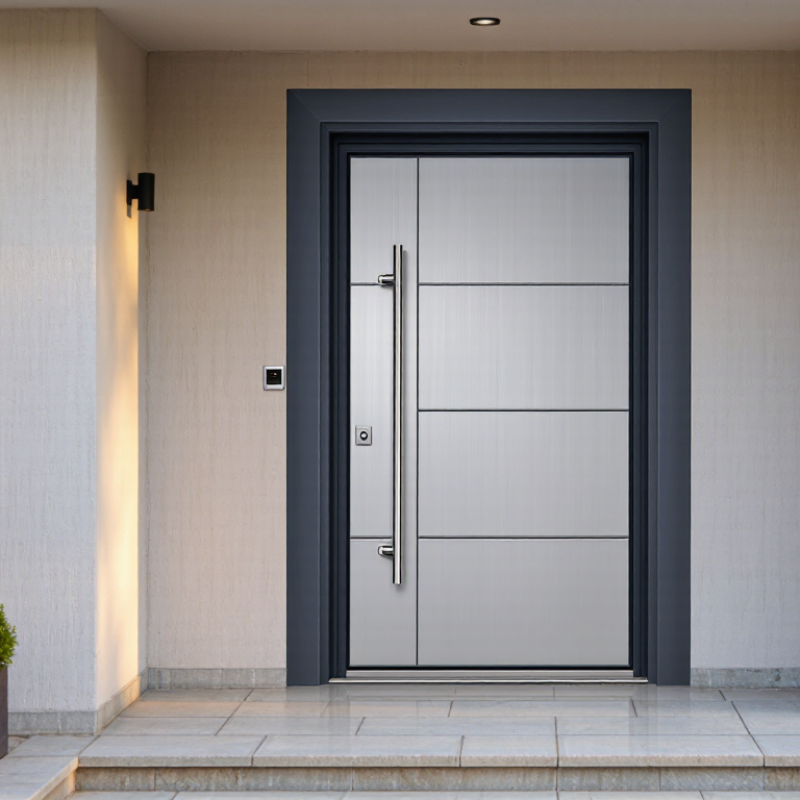
A premium aluminum entry door is more than a thick metal panel. Its quality comes from how the frame, glass, seals, and hardware work together. Thermally broken frames use an insulating barrier between interior and exterior aluminum, helping reduce heat transfer. Well-fitted weather seals can limit drafts and rain entry, while durable finishes help resist fading and corrosion. Details matter.
Look closely at the specifications, not just the appearance. Ask for documented thermal and air-leakage performance, and check whether the locking system engages securely at multiple points. If the door includes glass, consider its insulation rating and how the glazing is held in place. A heavy door can feel reassuring, but weight alone does not prove strength or good operation.
Installation is part of the product. A poorly leveled frame may cause rubbing, uneven gaps, or a latch that never feels quite right. Even a well-made door can disappoint if the opening is measured inaccurately. “Premium” is not a universal technical grade, so compare test data, warranty terms, and maintenance needs. Some finishes still need gentle cleaning, especially near salt air or dusty roads. No door is maintenance-free.
Comparing aluminum entry door manufacturers starts with the door’s actual performance, not its brochure photographs. Ask for documented air, water, and structural testing for the specific configuration you plan to buy. A large glazed door and a narrow solid panel may behave differently. Check the frame’s thermal break, glazing specifications, and weather seals. Details matter.
Review how the manufacturer builds and finishes each door. Request section drawings showing frame depth, threshold design, drainage paths, and hardware attachment points. Ask how finishes are tested for fading, corrosion, and wear, especially if the entrance faces strong sun or coastal air. Ask for evidence. Clear answers and current technical documents are more useful than broad claims.
Compare warranty terms, replacement-part availability, lead times, and support after delivery. Confirm whether dimensions, swing direction, glazing, and hardware can be specified without changing tested performance. Speak with installers who have handled similar doors, and ask what caused delays or adjustments. A minor weakness can hide in the handoff between factory and job site. I would not judge a manufacturer by one polished sample alone; samples rarely show how tolerances feel after repeated daily use.
A worldwide comparison of premium aluminum entry-door makers reveals different strengths, not one universal standard. This overview considers ten market profiles: a North American custom fabricator; a German systems engineer; an Italian design-focused producer; a Swiss precision specialist; and a Scandinavian manufacturer emphasizing low-carbon materials. The remaining profiles include a Turkish export-oriented maker, a Gulf-region specialist designing for intense heat, a Chinese high-volume producer, a Japanese precision manufacturer, and an Australian maker serving coastal conditions. These descriptions compare regional capabilities rather than claim a verified sales ranking.
Their practical differences show up at the doorway. One maker may offer narrow sightlines and oversized panels; another may prioritize robust seals, corrosion resistance, or dependable thermal breaks. Hardware compatibility, finish consistency, installation guidance, and access to replacement parts deserve equal scrutiny. Small details matter. The comparison is imperfect: climate, building codes, and installer skill can change how the same door performs.
The International Energy Agency’s buildings analysis reports that buildings account for about 30% of global final energy consumption and 26% of energy-related emissions. UNEP’s 2023 Global Status Report for Buildings and Construction estimates the sector uses 34% of global energy and produces 37% of energy- and process-related CO₂ emissions. These figures describe the wider building sector, not doors alone. Still, they explain why manufacturers’ thermal-performance data and tested assembly details merit close review. A polished specification sheet is useful, but field performance can be less tidy.
Premium aluminum entry doors combine precise fabrication with practical material choices. Manufacturers commonly shape aluminum profiles through extrusion, then cut and machine them for frames, rails, and stiles. Some corners are mechanically joined; others are welded and finished smooth. Neither method guarantees quality on its own. Consistent alignment and careful sealing matter just as much. Thermal breaks, often made from insulating polyamide, reduce heat transfer through the frame. Glass selection, weather seals, and drainage paths also affect comfort and performance.
Tips: Ask how corners are joined, where thermal breaks sit, and how water drains. Check a full-size sample if possible. Fit matters. Small gaps show.
Design options range from narrow sightlines and large glass panels to divided lights and solid lower sections. Powder-coated finishes offer varied colors, while anodizing creates a metallic appearance. Match the finish to the site: coastal air, strong sun, and frequent rain can change maintenance needs. Hardware deserves attention, too; a heavy door needs hinges and a lock suited to its size. One detail is easy to overlook: a striking handle may feel awkward in daily use. Compare finish samples in natural light, since showroom lighting can be misleading.
Anonymous industry overview of common premium-sector capabilities. The entries describe manufacturing methods and product options, not named companies or a ranked list of manufacturers.
| No. | Capability Area | Common Manufacturing Method | Typical Materials | Design Options | Key Considerations |
|---|---|---|---|---|---|
| 1 | Aluminum profiles | Architectural profiles are commonly produced by hot extrusion, then cut and machined to the door-system dimensions. | 6063-series aluminum alloys are widely used for architectural extrusions; alloy temper depends on the profile and application. | Slim or more substantial frame sections; square, rounded, or custom profile details. | Profile design affects stiffness, visible sightlines, hardware fit, and the space available for thermal breaks. |
| 2 | Thermal breaks | Separate interior and exterior aluminum sections are joined with an insulating barrier to reduce direct heat transfer through the frame. | Polyamide strips are commonly used as thermal-break components in aluminum systems. | Thermally broken and non-thermally broken configurations, depending on climate and product requirements. | Thermal performance is determined by the complete tested door assembly, not by the frame material alone. |
| 3 | Cutting and machining | Computer-controlled sawing, milling, and drilling are commonly used to prepare profiles and hardware openings. | Extruded aluminum profiles and compatible reinforcement or connection components. | Standard sizes, made-to-measure dimensions, and prepared openings for locks, hinges, and pulls. | Accurate machining supports alignment and consistent hardware operation; tolerances depend on the system design. |
| 4 | Frame and sash assembly | Cut profiles are assembled using system-specific mechanical corner joints, connectors, or other engineered joining methods. | Aluminum profiles with compatible corner cleats, fasteners, seals, and joining components. | Single-leaf and paired-leaf doors; inward- or outward-opening layouts where supported by the system. | Joint strength, squareness, drainage, and correct sealing are important to long-term operation. |
| 5 | Surface finishing | Common finishes include powder coating and anodizing, applied using processes appropriate to the selected finish and substrate. | Coated or anodized aluminum; pretreatment is selected to suit the finishing process and exposure conditions. | Multiple colors, gloss levels, and metallic or textured appearances may be available by order. | Color consistency, coating specification, and maintenance requirements vary by finish and environment. |
| 6 | Glazed door panels | Glazing is fitted into the door system with compatible beads, gaskets, and setting blocks. | Tempered or laminated safety glass; insulating glass units may be used where the system accommodates them. | Clear, obscure, tinted, or patterned glass; full-lite, partial-lite, and divided-lite layouts. | Glass selection must suit applicable safety requirements, opening dimensions, and the door-system specification. |
| 7 | Opaque door panels | Panel inserts are sized to fit the door framing system and retained using its specified fixing method. | Options can include insulated panel constructions or other compatible infill materials; exact build-up varies by product. | Flat or decorative faces, contrasting finishes, and combinations of solid and glazed sections. | Panel thickness and edge details must be compatible with the frame, hardware, and stated performance requirements. |
| 8 | Weather sealing and drainage | Gaskets, weather seals, thresholds, and drainage paths are integrated according to the door-system design. | EPDM and other suitable elastomeric seals are commonly used; material choice depends on the system and exposure. | Different threshold details and sealing arrangements for varied installation conditions. | Air and water performance depend on the complete assembly, installation, and maintenance of seals and drainage routes. |
| 9 | Hardware and security preparation | Profiles are prepared for compatible hinges, locking mechanisms, cylinders, handles, and strike plates. | Hardware commonly uses corrosion-resistant metals such as stainless steel, subject to specification. | Lever handles, pull handles, multipoint locks, and a range of hinge and access-control preparations. | Security depends on compatible components, correct installation, and tested door-set performance—not hardware alone. |
| 10 | Configuration and verification | Manufacturers configure doors to a system's tested limits and may conduct quality checks or performance testing on representative assemblies. | Complete assemblies can combine aluminum profiles, glazing or panels, seals, hardware, and finishes. | Custom dimensions, finish combinations, sidelights, and transoms may be available where system limits allow. | Request documentation for the exact configuration; test results and code requirements vary by market and installation. |
Aluminum entry doors serve homes, offices, hotels, and public buildings, but each setting has different demands. A busy lobby needs durable hardware and reliable access control. A coastal home may need corrosion-resistant finishes and careful drainage details. For cold climates, ask whether the frame includes a thermal break and how the complete door assembly performs—not just the glass.
Certifications and test reports help buyers compare claims. Check that documents identify the tested model, configuration, and date. Depending on the destination market, relevant evaluations may cover air leakage, water penetration, structural performance, fire rating, or accessibility. ISO 9001 can indicate a quality-management system; it does not, by itself, certify a door’s performance. Ask for independent reports when requirements are critical. Paperwork should match the product being quoted.
Evaluate more than the purchase price. Compare frame thickness, finish options, glazing, lock compatibility, lead time, warranty terms, and availability of replacement parts. Request installation guidance and clarify who handles service after delivery. A polished catalog is not proof. Neither is a long specification sheet. I would be cautious about ranking manufacturers from published claims alone; real project conditions can expose gaps that brochures miss. Small details matter. A sill that sheds water poorly may cause more trouble than a modest difference in thermal ratings.
Ask for air, water, and structural test results for your exact door configuration. A wide glazed door may perform differently from a narrow solid panel. Ask for evidence.
A thermal break, often made from insulating polyamide, reduces heat transfer through the frame. Also review the glazing, weather seals, and drainage paths. Details matter.
Request section drawings that show frame depth, threshold design, drainage, and hardware attachment points. Ask how frame corners are joined. Small gaps show.
Ask how finishes are tested for fading, corrosion, and wear. Strong sun, coastal air, and frequent rain can affect maintenance needs. Check samples in natural light.
Confirm whether dimensions, swing direction, glazing, and hardware can be changed while keeping tested performance. Get the answer in writing; assumptions can be costly.
Compare warranty terms, replacement-part availability, lead times, and support after delivery. Ask installers about delays or adjustments on similar projects. Handoffs can be tricky.
A heavy door needs hinges and a lock suited to its size. Try the handle in person; an attractive shape may feel awkward every day.
Not really. A sample may not reveal how tolerances feel after repeated use. I would compare several details, though one sample can still be useful.
A Premium Aluminum Entry Door combines a refined appearance with strength, durability, and practical performance. When comparing manufacturers, buyers can consider product quality, construction methods, material specifications, customization options, design flexibility, and the level of technical support offered. Leading producers serve varied markets and applications, from contemporary homes to commercial properties, with solutions tailored to different architectural styles and performance needs.
Manufacturing choices, finishes, glazing, hardware, and thermal or weather-resistant features can all affect a door’s suitability. Buyers should also review relevant certifications, installation requirements, warranty terms, and maintenance expectations, while matching product specifications to the building’s climate, security needs, and intended use. A careful evaluation of these factors helps identify a reliable door that balances appearance, function, and long-term value.