China’s aluminum entrance door industry combines large-scale production with increasingly demanding architectural expectations. The U.S. Geological Survey estimated China produced about 41.5 million metric tons of primary aluminum in 2023. That represented more than half of global output. This industrial depth supports extensive extrusion, powder coating, glass processing, and hardware supply chains.
However, production volume does not automatically prove manufacturer quality. The International Aluminium Institute emphasizes lifecycle performance, recycled content, and carbon reduction across aluminum products. These factors matter for entrance doors exposed to rain, sunlight, wind, and daily impact. A reliable supplier should explain alloy grades, profile thickness, thermal-break design, coating systems, glass specifications, and hardware warranties. Factory audits, sample testing, and project references also deserve attention. Claims are easy. Evidence is harder.
This guide examines leading China Aluminum Entrance Door Manufacturers through practical purchasing criteria. It considers manufacturing capability, customization experience, export documentation, testing practices, and after-sales support. Relevant benchmarks may include ISO 9001 quality systems, EN 14351-1 performance requirements, ASTM testing, and project-specific building codes. These standards do not guarantee perfect results. Installation quality can still weaken an excellent door. A beautiful sample may also hide inconsistent batch control. That is an uncomfortable but important point.
The selected manufacturers should therefore be viewed as candidates, not an absolute ranking. Buyers need to compare air leakage, water resistance, wind-load performance, thermal transmittance, lead times, and total installed cost. A carefully chosen Aluminum Entrance Door should look impressive at the entrance, close smoothly, and remain dependable after years of use.
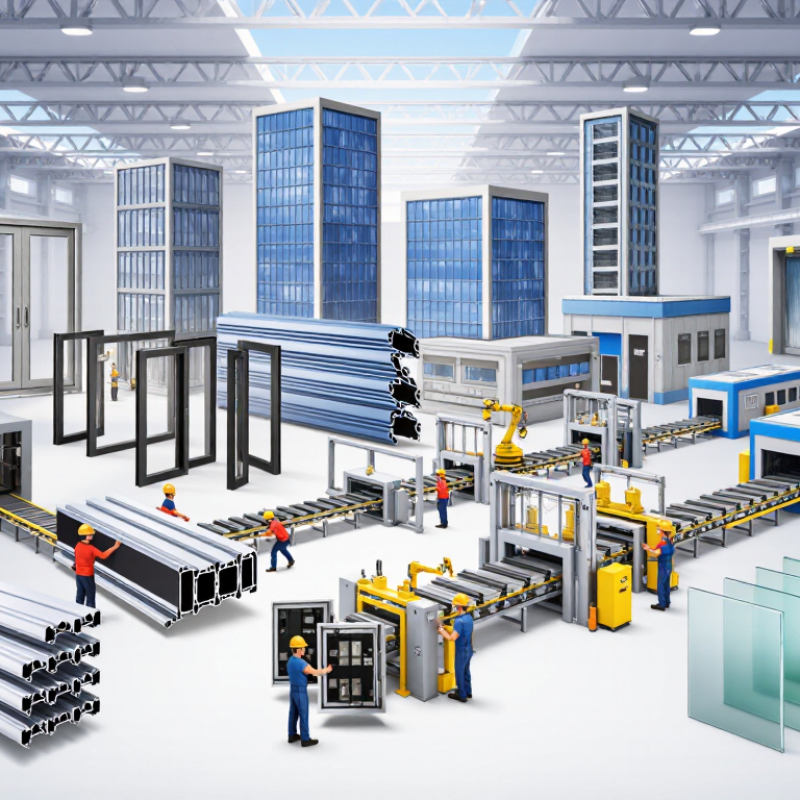
China’s Aluminum Door Industry: 41.59 Million Tonnes of 2023 Output
Top China Aluminum Entrance Door Manufacturers?
China’s aluminum industry produced approximately 41.59 million tonnes in 2023. This figure usually refers to primary aluminum, not finished entrance doors. It shows the scale of the material supply chain behind door manufacturing. Large output can support stable sourcing, competitive extrusion capacity, and faster access to standard profiles.
However, aluminum volume alone does not identify a dependable door manufacturer. A serious evaluation should examine alloy grades, profile thickness, thermal-break design, powder-coating quality, and welding or corner-joint methods. Ask for mill certificates and independent test reports. Check how the factory controls color consistency, glass fitting, hardware alignment, and water drainage. Small details matter. A door may look excellent under showroom lights, yet scrape the threshold after installation.
Factory visits can reveal more than polished product images. Review sample rooms, production records, packaging methods, and corrective-action reports. Confirm whether the stated 41.59 million tonnes supports real capacity or merely broad industry statistics. Some suppliers may outsource key processes without explaining this clearly. That is a weakness worth questioning. Even a careful audit can miss seasonal delays, material substitutions, or inconsistent inspection standards. Buyers should compare tested samples with mass-production units before approving a large order.
FAQS
China produced about 41.59 million tonnes of primary aluminum in 2023. This supports broad material availability and extrusion capacity. It does not measure finished entrance doors. Do not confuse industry scale with factory reliability.
Review alloy grades, profile thickness, thermal-break design, coating quality, and joint construction. Request mill certificates and independent test reports. Inspect drainage, glass fitting, hardware alignment, and corner joints. Small details matter.
GB/T 8478-2020 is an important Chinese reference for building doors and windows. EN 14351-1:2006+A2:2016 may apply to external pedestrian doorsets. Confirm the destination’s requirements before approval. Rules vary.
Ask for evidence covering air permeability, watertightness, wind resistance, thermal transmittance, and acoustic performance. Reports should match the supplied configuration. Frame depth, glass, seals, and hardware can change results.
A showroom sample may use better components or tighter workmanship. Compare approved samples with production units before placing a large order. Check dimensions, gasket compression, finish color, and opening movement. Scraping is a warning.
Review sample rooms, production records, packaging methods, and corrective-action reports. Watch corner assembly and drainage paths closely. Check whether key processes are outsourced. Unexplained outsourcing deserves questions.
Compare several doors under natural light, not only bright showroom lighting. Inspect color variation, scratches, seal placement, and hardware alignment. Measure gaps around the frame. A polished sample proves little.
Seasonal delays, material substitutions, and inconsistent inspections may still occur. Request updated production records and pre-shipment checks. Recheck critical dimensions. Even careful audits can miss problems. That is uncomfortable, but realistic.
Request drawings, material specifications, inspection plans, installation instructions, certificates, and applicable test reports. Confirm the report’s size, glass type, opening direction, and frame design. Vague paperwork should slow the decision.
Conclusion
China’s aluminum door industry reached an estimated 41.59 million tonnes of output in 2023, creating a broad supplier base for residential, commercial, and architectural projects. This guide explains how to evaluate an Aluminum Entrance Door manufacturer using key technical references, including GB/T 8478-2020 and EN 14351-1:2006+A2:2016. Rather than relying only on price or appearance, buyers should compare U-values, air permeability, and water tightness to identify products with suitable thermal performance, weather resistance, and overall quality.
The article also outlines how to assess leading Chinese suppliers through their certifications, factory capacity, production controls, and export experience. A practical due-diligence checklist covers ISO 9001 certification, independent test reports, warranty terms, customization capabilities, communication, and realistic lead times. By reviewing technical data, manufacturing resources, compliance documents, and after-sales support together, international buyers can make a more informed decision and select an Aluminum Entrance Door supplier that matches their project requirements and market expectations.