The 2026 market for exterior doors offers more choices than ever, from slim, modern frames to highly customized entry systems. This guide introduces leading Aluminum Exterior Door manufacturers and the qualities that distinguish their products. It considers frame construction, glazing options, thermal performance, finish durability, design flexibility, and available support. These details matter. A door must look right, but it also needs to operate smoothly through daily use and changing weather.
Manufacturer comparisons can help architects, builders, and homeowners create a practical shortlist. Product specifications, testing information, warranty terms, and installation guidance offer useful points of reference. Still, a published rating cannot replace project-specific review. A coastal home, a busy commercial entrance, and a sheltered suburban doorway face different conditions. Ask how finishes handle sun exposure, how seals are designed, and whether replacement parts are accessible. Small details count.
This overview aims to make those questions easier to ask. It does not assume that one brand suits every budget or building style. Some specifications may look impressive on paper, yet deserve closer checking against local needs and installation quality. That is worth remembering. The manufacturers featured here provide a starting point, not a final verdict. Compare current product data, request samples where possible, and consult qualified professionals before choosing a system. A careful decision can improve appearance, comfort, and long-term value. There is no perfect shortcut.
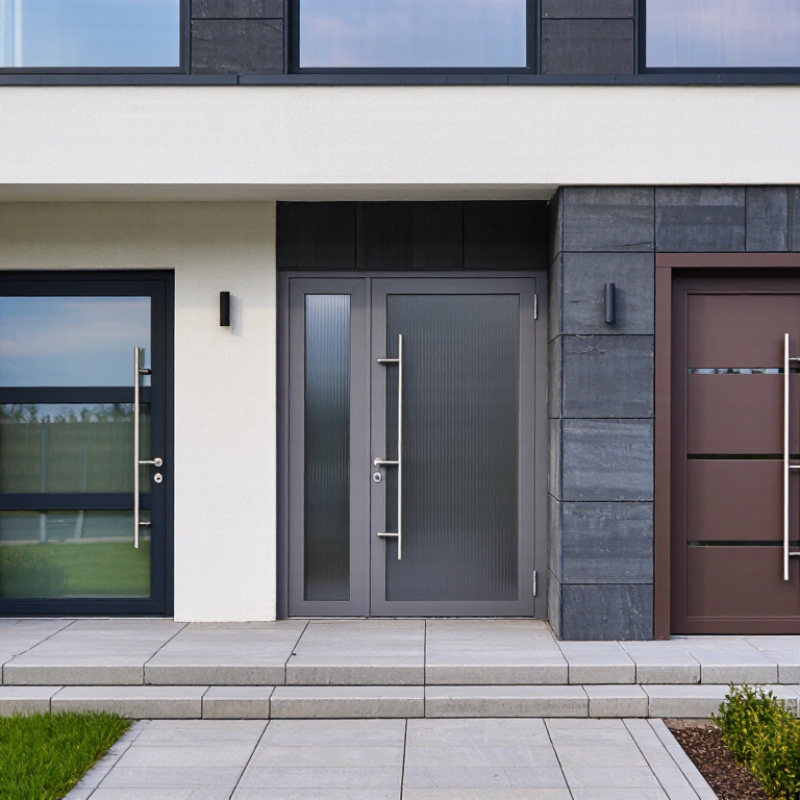
In 2026, an aluminum exterior door manufacturer is defined by more than attractive profiles or a wide product range. The strongest manufacturers can explain how frame design, thermal breaks, seals, and hardware work together in real openings. Ask for performance data tied to specific door configurations, not just broad claims. Air and water testing, cycle testing, and clear installation guidance help buyers assess what a system can handle. Details matter.
Material choices also reveal expertise. A manufacturer should describe alloy and finish options, drainage paths, glazing compatibility, and hardware suited to the door’s size and use. For coastal or high-moisture locations, ask how finishes and fasteners resist corrosion. Request drawings, maintenance instructions, lead times, and warranty terms in writing. These are practical signs of reliable support, not paperwork for its own sake.
Look beyond the factory, too. Installation tolerances, sill preparation, and site measurements can affect performance as much as the door itself. A technically capable manufacturer should help clarify these requirements and respond when project conditions change. No single profile suits every opening, and published test results may not reflect a poorly installed door. That limitation deserves attention. Comparing complete specifications, service arrangements, and documented test conditions gives architects, builders, and homeowners a more grounded basis for choosing a supplier.
A leading aluminum exterior door manufacturer should provide clear evidence of performance, not just polished product photos. Ask for documented air, water, and structural testing, plus details on frame depth, thermal breaks, and glazing options. These features affect comfort when winter winds press against the door or afternoon sun heats the entryway. Check how the finish is tested for fading and corrosion, especially in coastal or humid settings. Specific answers matter.
Tips: Request a sample corner section and inspect its joints, finish, and weather seals. Compare written specifications, not marketing claims. Confirm that quoted dimensions match the actual opening; even a small measurement error can complicate installation.
Also evaluate manufacturing consistency, customization limits, lead times, and after-sales support. Ask how replacement hardware and service questions are handled. A dependable manufacturer should explain what is covered by its warranty and what depends on installation or maintenance. Look for clear product documentation and realistic delivery estimates. Perfect claims deserve a second look. Some details may remain uncertain until the door is installed, so request references for projects with similar exposure and use. The cheapest quote may still cost more if key performance details are missing.
Profiles of notable aluminum exterior door manufacturers are most useful when they compare engineering, not showroom language. A strong producer specifies alloy, frame depth, thermal-break design, glazing options, and tested air and water performance. Those details matter. The U.S. Department of Energy estimates windows account for 25–30% of household heating and cooling energy use; doors still deserve separate scrutiny for seals, thresholds, and frame conduction. Ask whether published values describe a complete door assembly or only its glass. That distinction changes the comparison.
UNEP’s 2023 Global Status Report for Buildings and Construction attributes 34% of global energy demand and 37% of energy- and process-related carbon emissions in 2022 to buildings and construction. Against that backdrop, useful manufacturer profiles explain how designs address heat transfer and weather exposure. Some producers emphasize slim sightlines and large glazed panels; others prioritize thermal breaks, durable finishes, or configurable sizes. Better profiles disclose test standards, warranty limits, and installation guidance. Not every catalog explains these clearly. I would treat glossy claims cautiously, especially when no test report is linked. Compare replacement-part access and lead-time consistency, too—not only the quoted price.
Comparing Product Ranges and Manufacturing Capabilities
Comparing manufacturers means looking beyond frame color and catalog size. A useful product range may include hinged, sliding, folding, and pivot doors, with options for narrow sightlines, large glass panels, and different opening widths. Check whether listed dimensions are standard or made to order. That distinction affects lead time and installation planning.
Thermal performance deserves close attention. The U.S. Department of Energy estimates that windows account for 25–30% of residential heating and cooling energy use; glazed doors can also influence heat flow. Compare whole-door performance data, not just the aluminum profile. Ask for tested U-factor, air leakage, and water penetration results. A polished brochure is not proof. Small details matter.
Manufacturing capability shows up in repeatability. Ask how profiles are extruded, thermally broken, finished, and inspected, and whether hardware and seals are tested as part of the complete assembly. The International Aluminium Institute reports that about 75% of all aluminum ever produced remains in use, underscoring the material’s recyclability. Still, recycled-content claims should be documented for the actual product. I would also check finish samples in daylight; color can look different across coatings and batches. A little uncertainty remains when comparing factory claims without seeing production records.
Choosing an aluminum exterior door manufacturer starts with the opening, not a catalog. Record rough-opening dimensions, wall depth, exposure, and expected traffic before requesting a quote. A coastal entry, for example, needs careful attention to coating durability and drainage details. Small omissions become expensive.
Ask for documented performance data on air leakage, water resistance, structural load, and thermal values. Confirm which test standards apply and whether results cover your exact frame, glass, and hardware configuration. Request drawings, finish samples, warranty terms, and written lead times; vague promises are difficult to compare. Look for consistent quality checks, traceable materials, and a clear process for handling damaged units.
References can show how a manufacturer responds after delivery, not just how polished its sales material looks. Ask about replacement-part availability and who coordinates field measurements when site conditions differ from drawings. Price matters, but the cheapest quote may exclude installation details or project-specific testing. I would still question every specification: even a strong data sheet cannot predict every site condition. Leave room for that conversation.
Use this project-screening matrix to compare manufacturers. Performance targets should be set for the actual building, climate, opening size, and applicable local code; the figures below are examples for specifying and evaluating products, not universal code requirements.
| Selection Dimension | What to Evaluate | Practical Project Benchmark | Evidence to Request | Why It Matters |
|---|---|---|---|---|
| Product application | Confirm the proposed door type, operation, and intended exposure: hinged entry, sliding patio, folding, or commercial entrance. | Require a system specifically engineered for the project’s use, opening dimensions, traffic level, and exposure conditions. | Product schedule, system drawings, maximum tested panel dimensions, and installation details. | A system suitable for a sheltered residential opening may not be suitable for a large, exposed, or high-traffic entrance. |
| Thermal performance | Review whole-door U-factor, frame and glazing configuration, thermal breaks, and any stated solar heat gain coefficient (SHGC). | Set project-specific limits in the specification. Compare whole-product ratings in consistent units and for comparable sizes and configurations. | NFRC-certified rating where applicable, product label or directory record, and the rated configuration. | Thermal performance affects heat transfer and must be evaluated for the complete door assembly, not just the glass or frame material. |
| Air leakage | Check the tested air-leakage rate, test pressure, product type, and size represented by the test. | Specify a maximum rate and the applicable test method in the project documents; compare results only when test conditions match. | Laboratory test report or product certification showing the method, pressure, specimen, and measured result. | Seals, thresholds, corner joints, and installation affect air infiltration as well as the door design. |
| Water penetration | Review the tested water-penetration resistance and how the system manages drainage and weep paths. | Choose a test pressure appropriate to the building’s design wind pressure and exposure; do not treat a single pressure as suitable for every project. | Test report identifying the specimen, pressure, duration, test method, and any observed leakage. | Wind-driven rain performance depends on the assembly, sill details, drainage, and correct installation. |
| Structural capacity | Evaluate design-pressure ratings, frame and panel deflection, hardware loads, and the size of the tested assembly. | Require ratings that meet the project’s calculated loads and applicable building code; confirm that the proposed size is within the approved scope. | Structural test report, engineering calculations where required, and documentation for the specified configuration. | Large panels and high-wind locations can impose substantially different loads from standard-size doors. |
| Thermal-break construction | Ask how the aluminum frame separates interior and exterior metal surfaces and how frame joints are assembled. | Review the actual section drawings and rated whole-door performance rather than relying on a thermal-break claim alone. | Frame cross-sections, material details, and thermal-performance documentation for the selected system. | Aluminum is highly conductive; frame design and glazing choice influence heat transfer and interior surface temperatures. |
| Finish and corrosion resistance | Specify coating type, color, sheen, substrate preparation, and suitability for the project environment. | For coastal or chemically aggressive environments, obtain written confirmation of the finish system’s suitability and maintenance requirements. | Finish specification, coating test data where applicable, color sample, and care instructions. | Exposure, cleaning practices, and coating quality affect appearance and long-term surface durability. |
| Glazing and safety | Confirm glass type, thickness, safety-glazing locations, insulated-glass build-up, and compatibility with the door system. | Meet applicable safety-glazing and energy-code requirements for the project jurisdiction and opening location. | Glass schedule, safety-glazing documentation, and glazing-system details. | Glass selection affects safety, energy performance, acoustics, weight, and hardware loading. |
| Hardware and accessibility | Check hinges or rollers, locks, handles, closers, thresholds, replacement-part availability, and required operating force. | Confirm compatibility with the door’s weight and duty cycle, and coordinate accessible clearances and thresholds where required. | Hardware schedule, load or cycle data where available, installation instructions, and spare-parts policy. | Hardware is a key service and maintenance component and can limit the usable life of the complete assembly. |
| Testing and certification | Verify that performance claims correspond to independently tested products and the exact system being quoted. | For North American projects, check applicable requirements such as NAFS and local building codes; certification requirements vary by jurisdiction. | Current certificates or listings, test reports, and a clear match between the tested configuration and the project submittal. | A certificate for a different size, glass build-up, or operating style may not establish performance for the proposed door. |
| Customization and coordination | Assess available sizes, configurations, finishes, screens, sill options, and coordination with adjacent façade systems. | Obtain shop drawings before production and resolve dimensions, interfaces, drainage, and tolerances with the design team. | Project-specific shop drawings, approved finish samples, and a written list of deviations from the specification. | Early coordination helps prevent clashes, water-management problems, and costly field modifications. |
| Manufacturing and delivery | Clarify production capacity, order milestones, packaging, shipping method, and procedures for damaged or missing parts. | Request a project-specific delivery schedule with approval, production, dispatch, and receiving dates stated separately. | Written schedule, packaging details, delivery terms, and claims procedure. | Lead times depend on customization, material availability, approvals, and transport; confirm current dates rather than relying on generic estimates. |
| Installation support | Determine whether installation guidance, site support, installer training, or commissioning assistance is available. | Use installation instructions that match the selected system and coordinate perimeter sealing and anchorage with the wall design. | Installation manual, approved details, warranty conditions, and contact process for technical questions. | Even a tested product can perform poorly if it is installed, anchored, or sealed incorrectly. |
| Warranty and service | Review coverage for frames, finishes, glass, hardware, labor, and exclusions, including maintenance obligations. | Compare written warranty terms and confirm the process for service requests and replacement components. | Full warranty document, maintenance instructions, and written service or parts policy. | Warranty length alone does not show what is covered or how quickly service can be provided. |
| Total project cost | Compare the complete delivered and installed scope, including glazing, hardware, finishes, freight, installation, and maintenance. | Evaluate equivalent specifications and identify exclusions, allowances, taxes, and potential upgrade costs. | Itemized quotation, scope matrix, payment terms, and list of exclusions. | The lowest initial quote may omit components or services needed to achieve the required project performance. |
Ask for air, water, and structural test results. A polished product photo proves little.
Frame depth, thermal breaks, and glazing options affect comfort. Ask whether performance values cover the complete door or only its glass.
Request a sample corner section. Check the joints, finish, and weather seals closely.
Compare test standards, dimensions, and installation guidance. Confirm the quoted size matches your actual opening.
Ask how the finish is tested for fading and corrosion. Coastal air and humid weather can be tough.
Clarify what the warranty covers and what depends on installation or maintenance. Also ask how replacement hardware is handled.
Request realistic lead times and clear customization limits. A confident estimate is useful, but I would still verify it.
Not always. Missing performance details may cost more later, so compare the specifications, not just the price.
In 2026, an Aluminum Exterior Door manufacturer is defined not only by the doors it produces, but also by its ability to combine durable materials, thoughtful design, consistent quality control, and dependable project support. Leading manufacturers can be evaluated by examining their product engineering, finish options, customization capabilities, testing practices, production capacity, and ability to meet project timelines. Notable suppliers may differ in their focus, from standardized door systems to highly tailored solutions for residential and commercial buildings.
Comparing product ranges and manufacturing capabilities helps buyers understand which options suit their climate, design goals, performance needs, and budget. Before choosing a manufacturer, clarify requirements such as door dimensions, glazing, thermal performance, security features, finishes, installation coordination, and after-sales service. Reviewing samples, specifications, warranties, and communication processes can also help confirm that a supplier is a practical fit. A careful comparison makes it easier to select a manufacturer whose products and capabilities align with the project from planning through installation.