0%

China’s leading Aluminum Residential Door manufacturers serve a market shaped by changing homes, climates, and design preferences. Buyers compare more than appearance. They examine frame strength, thermal breaks, glazing options, hardware, finish quality, and the way a door seals against wind and rain. A slim black frame may look striking beside a pale stone entrance, but performance depends on details that are easy to miss. Such as drainage paths and corner joints.

This guide introduces manufacturers operating in China and the factors that help distinguish their products. Fenestration specialist Li Wen offers a practical perspective: “A residential door earns trust through the details you can feel—steady hardware, tight seals, and a frame that stays true.” The quote captures a useful evaluation principle, though it should not replace product data or independent inspection. Ask for specifications, test documentation, finish samples, and clear warranty terms. Check how the supplier handles custom dimensions and after-sales support, too.

No manufacturer is right for every project. Coastal exposure, seasonal temperature swings, installation conditions, and budget can change the best choice. A polished catalogue tells only part of the story. Compare actual configurations, not just marketing claims, and clarify what is included in each quotation. Even careful research has limits: published information may not reveal long-term service quality. The sections ahead provide a grounded starting point for comparing China’s top manufacturers and selecting an Aluminum Residential Door suited to real residential use.
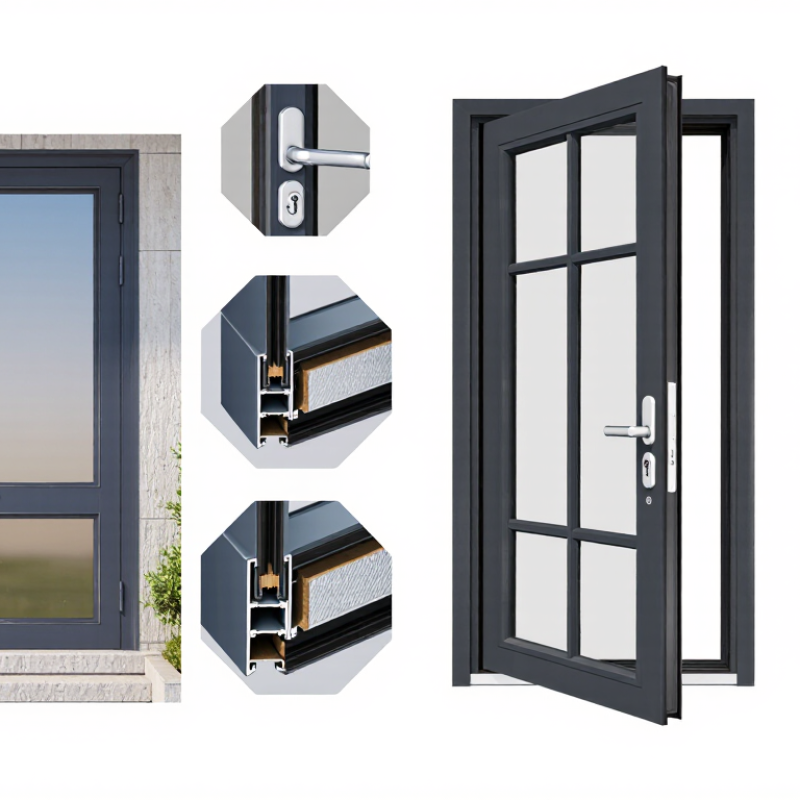
China Top Aluminum Residential Door Manufacturers

What Are Aluminum Residential Doors and How Are They Used?

Aluminum residential doors use extruded aluminum frames with glass, insulated panels, or both. Common applications include front entries, patio sliders, balcony doors, and doors between a home and a garage. Their slim profiles allow larger glass areas, bringing daylight into kitchens and living rooms. Aluminum is also rigid, which helps support broad panels without bulky frames.

The material conducts heat readily. Thermal breaks—non-metal barriers inside the frame—can reduce heat transfer, while weather seals help limit drafts and water entry. Check the whole assembly, not just the frame: glass specification, threshold, hardware, and installation all affect comfort. A detail is easy to miss. A well-insulated door can still leak around a poorly fitted sill.

The U.S. Department of Energy’s Energy Saver guidance estimates that windows account for about 25–30% of residential heating and cooling energy use. That figure concerns windows, not doors, but it shows why glazed openings deserve careful specification. Look for documented U-factor and air-leakage ratings, and compare products suited to the local climate. I would not choose by frame thickness alone; it says little about sealing or thermal performance. Even an attractive door can feel cold beside a drafty threshold.

How China’s Aluminum Door Manufacturing Industry Is Structured

China’s residential aluminum-door sector is a chain, not a single factory category. Upstream, billet suppliers feed extrusion plants that form frame and sash profiles. Thermal-break strips, surface finishing, glass, seals, and hardware add specialist stages. The China Nonferrous Metals Industry Association’s 2023 industry statistics put primary aluminum output at about 41.6 million tonnes. That figure describes material supply, not door production. It shows scale, but can mislead. Door makers still depend on profile quality, machining accuracy, and assembly.

Manufacturing is split between vertically integrated producers and regional fabricators that buy finished profiles. Integrated plants may handle extrusion, coating, cutting, assembly, and glazing; smaller workshops often focus on custom orders. Neither model guarantees performance. China’s GB/T 8478-2020 standard covers aluminum alloy doors and windows, but buyers should also request product-specific test reports. Check drainage slots, gasket joins, and frame anchoring on site. One weak joint can undo a good profile. Public statistics rarely separate residential-door output from broader aluminum products, so factory comparisons remain less tidy than catalogues suggest.

Which Products and Technologies Do Chinese Manufacturers Offer?

Chinese manufacturers offer aluminum residential doors in hinged, sliding, folding, and pivot styles. Homeowners can choose narrow or wide frames, single or double panels, and different glass configurations. Common options include insulated glass, low-e coatings, and laminated panes for added privacy or impact resistance. The right choice depends on climate, opening size, and how the room is used.

Many product lines use thermal-break frames, where a nonconductive section separates interior and exterior aluminum. This can reduce heat transfer, though performance also depends on glass, seals, and installation. Look for compression gaskets, drainage channels, multipoint locks, and corrosion-resistant finishes. Some factories offer custom colors, wood-grain effects, and made-to-measure dimensions. Details matter. A sleek frame is not enough if water drains poorly or the hardware feels loose. Specifications vary, so request test reports for the exact door configuration rather than relying on general catalog figures.

Tips: Measure the opening at several points. Ask for frame, glass, and hardware specifications together. Check how the sample operates, and confirm the threshold suits the site. Small differences can be easy to miss.

How to Evaluate China’s Leading Residential Door Manufacturers

How to Evaluate China’s Leading Residential Door Manufacturers

Evaluating a residential door manufacturer takes more than comparing catalog photos. Ask how the company controls aluminum profile thickness, corner joins, and surface finishing. Request technical sheets that identify alloy, glass options, thermal-break design, and hardware specifications. Clear answers matter. Check whether test reports cover air leakage, water resistance, and wind pressure for the door configuration you plan to buy. A report for a different size or model may not tell you much.

Look closely at production samples: run your hand along the frame, inspect seal alignment, and open and close the door several times. Ask how defects are recorded, how replacement parts are handled, and what installation guidance is supplied. A capable factory should explain its process without relying on vague claims. Lead time deserves scrutiny, too; confirm what happens if glass, locks, or finishes are delayed. It is easy to overvalue a polished showroom and overlook service after shipment. No checklist is perfect. A sample can also hide variation between production batches, so ask how routine inspections are documented. Compare answers, not just prices, and keep specifications in writing before approving an order.

China Top Aluminum Residential Door Manufacturers: How to Evaluate Leading Suppliers

Suggested evaluation weights for comparing residential aluminum door manufacturers. These percentages are a practical buyer’s framework, not market-survey results or ratings of specific companies.

Review product test reports and applicable standards, verify the offered profile and hardware specifications, and compare written warranty and after-sales terms. Confirm that any performance claims apply to the exact door configuration being quoted.

What Should Buyers Consider When Sourcing Aluminum Doors from China?

When sourcing aluminum residential doors from China, begin with the opening, not the catalog. Share measured dimensions, wall conditions, preferred swing direction, and photos of the installation site. Ask suppliers to state frame depth, profile thickness, thermal-break design, glass type, and hardware specifications in writing. A clear drawing can prevent costly misunderstandings. Small details matter.

Request samples or a project-specific prototype before approving a large order. Check corner joints, surface finish, drainage paths, gasket fit, and how smoothly the lock operates. Ask for test reports that match the proposed door configuration, not a similar-looking model. Confirm how measurements and quality checks are recorded during production. Not just the price.

Also examine lead times, packing methods, replacement-part availability, and who handles installation questions after delivery. Protective film and reinforced corners may seem minor, yet a damaged frame can delay an entire renovation. Agree on inspection criteria and document acceptable color or finish variation. A factory visit or third-party inspection can add useful evidence, although neither guarantees every unit will be flawless. I would not judge a supplier by polished photos alone; those are easy to prepare. Compare samples, documents, and communication, and leave room to revise assumptions when actual site conditions differ.

China Top Aluminum Residential Door Manufacturers - What Should Buyers Consider When Sourcing Aluminum Doors from China?

Evaluation Dimension What Buyers Should Check Useful Evidence or Reference How to Compare Suppliers
Product specification Confirm door type, opening direction, frame and sash dimensions, glazing configuration, threshold, hardware, and whether the product is intended for interior or exterior use. A dimensioned shop drawing, bill of materials, hardware schedule, and written confirmation of the project requirements. Compare quotations against the same drawings and configuration; a different glass, frame, or hardware specification can make prices incomparable.
Applicable product standards Check which standards and regulations apply in the destination market. Request test reports for the specified door system and configuration, not just general product literature. China's GB/T 8478-2020 covers aluminum alloy doors and windows. For European external pedestrian doorsets, EN 14351-1 is a relevant product standard; applicable conformity and marking requirements depend on the market and project. Verify the standard edition, test scope, tested specimen, and issuing laboratory. A report for a different size or configuration may not establish performance for the quoted product.
Air, water, and structural performance Set project-specific targets for air leakage, water penetration, and resistance to wind load. Requirements vary with building height, exposure, climate, and local codes. Reports may reference ASTM E283 for air leakage, ASTM E547 for water penetration, or ASTM E330 for structural performance, where applicable to the project. Compare test results using the same test method and units. Confirm that the tested assembly includes representative frame, glazing, seals, hardware, and installation details.
Thermal performance For conditioned spaces, ask for the complete door assembly's thermal performance, including frame, glazing, and edge effects; do not assess performance from the glass alone. Request declared or tested U-factor and, where relevant, solar heat gain coefficient (SHGC). Values and rating methods depend on the destination market. Compare values reported under the same method and for comparable door sizes and glazing. Confirm whether figures apply to the whole assembly or only a component.
Thermal break and condensation risk Determine whether the frame uses a thermal break and ask how the design addresses condensation in the project's expected indoor and outdoor conditions. Request profile cross-sections, material details, and applicable whole-door thermal or condensation assessments. Compare the documented frame construction and tested assembly performance rather than relying on terms such as “thermal” or “energy-saving” alone.
Aluminum alloy and profile details Specify the alloy and temper, profile dimensions, wall thickness, reinforcement, and fabrication details required by the design and performance targets. Request technical drawings, material specifications, and, when required, material certificates or inspection records linked to the order. Check that the quotation, drawings, sample, and production documents describe the same profile and material specification.
Surface finish and corrosion resistance Specify finish type, color, texture, exposure conditions, and any project requirements for coating durability or corrosion resistance. Ask for coating specifications and relevant test documentation. AAMA 2603, AAMA 2604, and AAMA 2605 describe different performance levels for organic coatings on aluminum extrusions and panels. Confirm the exact coating system and applicable standard; request a production sample or approved color sample. Suitability depends on exposure and project requirements.
Glazing and safety requirements Define glass type, thickness, insulating-glass build-up, tint, low-emissivity coating, and any safety-glazing requirements for the location. Request glass build-up details, applicable safety-glazing evidence, and identification of the glass manufacturer or processor in order documents. Check that glass specifications meet local building codes and match the drawings, energy targets, and tested door configuration.
Hardware, seals, and replaceability Confirm lock type, handle, hinges, cylinders, weather seals, screen options, and availability of replacement parts. Request hardware schedules, component specifications, installation instructions, and a list of recommended spare parts. Compare component specifications and service arrangements, not only appearance. Confirm that hardware is compatible with the door's size, weight, and intended use.
Factory quality control Review how the factory controls incoming materials, fabrication, assembly, dimensions, finish, and final inspection. Ask for documented inspection procedures, sample inspection records, and permission for pre-shipment inspection where appropriate. Agree in writing on inspection criteria, sampling, defect categories, and corrective-action procedures before production starts.
Samples and production approval Approve a representative sample or first article before bulk production, including finish, color, hardware, glass, and opening operation. Keep an approved sample, signed drawing revision, and dated record of agreed specifications. Use the approved sample and drawings as the reference for production inspection; document any approved changes.
Packaging and transport Confirm protective film, corner protection, separation between units, crate or pallet design, moisture protection, and handling labels. Request packaging photos or a packing specification and confirm shipping marks, package dimensions, and gross weights. Assess whether packaging suits the transport route and unloading method. Clarify responsibility for damage reporting and claims.
Quotation and trade terms Check currency, product scope, tooling or customization charges, packing, shipment terms, payment milestones, and quotation validity. Use a clearly named Incoterms® 2020 rule and place, such as the agreed port or delivery location; the named rule allocates specified costs and risks. Separate product cost, freight, insurance, duties, taxes, and destination charges. Confirm which items are included and which remain the buyer's responsibility.
Import and customs requirements Determine destination-country rules for product safety, energy performance, labeling, customs classification, and import documentation. Confirm requirements with the relevant authorities, customs broker, or qualified importer. Classification can depend on the door's materials, construction, and configuration. Do not rely on a supplier's suggested tariff code as a final determination; verify the classification and documentation required for the destination.
Warranty and after-sales support Clarify warranty duration and scope, exclusions, claim procedure, replacement-part availability, and support for installation questions. Request written warranty terms and a documented process for reporting defects, supplying evidence, and arranging remedies. Compare the exact coverage and remedy terms. Warranty conditions are contractual and should be reviewed for the destination market and project.

Buyer note: Performance requirements, certifications, building-code obligations, customs treatment, and warranty terms depend on the destination market and project. Verify current requirements with the relevant authority or qualified local professional before placing an order.

FAQS

What are aluminum residential doors made of?

They use extruded aluminum frames with glass, insulated panels, or both. Slim frames can bring more daylight indoors.

Where are these doors commonly used?

They suit front entries, patio openings, balconies, and connections between a home and garage. A wide glass panel can brighten a dim kitchen.

Do aluminum doors keep homes warm?

Aluminum conducts heat readily. Thermal breaks and weather seals can reduce heat transfer and drafts, but the full assembly matters.

What should I check for energy performance?

Review documented U-factor and air-leakage ratings. Check the glass, threshold, seals, and installation details too.

How can I assess a door manufacturer’s quality?

Request specifications for the aluminum profile, corner joins, finish, glass, thermal breaks, and hardware. Clear answers are useful.

What should I inspect in a production sample?

Feel along the frame, check seal alignment, and open and close the door several times. Small details matter.

Are test reports always enough to judge a door?

No. Confirm that reports cover the model and configuration you plan to buy, including its size and performance ratings.

How can I check service and production consistency?

Ask how defects, replacement parts, delays, and routine inspections are handled. A showroom sample may not reflect every batch. I’d still want that confirmed in writing.

Conclusion

This guide explains what an Aluminum Residential Door is, where it is commonly used, and how its design can support everyday entry, security, and comfort in a home. It also outlines how China’s aluminum door manufacturing industry is organized, from material processing and component production to assembly and quality control. Readers will learn about the range of residential door styles, finishes, configurations, and technologies available from Chinese manufacturers, including options designed to improve insulation, durability, and ease of use.

To compare manufacturers, buyers should consider product quality, production capabilities, customization options, communication, and the clarity of technical documentation. The guide also highlights practical sourcing considerations such as defining project requirements, confirming specifications and samples, reviewing packaging and shipping arrangements, and agreeing on inspection procedures and timelines. Together, these points can help buyers make informed decisions and select products suited to their homes and project needs.

Ethan

Ethan

Ethan is a seasoned marketing professional with a strong understanding of the company’s products, customers, and market landscape. With a thoughtful, research-driven approach, he transforms complex product features into clear, practical, and engaging content that helps readers make informed......