Featured Export-Grade Pivot & Entry Door Systems
Engineered to CE specifications with reinforced thermal-break profiles, advanced multi-point security hardware, and customizable architectural glazing.
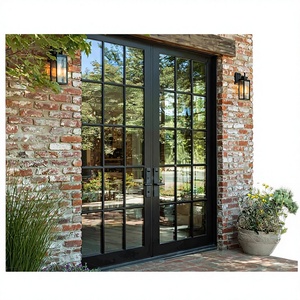
Sunnysky French Style Exterior Entry Double Tempered Glass Waterproof Modern Retro Black Aluminum Swing Door
Get Catalog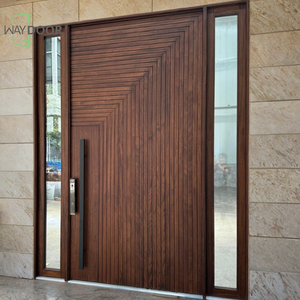
Premium Finished Oversize Heavy-Duty Single Front Entry Door With 2 Sidelights Oak Mahogany Solid Wood Exterior Pivot Door
Get Catalog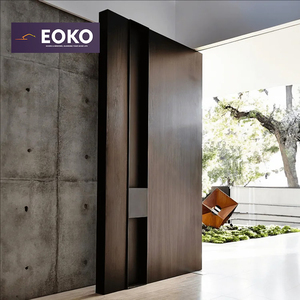
EOKO Custom Wooden Grain Front Entry Main Security Aluminum Decorous Exterior Pivot Door for America House Entrance Doors
Get Catalog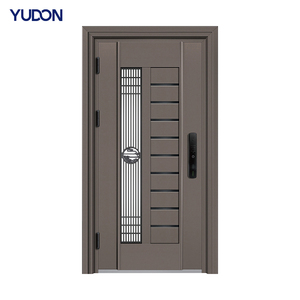
YUDON DOOR Automatic Sliding Stainless Steel Exterior And Front Doors For Villas Homes With Secure Locking System Door Entrance
Get Catalog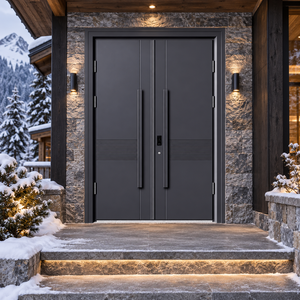
Customized Desert Villa Gate Oversized Bronze Double Entry Door with Circular Gold Medallion and Greek Key Decoration
Get Catalog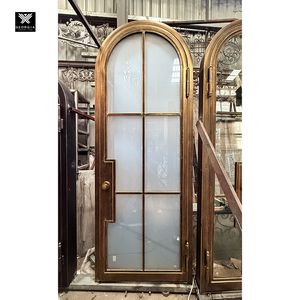
Arched Switchable Glass Steel Single Doors For Houses Front Entry Grilles Smart Frosted Glass Doors Interior Exterior
Get Catalog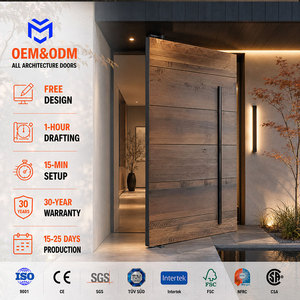
Custom OEM American Modern Durable Aluminium Wooden Residential Home Villa Entrance Security Front Entry Exterior Pivot Doors
Get Catalog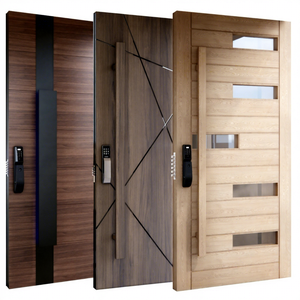
Manufacturer-direct Supply Waterproof Fire-resistant Security-rated Engineered Wood Pivot Doors for Modern Luxury Residential
Get Catalog1. Comprehensive Technical Analysis: Engineering Standards for CE Certified Pivot Doors
In modern high-end architectural design, the entry door has evolved from a basic security barrier into a complex engineering statement. Selecting a qualified CE Certified Custom Pivot Door Exporter requires a rigorous evaluation of structural load distribution, thermal break technology, and weatherproofing integration. Unlike conventional butt-hinged systems that transfer panel weight directly into side jambs, architectural pivot doors rely on heavy-duty top and bottom offset pivot spindles. This mechanism transfers the gravity load straight into the structural slab, enabling massive architectural openings exceeding 3000mm in height and 2000mm in width without frame sag.
1.1 Structural Load Distribution & Floor-Pivot Spindle Mechanics
When engineering oversized custom aluminum or composite wood pivot doors, weight management is paramount. CE certification (specifically harmonized standard EN 14351-1 for external pedestrian doorsets) enforces strict criteria regarding deflection, cycle testing, and operating forces. Top-tier exporters utilize hydraulic bottom pivots featuring integrated soft-close dampers, 360-degree adjustability, and hold-open indexing at 90 degrees. These systems withstand static door leaf weights up to 500kg while maintaining an opening force under 30 Newtons, satisfying international accessibility standards.
1.2 Thermal Efficiency & Polyamide Thermal Break Configuration
Modern luxury homes demand strict energy conservation. Traditional metal pivot doors historically suffered from thermal bridging. Modern engineered aluminum pivot entry systems overcome this via multi-chambered thermal break profiles. High-density polyamide (PA66 GF25) insulating strips separate the inner and outer aluminum skins. When combined with argon-filled, double or triple tempered Low-E glass units, thermal transmittance values drop to competitive levels (U-values below 1.4 W/m²K), mitigating indoor condensation risks in aggressive cold climates while locking in HVAC cooling in arid regions.
| Engineering Metric | Standard Aluminum Entry | CE Certified Thermal-Break Pivot System | Compliance Test Standard |
|---|---|---|---|
| Max Panel Dimensions | 1200mm x 2400mm | Up to 2200mm x 3800mm (Custom OEM) | EN 14351-1 / ASTM E330 |
| Thermal Transmittance (U-Value) | > 3.2 W/m²K | 1.1 – 1.5 W/m²K (Insulated Core) | ISO 10077-2 / NFRC 100 |
| Air Permeability | Class 2 (300 Pa) | Class 4 (600 Pa High-Sealed Drop Seal) | EN 12207 / ASTM E283 |
| Water Tightness | Class 3A (150 Pa) | Class 9A (600 Pa Perimeter EPDM) | EN 12208 / ASTM E547 |
| Security / Resistance Class | Basic Latch Lock | RC2 / RC3 Multi-Point Automatic Lock | EN 1627 - EN 1630 |
Exporter Quality Benchmark Note:
Grandor Door Industry Co., Ltd. controls every critical step in-house—including aluminum extrusion, powder coating, glass tempering, and precision CNC milling within our 155,000 m² smart facility. This eliminates subcontractor quality variances, guaranteeing structural compliance for B2B distributors and contractors worldwide.
2. Global Sourcing Trends: The Future of Custom Entrance Systems
Key technological shifts shaping how architects, importers, and developers specify external pivot entry systems for upcoming projects.
Smart Access Integration
Commercial and residential projects are rapidly moving away from mechanical keys. Modern export pivot doors feature integrated biometric fingerprint scanners, motorized multi-point automatic locking systems, facial recognition, and smart-home automation interfaces embedded seamlessly into stainless steel pull handles.
Switchable & Electrochromic Glazing
Incorporating switchable PDLC smart glass allows entryways to instantly toggle between ultra-clear visibility and complete frosted privacy at the touch of a button or via ambient sensor routines. Modern villa buyers prioritize dynamic light control combined with elevated security acoustics.
Hybrid Material Composition
Architects favor hybrid construction: exterior faces engineered from weather-resistant, fluorocarbon-coated aluminum alloys or architectural bronze to withstand harsh UV and salt corrosion, paired with warm, solid wood cladding (such as interior Mahogany or Oak) for interior spaces.
3. Corporate Strengths & Integrated Manufacturing Excellence
Choosing an export manufacturer for architectural building envelopes requires complete operational transparency. Grandor Door Industry Co., Ltd. operates as a premier Chinese manufacturer dedicated to removing overseas procurement risks through single-source production accountability.
155,000 m² Vertical Integration
From raw T6 aluminum billet extrusion and anodizing/powder-coating lines to automated double-glazing units and zero-tolerance assembly, all operations are conducted in one centralized mega-factory in Foshan.
Strict International Compliance
Our door systems are rigorously engineered and tested to satisfy worldwide building codes, including CE (EN 14351-1), AS2047 / AS1288 for Australia, and NFRC / ASTM testing standards for North American commercial projects.
Export Crating & BIM Support
We provide full shop-drawing engineering approvals, Revit BIM models for architects, and reinforced fumigated wooden crate packaging to ensure 100% damage-free sea freight delivery to over 60 global ports.
4. Frequently Asked Questions by International Buyers & Engineers
Essential guidance for procurement managers, structural engineers, and architectural importers specifying custom pivot doors.
What technical parameters are required to generate an accurate OEM pivot door quote?
To receive an accurate engineering proposal and cost estimate, please provide: structural rough opening dimensions (Width x Height), CAD architectural elevations or schedules, required thermal performance targets (U-value/SHGC), frame surface finish (e.g., RAL powder coat, anodized, or wood-grain transfer), glass build-up (tempered, laminated, Low-E), lock hardware preference (manual vs. motorized smart locks), and the destination port for freight calculation.
How do custom pivot doors achieve water and air tightness against driving rain?
Pivot doors naturally rotate past the perimeter frame, which creates challenges for traditional continuous weatherstripping. Grandor solves this by integrating concealed automatic drop-down bottom seals that drop against the threshold when closed, paired with continuous heavy-duty EPDM gasket seals around the top and side jambs, and magnetic interlocks. This system achieves CE Class 9A water tightness and Class 4 air permeability ratings.
Why choose thermal-break aluminum profiles over traditional wood or non-thermal aluminum?
Standard non-thermal aluminum easily conducts ambient exterior heat or cold into the interior. Polyamide thermal-break aluminum profiles interrupt this transfer completely, providing superior thermal efficiency while maintaining structural rigidity. Compared to solid wood, aluminum will not warp, twist, swell, or rot when exposed to extreme weather, humidity, or aggressive solar radiation, ensuring lifelong operational smoothness.
Does Grandor supply large-scale commercial and residential projects overseas?
Yes. Grandor’s 155,000 m² production hub regularly fulfills containerized wholesale and project orders across North America, Australia, Europe, and the Middle East. Past commercial project installations include luxury multi-family developments in Melbourne, steel-frame private estates in Brisbane, and custom architectural villas in Lake Norman, North Carolina, USA.
What CE certifications apply to Grandor’s custom exterior pivot doors?
Our doors conform to EN 14351-1 (Windows and doors - Product standard, performance characteristics). This covers structural resistance to wind load (EN 12210), water tightness (EN 12208), air permeability (EN 12207), thermal transmittance (EN ISO 10077), and safety performance of glazed units (EN 12600 / EN 12150).
Partner with China's Premier Custom Pivot Door Manufacturer
Empower your next architectural project with fully certified, factory-direct aluminum entry systems engineered to your exact specifications.
Get Catalog & Technical Quote