Enterprise Pivot & Exterior Security Door Solutions
Engineered for high-end residential villas, commercial entrances, and luxury hospitality developments. Our CE-marked pivot door systems incorporate thermal break aluminum profiles, multi-point smart locking mechanisms, and high-load hydraulic pivot hardware.
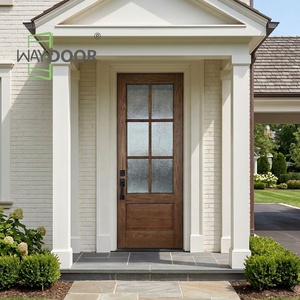
Fully Customized Soundproof Single Front Solid Wood Door With 6 Glass Panels
Precision-engineered mahogany/oak solid wood core with integrated perimeter drop seals achieving up to Rw 42 dB sound attenuation for luxury villas.
Get Catalog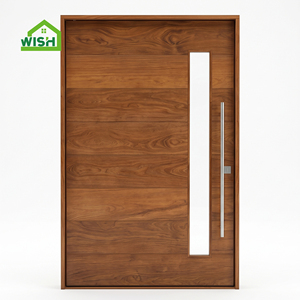
Modern House Entrance Large Solid Wood Insert Glass Pivot Door Entry Door Security
Heavy-duty floor-concealed pivot axis handling up to 500kg leaf weight with Low-E insulated tempered glass inserts for grand residential facades.
Get Catalog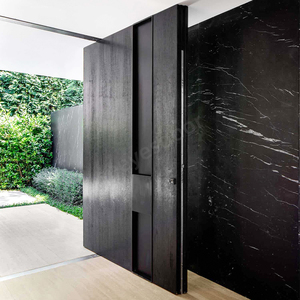
Seeyesdoor Luxury Design German Smart Locking System Thermal Insulation Solid Wood Pivot
Integrated German electronic multi-point motorized lock with biometric fingerprint recognition, emergency mechanical override, and thermal break structure.
Get Catalog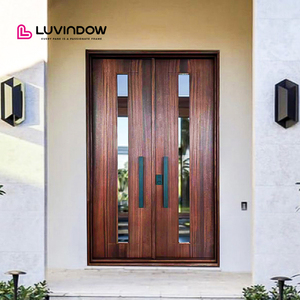
High Security Modern Energy Efficient Solid Wood Entry Door with Premium Hardware
Features PA66 GF25 polyamide thermal insulation strips delivering U-values as low as 0.95 W/m²K for extreme climate stability in hotel and commercial projects.
Get Catalog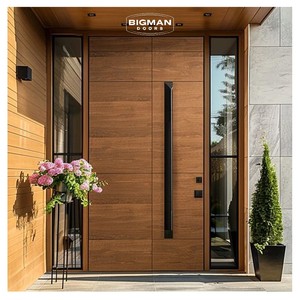
Premium Solid Walnut Front Entry Door With Double Sidelight Modern Design Waterproof
Bespoke double sidelight frame assembly with outdoor hydrophobic marine coating, anti-warp internal steel reinforcement, and stainless steel hardware.
Get Catalog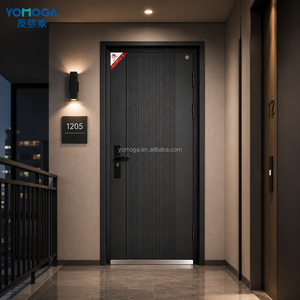
Premium Bespoke Energy Efficient Galvanized Steel Pivot Door Contractor Grade
Heavy-gauge zinc galvanized alloy structure designed for high-traffic apartment hotel halls, offering maximum forced-entry resistance and fire retardancy.
Get Catalog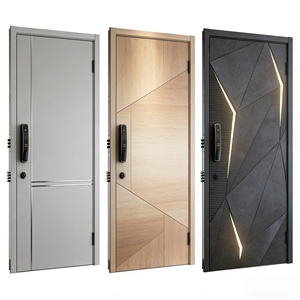
Modern Aluminum Security Door Residential Front Entrance Strong Protection System
Architectural grade T66 extruded aluminum casing with multi-locking pins, corrosion-resistant anodized finish, and slim profile visual appeal.
Get Catalog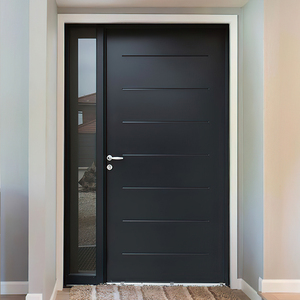
Luxury High Grade Noise Preventive Heat Insulation Waterproof Zinc Alloy Main Door
Flagship security main door featuring quad-layer weatherboarding, concealed 3D adjustable pivot hinges, and high-impact structural resistance.
Get CatalogEngineering Architecture & CE Compliance for Large-Scale Pivot Doors
In contemporary architectural design, large-scale entrance pivot doors serve as a primary design anchor. However, specifying oversized pivot openings creates complex structural, mechanical, and thermal challenges that standard exterior doors cannot resolve. A professional CE Certified Pivot Door Manufacturer must balance structural rigidity, kinetic weight distribution, air permeability, and thermal insulation to meet stringent global building codes.
Under the European Construction Products Regulation (CPR No 305/2011), exterior pedestrian doorsets must demonstrate compliance with EN 14351-1:2006+A2:2016. For wholesale buyers, general contractors, and project developers, verified CE certification is not merely a formality; it provides legally binding proof of performance regarding key physical characteristics:
Air Permeability (EN 12207)
Tested up to Class 4 (600 Pa test pressure). Pivot doors utilize continuous EPDM magnetic rebate gaskets and automatic floor drop-down seals to eliminate air infiltration around the offset pivot axis.
Watertightness (EN 12208)
Achieving ratings up to Class E900 (900 Pa unsealed water spray). Engineered with internal drainage channels within the floor threshold transom to drain wind-driven rain outward.
Wind Load Resistance (EN 12210)
Certified to Class C5/B5. Reinforced internal multi-chamber aluminum extrusions prevent structural deflection even under extreme hurricane-force velocity pressures up to 3000 Pa.
Unlike traditional side-hinged doors that transfer cantilever forces directly onto vertical jamb frames, architectural pivot systems transfer the door leaf’s dead load straight down into the structural floor slab via a heavy-duty bottom pivot axis.
Our advanced factory engineering utilizes floor-concealed hydraulic self-closing pivot systems capable of supporting single door leaf weights from 250 kg up to 800 kg with heights extending to 6,000 mm. These units feature:
- 3D Micro-Adjustment Alignment: Allows +/- 5mm lateral and depth adjustment on-site for absolute vertical plumb precision after installation.
- Adjustable Hydraulic Dampening & Backcheck: Prevents the door panel from swinging open violently under wind gusts, protecting adjacent glazing walls.
- Electromechanical Hold-Open Stations: Selectable 90° or 105° hold-open states integrated into central building management systems (BMS) for fire safety releasing.
Large aluminum and steel pivot door surfaces can act as thermal bridges if uninsulated. Grandor Door Industry Co., Ltd. resolves thermal loss by incorporating high-performance polyamide breaks (PA66 GF25 reinforced with 25% glass fiber) within the extrusions.
When paired with triple-glazed Low-E insulated glass units (IGUs) filled with 90% Argon gas, our thermal break pivot doors achieve complete doorset Thermal Transmittance values down to Ud ≤ 0.85 W/m²K (passive house compatible standard).
| Performance Indicator | Standard Aluminum Pivot | Grandor CE Thermal Break Pivot | Test Standard / Regulatory Benchmark |
|---|---|---|---|
| Thermal Transmittance (Ud) | 2.8 - 3.5 W/m²K | 0.85 - 1.2 W/m²K | EN ISO 10077-1 / NFRC 100 |
| Acoustic Isolation (Rw) | 28 - 32 dB | 38 - 45 dB | EN ISO 717-1 / ASTM E90 |
| Air Permeability | Class 2 (300 Pa) | Class 4 (600 Pa) | EN 12207 / ASTM E283 |
| Wind Deflection Resistance | Class B3 (1200 Pa) | Class C5 (2000 Pa+) | EN 12210 / ASTM E330 |
| Security / Burglar Resistance | Basic Latch Point | RC3 / RC4 Multi-Point Smart Lock | EN 1627 - EN 1630 Standard |
Global Procurement Trends & Future Outlook for Architectural Pivot Doors (2025–2030)
As the commercial real estate and luxury residential markets evolve globally, international procurement officers, facade consultants, and wholesale distributors must anticipate emerging architectural demands. Procurement strategies are shifting from purely low-cost sourcing toward value-engineered compliance, embedded smart hardware, and material circularity.
Trend 1: Electrified Smart Access & Motorized Lock Integration
Modern developers no longer specify purely mechanical key locks for high-value main entry doors. The industry is rapidly adopting fully integrated motorized multi-point lock systems (e.g., German Winkhaus, KFV, or SIEGENIA mechanics) wired into access control hubs.
Future-ready factories must embed concealed cabling channels, optical sensor switches, biometric facial/fingerprint scanners, and smart home API protocol support directly within the door leaf profile during factory assembly.
Trend 2: Seamless Zero-Threshold & Flush Floor Track Systems
Architects are demanding barrier-free transitions that blur indoor and outdoor living boundaries. Traditional raised door sills are being replaced by flush sub-floor drainage tracks equipped with magnetic pop-up bottom gaskets.
When closed, the gasket drops down via magnetic attraction or spring activation to create an airtight seal; when opened, it retracts completely into the leaf, eliminating tripping hazards.
Trend 3: Hybrid Material Fabrication & Zinc Alloy Cores
While solid timber offers natural aesthetic warmth, it suffers from structural warping and thermal expansion under direct sun exposure. Procurement is trending strongly toward hybrid construction: high-rigidity zinc-galvanized alloy or extruded aluminum core framework laminated with real hardwood veneers or PVDF fluorocarbon coatings.
This structural hybrid guarantees zero thermal deformation over a 25-year service lifecycle.
ESG mandates in Western Europe, North America, and Australia require developers to account for embodied carbon across all building materials. Leading manufacturers must now supply verified Environmental Product Declarations (EPD) detailing cradle-to-gate carbon metrics.
By utilizing hydro-powered recycled architectural aluminum billets (reducing embodied carbon from 18 kg CO₂/kg Al down to under 4 kg CO₂/kg Al), Grandor assists project developers in securing LEED Gold and BREEAM Excellent environmental building accreditations.
Integrated 155,000 m² Manufacturing Facility in Foshan, China
Grandor Door Industry Co., Ltd. operates a fully integrated production ecosystem in Foshan, Guangdong. By performing all manufacturing steps in-house—avoiding third-party processing subcontractors—we guarantee strict quality control, consistent dimensional tolerances, and reliable export fulfillment schedules.
- ✓ In-House Aluminum Extrusion Lines: Precision alloy profile extrusion up to 7.5-meter continuous lengths.
- ✓ Automated Surface Finishing: Vertical powder coating, anodizing, and Italian heat-transfer wood-grain technology.
- ✓ Glass Fabrication Plant: Fully automated glass cutting, edge polishing, tempering furnaces, and double/triple argon IGU lines.
- ✓ 5-Axis CNC Machining Centers: Micron-precision milling for smart locks, concealed pivot plates, and flush hardware handles.
- ✓ Quality Assurance Testing Lab: Air, water, structural pressure chamber testing on every customized lot before container loading.
Pivot Door Procurement FAQ for Architects & Wholesale Importers
Technical guidance based on 16+ years of international export experience supplying over 60 countries.