Top-Rated Pivot & Architectural Entry Door Systems
Engineered for extreme structural integrity, thermal efficiency, and high-security defense. Fully customizable for international building compliance standards.
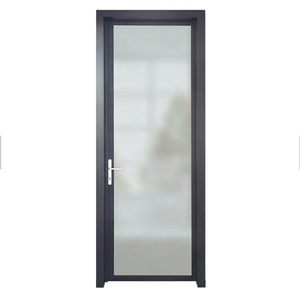
House Aluminum Glass Door House Casement Door Aluminum Glass Swing Door Aluminium Double Glazed
- Double Glazed Low-E Tempered Glass
- Multi-Point Compression Seal System
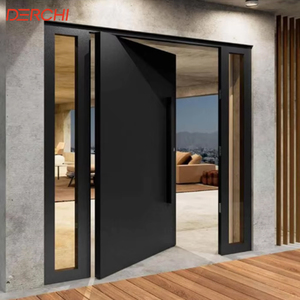
High Quality Exterior Entrance Cast Aluminium Front Main Door Modern Residential With Glass Pivot Security Entry Doors
- Heavy-Duty Cast Aluminum Surface
- Hidden Hydraulic Self-Closing Pivot
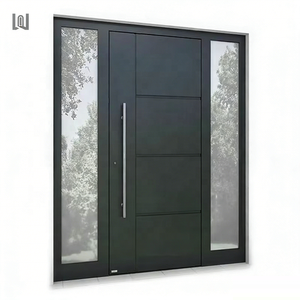
Security Anti Theft Metal Security Door Exterior Entry Front Door Houses Entry Security Door
- Reinforced Steel/Aluminum Core
- Anti-Pry 5-Latch Lock Mechanism
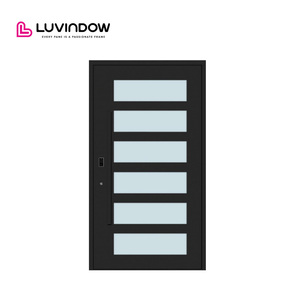
Secure Large Opening Aluminum Entry Pivot Doors For High End North American Residential Communities
- Spans up to 3000mm x 6000mm
- NFRC & Florida Wind Load Ready
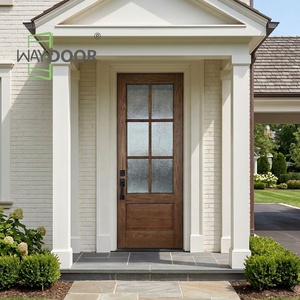
Fully Customized Soundproof Single Front Solid Wood Door With 6 Glass Panels For Houses Room Mahogany Oak Wooden Exterior Door
- Sound Isolation Rating up to 42 dB
- Solid Mahogany / Oak Finish
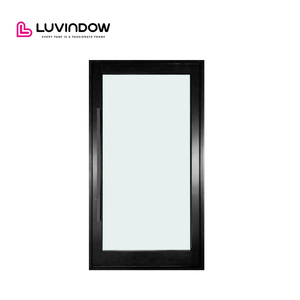
High Performance Thermal Insulation Wide Access Aluminum Pivot Entry Doors for Luxury Builder Residential Projects
- Polyamide PA66-GF25 Thermal Strip
- Ultra-Low U-Value (<1.4 W/m²K)
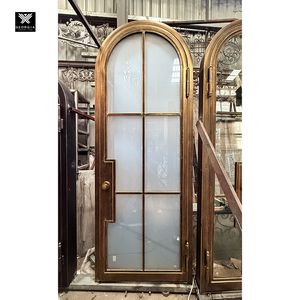
Arched Switchable Glass Steel Single Doors For Houses Front Entry Grilles Smart Frosted Glass Doors Interior Exterior
- PDLC Electronic Privacy Glass
- Handcrafted Decorative Grilles
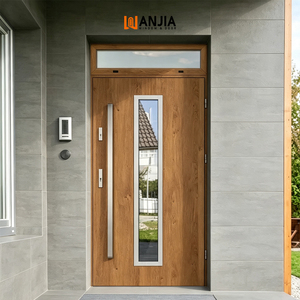
Energy Efficient Security Entry Door With Transom Prehung Unit Front Entry Doors for House Modern Aluminum Doors
- Complete Factory Pre-Hung Unit
- Integrated Overhead Daylight Transom
1. Sourcing China's Best Pivot Entry Door Manufacturers: A Strategic B2B Blueprint
In modern architectural design, the entrance door has evolved from a simple security barrier into a defining architectural statement. Among all entrance configurations, oversized aluminum pivot entry doors represent the pinnacle of luxury, structural engineering, and design sophistication. Unlike traditional hinged doors that hang from frame jambs—imposing severe weight limitations—pivot doors rotate on a top-and-bottom offset axis. This design distributes leaf mass directly down into the concrete slab, allowing architects and builders to specify opening dimensions exceeding 3.5 meters in width and 6 meters in height with door sash weights upwards of 500 kilograms.
China, led by the advanced manufacturing ecosystem in Foshan, Guangdong, has emerged as the premier manufacturing hub for custom architectural pivot doors. Global procurement leaders, real estate developers, and commercial contractors routinely source from top-tier Chinese manufacturers due to unparalleled vertical supply chain integration, raw material processing capabilities, and advanced CNC machining. However, navigating the Chinese supplier landscape requires a rigorous understanding of aluminum alloy grades, structural thermal break engineering, hardware load vectors, and international building certification standards.
Leading factories like Grandor Door Industry Co., Ltd. have addressed historical quality variance by centralizing all critical production stages under a single 155,000 m² operational umbrella. By housing profile extrusion, surface coating, double/triple glass tempering, and robotic precision assembly within one facility, elite Chinese manufacturers ensure that structural tolerances remain within ±0.5mm, eliminating the risk of panel warping or seal failure during ocean transit or after long-term field installation.
2. Technical Anatomy & Structural Mechanics of Commercial Pivot Systems
To evaluate potential factories objectively, procurement directors and engineering consultants must evaluate five core technical pillars that dictate long-term pivot door performance: structural load distribution, thermal break insulation, hardware kinematics, surface treatment longevity, and smart access integration.
1. Profile Engineering & Alloy Grades
Premier pivot entry doors utilize high-grade T6 6063 architectural aluminum extrusions with profile wall thicknesses ranging from 2.5mm to 4.0mm. Multi-chamber designs reinforced with structural ribs prevent torsional twisting across wide glass spans.
2. Polyamide Thermal Break Technology
To eliminate thermal bridging, top factories press Polyamide PA66-GF25 (25% fiberglass reinforced) insulation strips into the inner and outer aluminum frames. This allows assemblies to achieve thermal U-values below 1.4 W/m²K.
3. Heavy-Duty Pivot Hardware Kinematics
Failure in pivot doors almost always traces back to inferior floor spring hardware. Tier-1 manufacturers integrate German or Italian-engineered concealed floor springs featuring hydraulic dampening, 90° hold-open states, and multi-axis alignment.
4. Multi-Point Perimeter Security Locks
Because pivot doors seal on an offset point, standard deadbolts leave corners vulnerable to atmospheric leaks and forced entry. Advanced systems incorporate 5-point motorized drop-bolt locking bars driven by electronic actuators.
5. Fluorocarbon (PVDF) & Anodized Coatings
For extreme coastal environments (C4/C5 corrosion ratings), profiles undergo a 3-coat PVDF fluorocarbon baking process or 25-micron anodization, guaranteeing 20+ years of resistance against salt fog, UV degradation, and chalking.
6. Biometric & Smart Automation Ready
Seamless integration with modern smart home ecosystems: 3D facial recognition cameras, encrypted RFID keycards, hidden biometric thumbprint sensors, and motorized auto-opening drives hidden inside the header profile.
Technical Insight: Deflection Ratios & Structural Wind Pressure
When specifying oversized pivot entry doors for high-rise luxury towers or hurricane-prone coastal communities (such as Florida, Australia, or the Caribbean), structural engineers must evaluate the sash's deflection ratio under maximum wind load pressure (ASTM E330 / AS2047 testing). Standard casement doors exhibit structural deflection at lower wind speeds due to hinge point concentration. In contrast, a heavy-duty pivot door engineered by Grandor utilizes an internal vertical stainless-steel tensioning rod running through the core of the aluminum panel. This tensioning system allows field adjustment against environmental sagging while absorbing lateral wind pressure up to 4500 Pascals (Pa).
3. Structural & Architectural Door Performance Matrix
A direct technical comparison highlighting how Thermal Break Aluminum Pivot Doors perform against traditional residential door configurations across key international engineering metrics.
| Performance Specification | Grandor Thermal Pivot System | Heavy-Duty Casement Door | Standard Sliding System | Solid Timber Exterior Door |
|---|---|---|---|---|
| Maximum Sash Opening Width | Up to 3,000 mm | 1,200 mm | 1,800 mm per panel | 1,100 mm |
| Maximum Sash Weight Capacity | 350 kg - 600 kg | 120 kg | 250 kg | 90 kg |
| Thermal Transmittance (U-Value) | 1.2 - 1.6 W/m²K | 1.4 - 1.8 W/m²K | 1.8 - 2.4 W/m²K | 2.2 - 3.0 W/m²K |
| Wind Pressure Resistance (Pa) | 3,500 - 5,000 Pa | 2,500 Pa | 3,000 Pa | 1,500 Pa |
| Acoustic Insulation Rating (STC/Rw) | 38 dB - 44 dB | 35 dB | 32 dB | 28 dB - 32 dB |
| Security Rating Standard | PAS 24 / RC3 Grade | RC2 Grade | Basic Multi-point | Single Deadbolt |
| Maintenance & Lifecycle Expectancy | 30+ Years (Corrosion Free) | 20 Years | 15 Years | 5-10 Years (Requires Re-staining) |
4. Why Grandor Represents China's Premier Entry Door Manufacturing Facility
Selecting the right OEM/ODM factory in China is the critical variable determining project profit margins, installation timelines, and client satisfaction. Grandor Door Industry Co., Ltd. stands at the forefront of China's architectural metal manufacturing sector. Situated in Foshan, Guangdong, Grandor operates an expansive 155,000 m² modern manufacturing complex supported by over 16 years of direct international exporting experience.
Complete In-House Production Verticality
Unlike regional assemblers that outsource components, Grandor performs aluminum profile extrusion, thermal break stripping, fluorocarbon surface coating, glass tempering, and CNC corner crimping 100% inside our own facility.
Stringent Global Quality Certification
Grandor product lines are certified to meet or exceed rigorous international performance metrics, including ISO 9001, CE (EN 14351-1), Australian Standards AS 2047 / AS 1288, and NFRC energy ratings for North America.
Full Engineering & BIM/CAD Support
Every commercial order is backed by dedicated structural engineers who generate shop drawings, wind load calculation reports, thermal simulation models, and BIM objects prior to cutting production extrusions.
5. Product Development & Engineering Trends in Pivot Door Manufacturing
As global architectural preferences lean toward minimal sightlines, seamless indoor-outdoor transitions, and extreme energy conservation, pivot door technology is undergoing rapid evolution. Foreign buyers should align with factories actively investing in next-generation manufacturing capabilities:
1. Ultra-Low U-Value Passive House Glazing
Future pivot doors will integrate triple and quadruple-glazed argon/krypton filled units combined with Aerogel-infused thermal break profiles to achieve U-values under 0.8 W/m²K for Passive House projects in cold climate zones.
2. Concealed Magnetic Levitation Hardware
The next frontier in zero-threshold opening mechanics involves MagLev pivot assist drives. These systems neutralize physical sash friction, allowing a 500kg heavy-duty door panel to open smoothly with a push force under 5 Newtons.
3. Dynamic Smart Glass & Solar Integration
Integration of electrochromic PDLC switchable privacy glass powered by ultra-thin organic photovoltaic (BIPV) solar cells embedded directly into the door's glass pane, enabling wireless smart privacy control.
6. Future Sourcing & Procurement Trends for International Buyers
Global economic shifts and freight dynamics are reshaping how architects, developers, and door importers procure high-end architectural products from China. Adapting to these trends ensures maximum supply chain resilience and cost efficiency:
1. Shift to Factory Pre-Hung Unitized Crate Shipping
To bypass astronomical jobsite labor costs overseas, buyers are demanding 100% factory pre-hung units. Doors are fully assembled, pre-calibrated on factory floor springs, tested, and shipped intact inside customized steel-reinforced timber crates.
2. Parametric BIM CAD Workflows
Leading developers require direct integration between architectural Revit files and factory CNC tooling software. Grandor accepts 3D parametric CAD models, transferring dimensions directly to automated cutting lines to eliminate manual translation errors.
3. Transparent Supply Chain Carbon Audits
With Western markets introducing carbon border adjustments (CBAM), importers are selecting factories utilizing low-carbon recycled aluminum billets, non-toxic powder coatings, and zero-VOC structural adhesives backed by verified EPD (Environmental Product Declaration) certificates.
7. Frequently Asked Questions (FAQ) for Global Buyers
Detailed answers addressing critical engineering, logistics, compliance, and custom ordering questions.
What technical parameters are required to prepare a precise factory price proposal?
To issue an authoritative price and engineering proposal, our technical team requires: (1) Architectural opening dimensions (rough opening width x height x wall thickness), (2) Door operation type (Pivot vs Casement vs Sliding), (3) Target performance metrics such as U-value, acoustic STC rating, or Florida Hurricane Wind Load pressure, (4) Glass specifications (e.g., 6mm Low-E + 12Ar + 6mm Tempered), (5) Preferred hardware brand or security locking preferences, and (6) Destination port for freight calculations.
Why choose thermal-break aluminum profiles over traditional non-thermal aluminum?
Standard aluminum is a highly conductive metal, meaning heat quickly transfers through the frame, causing energy loss and internal condensation. A thermal break consists of an engineered low-conductivity Polyamide PA66-GF25 strip mechanically locked between the interior and exterior aluminum profiles. This structural barrier reduces heat transfer by up to 60%, eliminates interior sweat/mold, and allows the door system to easily meet strict energy codes like North American NFRC or European CE specifications.
How does a pivot entry door handle water tightness and air infiltration?
Because pivot doors rotate around an offset axis rather than side hinges, sealing the top and bottom pivot gaps requires advanced engineering. Grandor pivot doors utilize a dual-stage perimeter EPDM weather-stripping system combined with drop-down automatic bottom acoustic drop seals. When the door closes, heavy-duty mechanical plungers deploy a rubber sweep seal directly against the floor threshold, achieving water tightness resistance tested up to 450 Pascals.
Can Grandor manufacture completely bespoke sizes, finishes, and smart hardware integration?
Yes. Because profile extrusion, powder coating, PVDF painting, wood-grain heat transfer, and CNC machining are done 100% in-house, Grandor specializes in fully custom architectural units. We routinely build pivot doors up to 3000mm x 6000mm in custom RAL colors, anodized bronze, or natural timber textures. Furthermore, hardware pre-cutouts can be customized for any major European smart lock, electric strike, or biometric system.
What protection methods prevent shipping damage during container ocean freight?
Heavy architectural door systems require specialized export packaging. Every Grandor door frame and panel undergoes: (1) Protective surface film masking, (2) Corner guard shock absorption, (3) Multi-layer bubble wrap insulation, and (4) Encapsulation inside a fully enclosed, IPPC-certified fumigated plywood crate with internal steel frame bracing. Crates are engineered with bottom fork slots for safe offloading on local jobsites.
Does Grandor supply large-scale commercial real estate and residential builder orders overseas?
Yes. Our 155,000 m² manufacturing plant maintains an annual capacity exceeding 300,000 square meters of high-end window and door systems. We regularly partner with commercial real estate developers, hotel chains, and residential luxury builders in Australia, the United States, Canada, the Middle East, and Europe, providing factory-direct pricing, certified shop drawings, and dedicated project manager oversight from order placement to site installation.