Featured Heavy-Duty Impact & Security Entry Doors
Factory-direct architectural entrance systems engineered for severe storm resistance, High-Velocity Hurricane Zone (HVHZ) compliance, and high-security commercial or luxury residential projects.
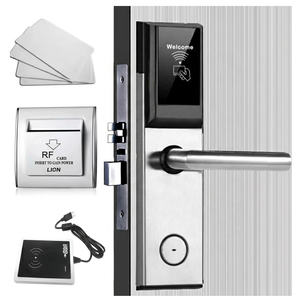
RFID Hotel Door Lock with Key Card Management Hotel Software Keyless Entry 13.56mhz Sensor and Area Control for Hotel Resort
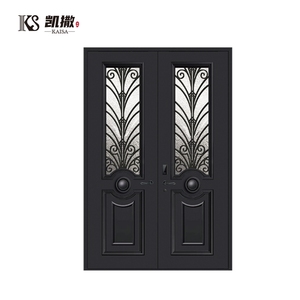
Residential Project Europe Aluminum Security Doors for Houses Exterior Front Villa Entry Doors
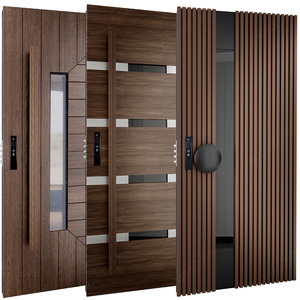
Residential: Exterior Aluminum Security Entrance Door Aluminum Blast Front Door With Security Features For Villas
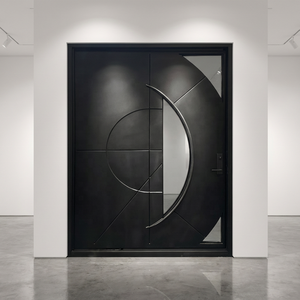
Custom Modern Matte Black Steel Full Height Pivot Door with Geometric Glass Cutouts C Shape Handle for Luxury Home
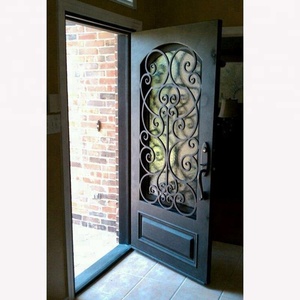
Custom Newest Modern Iron Safety Door Design in Metal Heavy Duty for Residential Villa & Commercial Building
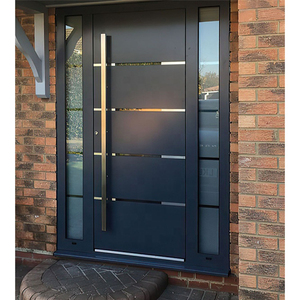
Hot Sale Security Steel Single Gate Door Exterior Metal Security Front Entry Doors for Houses
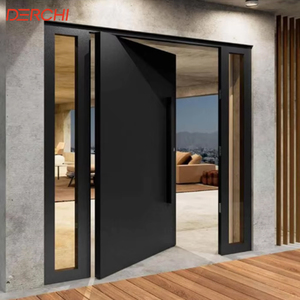
High Quality Exterior Entrance Cast Aluminium Front Main Door Modern Residential With Glass Pivot Security Entry Doors
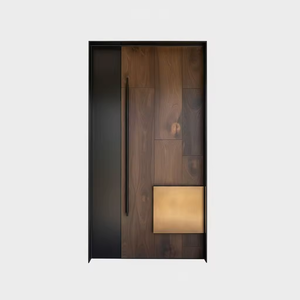
Residential Luxury Modern Pivot Main Entrance Door for Apartment Villa Exterior Front Door Digital Locking Aluminum Pivot Doors
Engineering Principles of Hurricane-Resistant Front Doors
An in-depth technical examination of structural design pressure (DP), missile impact resistance, cyclic fatigue testing, and thermal breaks for international project procurement.
In coastal geography across North America, the Caribbean, Australia, and Southeast Asia, building envelopes face unprecedented structural demands. Extreme weather events—ranging from Category 5 hurricanes to severe typhoons—exert immense dynamic pressures and airborne debris impacts on exterior fenestration. As the primary point of ingress and egress, a luxury villa or commercial building’s front entry door represents both its aesthetic signature and its most critical vulnerability against envelope breach.
When selecting a supplier from China’s top hurricane-resistant front door manufacturers and exporters, commercial buyers, structural engineers, and real estate developers must look beyond surface visual appeal. Evaluating true hurricane resilience requires a comprehensive analysis of metal alloy mechanical properties, internal structural reinforcement, glass lamination chemistry, multi-point lock engagements, and international testing compliance.
High Design Pressure (DP)
Engineered profiles rated from DP50 to DP100+, capable of withstanding wind loads exceeding 200 mph (89 m/s) without permanent deflection or frame dislodgement.
Large Missile Impact (SGP)
Laminated security glass utilizing SentryGlas® (SGP) ionoplast interlayers, tested to absorb 9-lb 2x4 lumber impacts fired at 50 ft/s (TAS 201 / ASTM E1996).
Multi-Point Security Locking
Continuous stainless steel multi-point gearboxes engaging up to 7 locking pins simultaneously across top, bottom, and side jambs to eliminate frame bowing under pressure.
1. Physics of Wind Load & High-Velocity Hurricane Zones (HVHZ)
During extreme windstorms, severe atmospheric pressure differentials develop between a structure's exterior envelope and interior spaces. If wind forces breach the front entry door, internal air pressure spikes rapidly, often causing catastrophic roof lifting and wall collapse. Consequently, standards such as Florida’s High-Velocity Hurricane Zone (HVHZ) code, Miami-Dade NOA protocols, and ASTM E1886/E1996 dictate strict performance criteria for exterior doors:
- TAS 201 (Large & Small Missile Impact Test): Evaluates structural integrity when exposed to heavy airborne debris. The door sash and glazed panels must withstand direct missile impacts without tearing the interlayer or breaching the frame assembly.
- TAS 202 (Uniform Static Air Pressure Test): Subjects the complete door assembly to extreme positive and negative static pressures to measure structural deflection, air infiltration, and water penetration under driving rain.
- TAS 203 (Cyclic Wind Pressure Loading): Subjects the door to 9,000 rapid cycles of positive and negative pressure variations following missile impact, testing structural fatigue in hinges, latches, and extruded aluminum joints.
Engineering Focus: High-Tension Extruded Aluminum vs. Steel
While traditional steel doors provide initial structural rigidity, untreated steel suffers from severe internal corrosion in humid, salt-rich coastal environments. Leading Chinese exporters utilize heavy-gauge 6063-T6 or 6060-T66 architectural aluminum extrusions featuring structural wall thicknesses up to 3.0mm–4.0mm, paired with internal galvanized steel core stiffeners. This hybrid construction prevents electrolytic reaction while providing superior strength-to-weight ratios for oversized pivot and double-swing entrance configurations.
2. Advanced Glazing Systems for Hurricane & Forced Entry Resistance
Modern architectural trends favor full-height front doors featuring decorative or transparent glass cutouts. Achieving hurricane resilience in glazed entry doors requires advanced lamination engineering. Standard Polyvinyl Butyral (PVB) interlayers often tear under intense cyclic pressure following impact. Top-tier Chinese manufacturers employ SentryGlas® (SGP) ionoplast interlayers, which are up to 5 times tougher and 100 times stiffer than conventional PVB.
A typical HVHZ-compliant glazing schedule for luxury entry doors features a double-sealed insulated laminated build-up:
- Outer Layer: 6mm or 8mm High-Toughness Low-E Tempered Glass (reflects solar heat while providing impact resistance).
- Air/Gas Gap: 12A / 16A Argon Gas Filled Spacer with warm-edge Technform swisspacers to maximize thermal isolation.
- Inner Laminated Core: 6mm Tempered Glass + 1.52mm SGP Interlayer + 6mm Tempered Glass.
Even if the outer glass pane fractures during severe storm impact, the inner SGP laminated core remains structurally rigid within its structural silicone glazing pocket (using Dow Corning 995 structural adhesive), preventing wind and water from breaching the building interior.
Front Door Structural & Performance Matrix
Compare material attributes across Cast Aluminum, Extruded Thermal Break Aluminum, Heavy-Duty Steel, and Wrought Iron front entry systems.
| Performance Metrics | Cast Aluminum Doors | Extruded Thermal Break Aluminum | Reinforced Heavy Steel | Wrought Iron Safety Doors |
|---|---|---|---|---|
| Hurricane DP Rating | DP65 - DP90 (High) | DP70 - DP100+ (Ultra High) | DP50 - DP80 (Moderate-High) | DP40 - DP60 (Moderate) |
| Coastal Corrosion Resistance | Class C5-M (30+ Yrs PVDF) | Class C5-M (Anodized/PVDF) | Moderate (Requires Galvanization) | Low-Moderate (Prone to Rust) |
| Thermal Insulation (U-Factor) | 0.28 - 0.35 BTU/h·ft²·°F | 0.18 - 0.26 BTU/h·ft²·°F | 0.32 - 0.45 BTU/h·ft²·°F | 0.50 - 0.75 (Poor Isolation) |
| Maximum Panel Height | Up to 3,500 mm | Up to 4,500 mm (Pivot) | Up to 3,000 mm | Up to 3,200 mm |
| Hardware Integration | Multi-Point / Smart Lock Ready | German Siegenia / HOPPE / Smart | Heavy-Duty Mortise Lock | Traditional Mechanical Deadbolts |
| Maintenance Requirements | Zero Maintenance | Near Zero Maintenance | Periodic Anti-Rust Coating | Frequent Painting / Rust Control |
Future B2B Procurement Trends in Entry Systems (2025–2030)
Key design, technological, and environmental developments shaping international commercial and residential entrance purchasing.
1. Smart Access & IoT Hardware Integration
The global luxury door market is moving rapidly away from mechanical keys. Future-proof front doors feature fully integrated, weatherproof 3D facial recognition sensors, 13.56MHz RFID keyless access, biometric fingerprint readers, and motorized multi-point locks that sync via Wi-Fi/Zigbee with smart home management systems—without compromising impact pressure seals.
2. Oversized Modern Pivot Entrances
Architects are increasingly specifying grand floor-to-ceiling pivot doors scaling up to 4.5 meters in height and 2.0 meters in width. Engineering these massive sashes to survive hurricane-force winds requires custom-engineered floor springs, top-concealed heavy pivot hinges rated for 500kg+ loads, and internal anti-warping tension rods.
3. Decarbonized Production & Thermally Broken Cores
Energy codes across North America and Europe (such as Title 24 and Part L) demand strictly enforced thermal transmittance standards. Procurement managers are prioritizing doors crafted with polyamide PA66-GF25 thermal breaks and eco-friendly primary aluminum melted with renewable hydropower, reducing embedded carbon footprints while lowering building HVAC consumption.
Grandor Door Industry Co., Ltd. Enterprise Competency
Why leading global developers, importers, and architects partner with our centralized manufacturing ecosystem in Foshan, China.
A primary challenge for international B2B buyers importing architectural doors from Asia is fragmented quality control—where profile extrusion, surface treatment, glass toughening, and final lock assembly are subcontracted across disparate third-party workshops. Grandor Door Industry Co., Ltd. resolves this structural inefficiency through complete vertical integration under one roof at our 155,000 m² state-of-the-art facility in Foshan, Guangdong.
Fully In-House Manufacturing Control
From primary aluminum billet extrusion and precision CNC machining to automated PVDF powder coating, insulated glass tempering, and multi-point hardware calibration—every manufacturing step is audited by our internal quality assurance team. One single accountable supplier guarantees consistent dimensional tolerances, unified color matching, and reliable lead times.
Global Standard Compliance & Testing
Our storm-resistant windows and front doors are engineered and certified to meet international building standards, including ISO 9001 quality frameworks, European CE (EN 14351-1), Australian AS 2047 / AS 1288 performance benchmarks, and North American NFRC / ASTM structural ratings. Complete structural calculations and test reports are provided during project shop drawing approval.
Our End-to-End Quality & Export Process Workflow
CAD & BIM Engineering
Direct review of architectural elevations, shop drawings, wind load calculations, and hardware schedules.
In-House Extrusion & Coating
Precision alloy extrusions coated in AkzoNobel or PPG PVDF finishes, tested for 30-year salt-spray resistance.
Glazing & Assembly
SGP laminated glass tempering, robotic structural silicone injection, and multi-point lock alignment.
Crater Export Packing
Steel-reinforced plywood crating with vacuum foil wrapping to prevent sea-freight humidity damage.
Frequently Asked Questions for Overseas Importers
Technical and logistical guidance for procurement directors, builders, and developers sourcing doors from China.
How do Chinese manufacturers verify hurricane impact ratings for overseas building codes?
Leading exporters like Grandor verify structural performance through third-party international testing laboratories (such as Intertek, SGS, or TUV) according to ASTM E1886, ASTM E1996, and Florida Building Code TAS 201/202/203 standards. Additionally, our internal engineering department utilizes Finite Element Analysis (FEA) computer simulations to verify frame deflection, stress distribution, and glass load capacity before physical dies are extruded for custom architectural projects.
What is the key structural difference between standard security doors and HVHZ-certified hurricane front doors?
A standard security door relies primarily on steel sheet thickness and basic deadbolts to resist forced entry. In contrast, an HVHZ-certified hurricane front door is engineered to withstand massive structural wind pressure and debris impact simultaneously. This requires reinforced heavy-wall extruded aluminum profiles (3.0mm+), internal structural steel stiffeners, continuous perimeter EPDM weather gaskets, SGP ionoplast laminated impact glass, and multi-point locking gearboxes that secure the sash to the frame at up to 7 distinct points.
How does Grandor prevent hardware degradation and rust in coastal salt-spray environments?
For coastal and marine installations, we eliminate galvanic corrosion by specifying 316-grade stainless steel lock bodies, hinges, and handles. All aluminum surfaces undergo multi-stage pretreatment followed by fluorocarbon (PVDF) powder coating tested to withstand over 3,000 hours of continuous salt spray (ASTM B117). Fasteners are isolation-coated to prevent direct contact between dissimilar metals.
What technical data is required to receive an accurate shop drawing and quotation?
To prepare a professional engineering proposal, our team requires: (1) Architectural drawings or rough opening dimensions; (2) Door schedule indicating opening mechanisms (pivot, single swing, double swing); (3) Required performance targets (e.g., DP rating, U-factor, STC acoustic rating); (4) Preferred frame finish (PVDF powder, wood-grain, anodized) and glass spec; and (5) Destination port and estimated project delivery timeline.
How are oversized glass and pivot doors packaged to prevent damage during ocean transport?
Export door systems are packaged inside fully enclosed, fumigated, steel-framed plywood crates. Door sashes are wrapped in protective polyethylene films, corner-guarded with high-density EVA foam blocks, and vacuum-sealed with desiccant packs to prevent moisture condensation during ocean transit. Heavy pivot assemblies and glass panels are crated separately or pre-assembled in knock-down (KD) frame configurations for easy job-site hoisting.
Start Your Custom Hurricane Door Project Today
Connect directly with Grandor's senior architectural engineering team. We provide complete technical consultation, structural shop drawings, and competitive direct-factory quotations within 24 hours.