Heavy-Duty Reinforced Aluminum Frames & Entrance Systems
Explore our factory-direct, thermally isolated, and high-security structural aluminum frame solutions tailored for high-end residential villas and commercial developments.
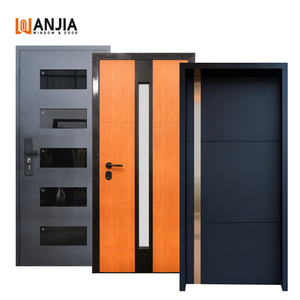
Contemporary Architectural Residential Exterior Entrance Door Sound Insulation Front Entry Doors Soundproof Security Door
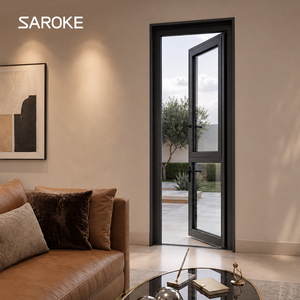
American Standard House Black Metal Patio Exterior Thermal Break Aluminum Doors and windows
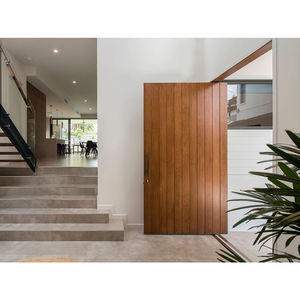
Modern Design Solid Wood Pivot Entry Door for Villa Finished Surface Manufactured by House Entrance Door
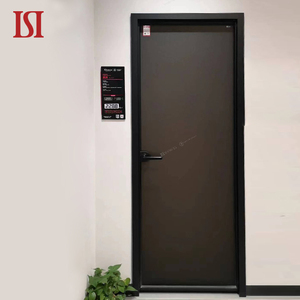
Top Brand Modern Simple Aluminum Swing Door Black Aluminum Frame High Quality Alloy Material For Bedroom Custom Minimalist
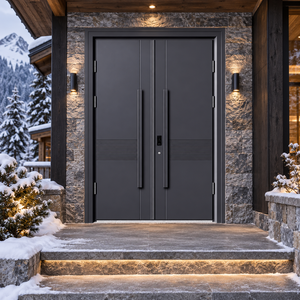
Customized Desert Villa Gate Oversized Bronze Double Entry Door with Circular Gold Medallion and Greek Key Decoration
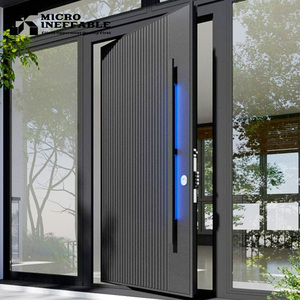
High Performance Rustproof Aluminum Pivot Exterior Door with Double Weather Stripping and Adjustable Pivot Hinge
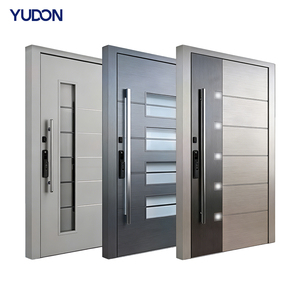
YUDON DOOR Luxury American Design Exterior Pivot Entrance Door Zinc Alloy Anti-Theft Fireproof Bulletproof Glass Door
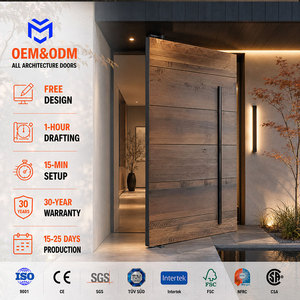
Custom OEM American Modern Durable Aluminium Wooden Residential Home Villa Entrance Security Front Entry Exterior Pivot Doors
Why Global Developers & Procurement Directors Select Grandor
Operating a vertically integrated 155,000 m² smart production ecosystem in Foshan, China, Grandor Door Industry Co., Ltd. eliminates supply chain fragmentation, guaranteeing structural perfection and certified thermal efficiency.
100% In-House Extrusion & Milling
Unlike assemblers who outsource profile extrusion, Grandor manages aluminum alloy billet casting, precision extrusion die creation, CNC milling, and thermal-break strip insertion inside a single unified facility. This controls wall thickness tolerance down to ±0.15mm.
Multi-Point High-Security Engineering
Reinforced aluminum door frames designed by Grandor incorporate heavy-duty internal steel gusseting, anti-pry lock pocket recesses, and multi-point hardware integration that satisfy rigorous European anti-burglar and North American hurricane impact standards.
Severe Environment Coatings
Equipped with automated vertical powder coating lines, fluorocarbon (PVDF) spray lines, and Italian thermal-transfer wood-grain technology, our frames deliver C5-M marine-grade corrosion resistance capable of surviving 3,000+ hours of continuous salt spray testing.
Technical Whitepaper: Engineering Parameters of Reinforced Aluminum Door Frames
In contemporary architectural design, door frames are no longer viewed merely as passive aesthetic borders; they serve as critical load-bearing structural members of the building envelope. As architects push for oversized glass spans, massive pivot entrances (exceeding 4 meters in height), and ultra-slim sightlines, reinforced aluminum door frame engineering has undergone a monumental shift toward high-tensile alloy formulations, structural polyamide thermal barriers, and advanced corner joinery.
1. Alloy Selection & Mechanical Properties (6063-T6 vs. 6061-T6)
The structural backbone of a heavy-duty reinforced aluminum door frame lies in its metallurgical chemical composition and heat treatment state. Standard architectural frames utilize 6063-T5 aluminum, which offers good extrudability but lower yield strength. For heavy-duty security entrances, commercial curtain wall integrated doors, and heavy pivot systems, Grandor enforces strict usage of high-grade 6063-T6 or structural 6061-T6 aluminum alloys.
- 6063-T6 Alloy: Tensile strength ≥ 205 MPa, Yield strength ≥ 170 MPa, Hardness ≥ 12 Webster (HW). Ideal for intricate extrusion profiles requiring fine surface finishes alongside structural rigidity.
- 6061-T6 Alloy: Tensile strength ≥ 290 MPa, Yield strength ≥ 240 MPa. Utilized in internal structural reinforcement ribs, heavy hinge mounting plates, and bulletproof frame inserts.
- Profile Wall Thickness: While standard residential frames utilize 1.4mm to 1.6mm profiles, Grandor's reinforced door frame series features structural wall thicknesses ranging from 2.0mm to 3.0mm, with critical load points reinforced up to 5.0mm.
| Mechanical Specification | Standard Frames (6063-T5) | Grandor Reinforced Frame (6063-T6) | Grandor Heavy Duty (6061-T6) |
|---|---|---|---|
| Ultimate Tensile Strength | 160 MPa | 215 MPa | 310 MPa |
| Yield Strength (0.2% Offset) | 110 MPa | 185 MPa | 255 MPa |
| Profile Structural Thickness | 1.2 mm - 1.4 mm | 2.0 mm - 2.5 mm | 3.0 mm - 5.0 mm Reinforced |
| Corner Joint Shear Resistance | Low (< 3.5 kN) | High (≥ 8.5 kN) | Extreme (≥ 14.0 kN) |
| Wind Pressure Resistance (ASTM E330) | DP30 - DP40 | DP60 - DP75 | DP90+ (Hurricane Rated) |
2. Polyamide Thermal Break Integration & Thermal Mechanics
Metals are naturally high thermal conductors. To prevent heat transfer between interior and exterior spaces, a reinforced thermal break frame separates the aluminum profile into inner and outer chambers connected by low-conductivity polyamide strips. Grandor utilizes premium PA66-GF25 (Polyamide 66 reinforced with 25% glass fiber) thermal insulation bars.
The thermal expansion coefficient of PA66-GF25 matches aluminum alloys perfectly ($2.3 \times 10^{-5} / K$), preventing delamination or structural slippage during extreme temperature fluctuations between desert heat (+50°C) and sub-zero freeze environments (-30°C). Combined with argon-filled, Low-E double or triple glazing, Grandor frames reduce overall system U-values down to 0.85 - 1.2 W/m²·K, directly contributing to LEED green building accreditation.
3. Corner Crimping Technology & Mechanical Stability
A reinforced frame is only as strong as its weakest joint. Inferior frames rely solely on mechanical screws at 90-degree corners, leading to frame sag, glass stress fractures, and water leakage over time. Grandor incorporates a multi-step joinery methodology:
- Heavy-Duty Cast Aluminum Corner Cleats: Precision-milled solid cleats inserted into the extrusion chambers.
- Hydraulic Dual-Corner Crimping: High-tonnage automated machines cold-press the aluminum profile walls into the internal cleats.
- Two-Component Structural Glue Injection: Specialized epoxy sealant is injected under pressure into corner cavities, completely filling micro-gaps to guarantee structural rigidity and 100% water tightness (EN 12208 Class 9A compliant).
Structural Engineering Insight for B2B Purchasing Directors
When importing door systems for high-wind or coastal zones, verifying frame Moment of Inertia ($I_x$ and $I_y$ values) is essential. Grandor provides complete finite element analysis (FEA) reports alongside shop drawings to verify structural deflection limits ($L/175$ or $L/240$) before extrusion begins.
Global Procurement Trends: Reinforced Aluminum Door Frames (2025–2030)
As international building standards become increasingly stringent regarding energy performance, building security, and carbon footprint accountability, global B2B buyers must adapt to five primary market shifts governing aluminum door frame procurement:
Trend 1: Shift Toward Modern Minimalist Profiles with Deep Structural Core
Architects across North America, Australia, and Western Europe are increasingly specifying minimal frame sightlines coupled with massive door leaf sizes. Buyers are demanding frame systems with visible face widths under 40mm that can still support panel weights exceeding 400kg. Achieving this requires custom internal steel reinforcement cores and high-capacity concealed pivot hinges engineered directly into the frame profile.
Trend 2: Rigorous ESG & Low-Carbon Recycled Aluminum Demand
Decarbonization policies in the EU and Americas have accelerated demand for low-carbon primary aluminum. Leading real estate developers now require EPD (Environmental Product Declaration) certificates. Grandor’s closed-loop scrap recycling and clean-energy extrusion processes ensure profiles contain up to 60% post-industrial recycled content without compromising structural tensile integrity.
Trend 3: Smart Lock & Mechatronic Frame Integration
Traditional mechanical locks are rapidly giving way to motorized multi-point locking mechanisms. Modern reinforced aluminum frames are now extruded with dedicated internal wiring channels, electromagnetic strike cutouts, and concealed contact sensors for seamless integration into smart building control systems and biometric access controls.
Trend 4: Climate Resilience & Extreme Weather Testing
With global climate volatility causing severe storm events, window and door schedules increasingly demand compliance with NFRC, AS 2047, and ASTM hurricane impact standards (Dade County protocols). B2B procurement managers are favoring suppliers capable of providing certified air infiltration (ASTM E283), water resistance (ASTM E547), and structural performance (ASTM E330) test reports from accredited third-party laboratories.
Frequently Asked Questions for Overseas Importers & Contractors
Essential technical, financial, and logistical insights to streamline your wholesale door frame orders from China.
What specific technical data is required to generate an accurate RFQ proposal?
To provide a fully compliant engineering quote, please provide: (1) Architectural drawings or shop elevation schedules detailing opening dimensions; (2) Frame performance requirements such as U-value, Acoustic Rating (STC/Rw), Wind Pressure (DP rating); (3) Alloy finish preference (Powder Coating RAL code, Anodized shade, or Wood-Grain); (4) Glass specification (e.g., 6mm Low-E + 12Ar + 6mm Toughened); and (5) Expected project delivery timeline and target sea freight discharge port.
How does Grandor ensure frame dimensional tolerances across large commercial orders?
Grandor operates automated 5-axis CNC machining centers that perform drilling, milling, and corner cutting on extruded profiles in a single setup. This eliminates cumulative human error, maintaining frame length and diagonal tolerances within ±0.5mm. Furthermore, pre-assembly mockups are conducted in our factory prior to export packaging.
Why choose thermal-break aluminum frames over standard aluminum or uPVC frames?
Standard aluminum frames conduct heat rapidly, resulting in high HVAC energy costs and indoor surface condensation. uPVC, while thermally efficient, lacks structural strength, degrades under intense UV radiation, and cannot support oversized glass panels. Reinforced thermal-break aluminum combines the structural power of high-tensile metal alloy with the thermal isolation of polyamide strips, resisting UV exposure while enabling massive architectural openings.
Can Grandor customize frame extrusion dies for proprietary architectural profiles?
Yes. Our in-house tool and die department manufactures custom extrusion dies based on client CAD/BIM models. We complete die design, testing, sample extrusion, and mechanical testing within 15 to 20 business days, offering exclusive OEM profile protection agreements for distributors and brand owners.
What international certifications do Grandor door frame systems comply with?
Grandor products are tested to international benchmarks including ISO 9001 quality management systems, European CE marking (EN 14351-1), Australian Standards (AS 2047 / AS 1288), and North American NFRC / ASTM acoustic and structural standards. Certified test reports can be supplied upon project request.
How are reinforced aluminum frames packaged to prevent shipping damage?
All finished profiles undergo a 4-layer protective packaging sequence: (1) Protective removable PE film over coated surfaces; (2) EPDM corner guards; (3) Shock-absorbing bubble wrap; and (4) Fumigated fully enclosed plywood crates or steel A-frame racks for seamless container loading and crane unloading on job sites.
What is the standard lead time for wholesale factory production?
Standard production lead times are 25 to 35 days following shop drawing sign-off and deposit receipt. For complex custom anodized or PVDF finishes, or custom extrusion die development, lead times range between 35 and 45 days. Expedited production schedules are available for time-sensitive commercial projects.
Does Grandor offer hardware integration support for local lock brands?
Yes. Our CNC milling equipment can be calibrated to pre-cut lock pockets, hinge mortises, and flush-bolt channels according to any major global hardware specification, including Hopo, Sobinco, Siegenia, GU, Schlegel, or Yale hardware systems.
Partner with China's Premier Reinforced Aluminum Frame Manufacturer
Direct factory pricing, comprehensive shop drawings, certified structural reliability, and dedicated international project support.