Featured Tempered Glass & Architectural Entry Systems
Engineered to comply with international fenestration standards including AS2047, NFRC, CE, and ASTM impact certifications for global residential and commercial developments.
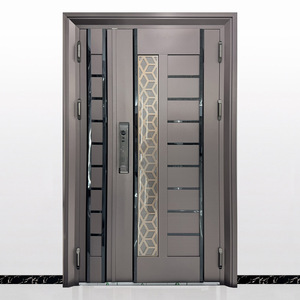
Custom High Quality Modern Design Stainless Steel Security Door Anti-Theft Waterproof Intelligent Lock Entry Exterior Bedroom
Inquire Now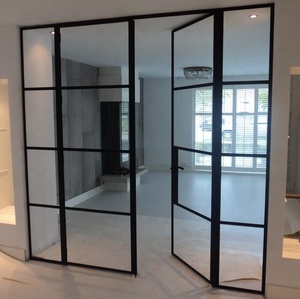
HOTIAN French Black Balcony Patio Door Wrought Iron Swing Crittall Door Steel Glass Saloon Windows And Doors
Inquire Now
Customized Large Size Soundproof Impact Resistant High Performance Hurricane Proof Modern Thermal Break Aluminum Folding Door
Inquire Now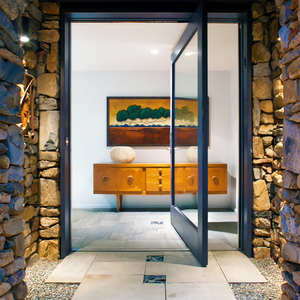
Florida Miami-Dade Approved NFRC North American Style Big Panel Tempered Glass Aluminium Modern Entry Front Pivot Doors
Inquire Now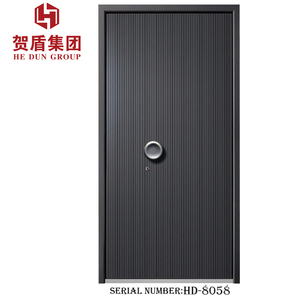
Cast Aluminum Security Door Entrance Doors for Home Embossed Relief Carving Moisture Resistance Sound Insulation Farmhouse
Inquire Now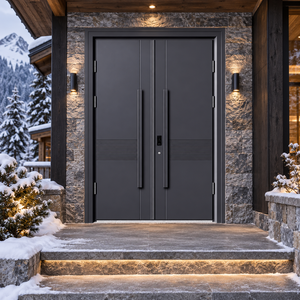
Customized Desert Villa Gate Oversized Bronze Double Entry Door with Circular Gold Medallion and Greek Key Decoration
Inquire Now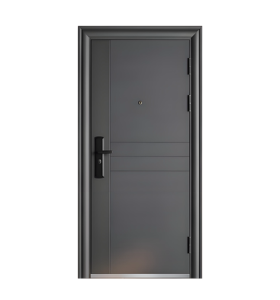
MDF Exterior Modern Steel High-Quality Bulletproof Residential Security Front Door
Inquire Now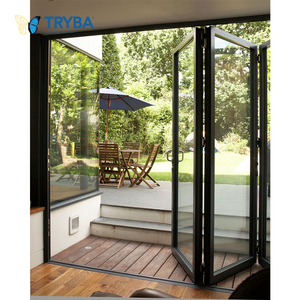
Modern Design Outdoor Aluminum Folding Patio Doors Economic Accordion Style with Multi-Locking Vertical Bi-Fold Screen
Inquire Now1. Executive B2B Procurement Whitepaper: China's Role in Modern Architectural Entry Systems
The global architectural landscape is undergoing a monumental paradigm shift. Modern architectural design increasingly demands grand open spans, maximal natural light transmission, robust structural integrity, and uncompromising energy performance. At the center of this transformation is the tempered glass entry door—a critical building envelope component that bridges high-end aesthetic appeal with severe structural security. As luxury residential estates, commercial headquarters, and high-density urban developments elevate their performance thresholds, global procurement directors, real estate developers, and façade contractors are turning to specialized OEM/ODM factories in China for tailored, high-precision door and window solutions.
China has solidified its position as the world's leading hub for advanced fenestration manufacturing, accounting for over 50% of the world's architectural glass processing and aluminum extrusion capacity. Leading manufacturers, such as Grandor Door Industry Co., Ltd., operate fully integrated 155,000 square meter smart production campuses in Foshan, Guangdong. Unlike traditional assembly workshops that rely on fragmented subcontracting networks, top-tier Chinese exporters execute raw material extrusion, powder-coating, anodizing, glass tempering, double-glazing unit (IGU) fabrication, and full-scale mock-up assembly under one centralized quality management system (ISO 9001 certified). This total operational control minimizes supply chain friction, mitigates dimensional tolerance stacking, and guarantees strict compliance with demanding overseas codes such as Australia's AS2047 / AS1288, North America's NFRC / ASTM, and Europe's CE EN 14351-1 standards.
2. Material Science & Manufacturing Engineering: Toughened Glass & Thermal Break Systems
To evaluate the structural reliability of a tempered glass entry door, global procurement managers must look beyond surface aesthetics into the core physics of thermal toughening, glass laminating, and aluminum alloy metallurgy.
2.1 The Physics of Thermal Glass Tempering & Safety Performance
Standard float glass exhibits a bending strength of approximately 40 to 50 MPa. During the tempering process at Grandor's automated glass processing lines, float glass sheets are uniformly heated to temperatures between 620°C and 680°C—exceeding the glass transformation point—and subsequently subjected to rapid, controlled air quenching. This thermal shock rapidly cools the outer surfaces, locking them in a state of high compressive stress (exceeding 90 to 120 MPa), while the central core remains under tensile tension. Consequently, fully tempered safety glass exhibits 4 to 5 times the flexural and impact strength of annealed glass. When fractured under catastrophic load, it disintegrates into small, blunt, dice-like fragments, drastically reducing the risk of severe lacerations and meeting strict international impact safety standards (ANSI Z97.1, EN 12150, and AS/NZS 2208).
2.2 Heat Soak Testing (HST) to Eliminate Spontaneous Explosion Risk
A major concern for architects specifying large-format glass pivot doors is spontaneous breakage caused by microscopic Nickel Sulfide (NiS) inclusions present in raw float glass. Over time, ambient temperature fluctuations trigger a phase transformation in NiS crystals, expanding their volume and creating localized internal tension that can shatter tempered panels without external warning. Premier Chinese factories mitigate this risk by subjecting all exterior tempered panels to mandatory Heat Soak Testing (HST) according to EN 14179. Glass sheets are held at 290°C for a minimum of two hours in a specialized oven, deliberately triggering premature fracture of contaminated panels on the factory floor rather than at the client's jobsite.
2.3 Architectural Aluminum Alloy & Polyamide Thermal Break Engineering
Glass performance is fundamentally constrained by its framing system. High-performance entry systems utilize 6063-T5 or 6063-T6 architectural grade aluminum extrusions with nominal wall thicknesses ranging from 2.0mm to 3.0mm for heavy-duty pivot and bi-fold doors. To counteract the high thermal conductivity of metal frames, multi-chambered Polyamide (PA66-GF25 reinforced with 25% fiberglass) thermal barrier strips are mechanically crimped between the interior and exterior aluminum profiles. This thermal break effectively interrupts heat conduction, lowering total system U-factors to as low as 1.2 W/m²K when paired with double-silver Low-E insulated glass units (IGUs) filled with 95% pure Argon gas.
Fenestration System Engineering Benchmarks
| Door Category System | Primary Alloy / Core | Standard Glazing Build-up | Thermal U-Factor Range | Acoustic Rating (STC) | Key Compliance Standard |
|---|---|---|---|---|---|
| Modern Front Pivot Entry Doors | 6063-T6 Aluminum (3.0mm) | 6mm Low-E + 1.52SGP + 6mm Tempered | 1.2 – 1.6 W/m²K | 38 – 42 dB | Miami-Dade TAS 201/202/203, NFRC |
| Thermal Break Bi-Fold Patio Doors | 6063-T5 Aluminum (2.0mm) | 6mm Temp + 12Ar + 6mm Low-E Temp | 1.4 – 1.8 W/m²K | 35 – 40 dB | AS2047, AS1288, CE EN 14351-1 |
| Crittall Style Wrought Iron Swing | Low-Carbon Steel / Hot-Dip Galvanized | 5mm Temp + 9Ar + 5mm Tempered Clear | 2.2 – 2.8 W/m²K | 32 – 36 dB | ISO 1461 Galvanizing, EN 10365 |
| Cast Aluminum Embossed Villa Doors | Solid Cast Al Panel + Rockwool Core | Double Glazed Privacy Art Glass (8mm) | 1.0 – 1.4 W/m²K | 40 – 45 dB | GB/T 8478, Bullet Resistance UL 752 |
| Stainless Steel Intelligent Security Doors | 304 / 316 Stainless Steel Shell | Bulletproof/Laminated Tempered Glass | 1.5 – 2.0 W/m²K | 36 – 42 dB | EN 1627 RC3 / RC4 Burglar Proof |
Core OEM/ODM Capabilities of Top Chinese Exporters
In-House Extrusion & Powder Coating
Vertical integration allows seamless extrusion of custom architectural dies up to 400mm cross-sections. Surface treatments include AkzoNobel fluorocarbon (PVDF) powder finishes capable of enduring 30-year salt spray exposure tests without chalking or peeling.
Advanced Multi-Point Security & Smart Hardware
Equipped with heavy-duty German concealed hardware (Siegenia, GU, Roto) or customized high-load 500kg pivot hinges. Dual-motor biometric locksets integrate fingerprint, RFID, OLED touchpads, and smart home automation interfaces (RS485/Zigbee).
Export-Ready Structural Crating & Logistics
Glazed units are wrapped in protective polyethylene films, separated by shock-absorbing cork pads, and secured inside fully enclosed ISPM 15 compliant fumigated wooden crates with reinforced steel banding to prevent transit damage during sea transport.
3. Future Procurement Trends in Tempered Glass & Architectural Doors (2025–2030)
As international energy codes tighten and architectural design trends evolve, modern door procurement is shifting away from standardized off-the-shelf units toward highly customized, high-performance building systems. Key trends shaping procurement over the next decade include:
3.1 Vacuum Insulated Tempered Glass (VIG) Integration
Traditional double-glazed IGUs rely on air or argon gas gaps (typically 12mm to 16mm thick) to reduce thermal conduction. Emerging next-generation entry systems incorporate Vacuum Insulated Glass (VIG), where a microscopic vacuum gap (0.15mm) is maintained between two tempered glass sheets supported by micro-pillars. VIG technology achieves U-factors as low as 0.60 W/m²K in ultra-thin profile depths, matching the thermal resistance of solid masonry walls while maintaining crystal-clear transparency.
3.2 Oversized Monolithic Pivot Entrances
Architectural luxury trends favor grand floor-to-ceiling entry statements. Standard swing door heights of 2.1 meters are rapidly giving way to custom pivot doors standing 3.5 to 5.0 meters high and up to 2.2 meters wide. Manufacturing these massive panels requires specialized high-capacity tempering furnaces, ultra-flat glass processing to prevent optical distortion, and structural SGP (SentryGlas) interlayers to ensure high wind load resistance (exceeding 5000 Pa design pressure).
3.3 Hurricane Impact & Extreme Weather Resilience
With the increasing frequency of severe storm events across coastal regions in North America, Australia, and the Caribbean, hurricane impact certification has transformed from an optional upgrade to a mandatory requirement. High-end Chinese exporters utilize multi-layered laminated tempered glass featuring 1.52mm or 2.28mm SentryGlas interlayers capable of withstanding large-missile impact testing (a 9-pound 2x4 wooden stud fired at 50 feet per second) followed by 9,000 cycles of positive and negative pressure loading (Miami-Dade NOA standard).
3.4 Low-Carbon Recycled Aluminum & Decarbonized Manufacturing
Environmental, Social, and Governance (ESG) criteria are playing a pivotal role in vendor selection for commercial developments. Leading factories are adopting primary aluminum billets smelted using renewable hydro-electric energy, as well as incorporating up to 75% post-consumer recycled aluminum, significantly reducing the embodied carbon footprint of exported architectural systems.
Frequently Asked Questions (FAQ) for Overseas Buyers
Direct technical answers addressing international compliance, customization, quality verification, and shipping procedures.
What technical documentation is required for custom window and door proposals?
Why should developers specify thermal break aluminum instead of standard aluminum framing?
How do China factories guarantee compliance with local standards like AS2047, NFRC, and CE?
What is the difference between SGP laminated glass and standard PVB laminated glass for entry doors?
Can sizes, glass tints, and smart hardware be customized for commercial wholesale orders?
What packaging and containerization measures prevent damage during international ocean freight?
4. Why Partner with Grandor Door Industry Co., Ltd.?
With over 16 years of dedicated engineering and export excellence, Grandor Door Industry Co., Ltd. stands at the forefront of China's premium architectural window and door manufacturing sector. Operating from a state-of-the-art 155,000 m² smart facility in Foshan, Guangdong, Grandor integrates raw material extrusion, surface finishing, precision glass processing, thermal break assembly, and pre-shipment quality verification under one roof.
Supporting an international footprint spanning 60+ countries and backed by a global network of over 800 retail and distribution partners, Grandor delivers institutional-grade fenestration packages for landmark private villas, luxury multi-family developments, and high-profile commercial complexes. Whether your project requires Florida Miami-Dade hurricane-approved pivot doors, soundproof bi-fold patio systems, or bespoke cast aluminum villa gates, Grandor provides single-source accountability, precise shop drawings, competitive factory-direct pricing, and dependable lead times.
Request a Factory-Direct Technical Proposal
Submit your architectural drawings, door schedules, or project performance specifications. Our fenestration engineering team will deliver a comprehensive submittal package and pricing within 24 hours.
Inquire Now