Featured Architectural Entry Door Systems
Precision-engineered exterior doors, cast aluminum security entry gates, and heavy-duty thermal break pivot systems customized for commercial & residential projects worldwide.
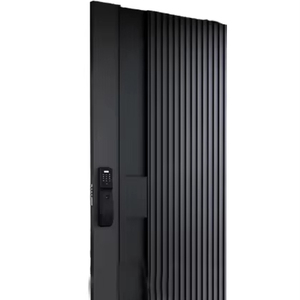
BST Ex-01 Modern Aluminium Anti-Theft Security Exterior Entry Door with 5 Year Warranty for Residential & Hotel Use
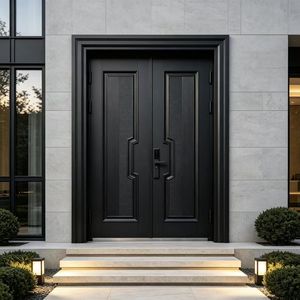
Big Size Villa Entrance Security Door Cast Aluminum Alloy Heavy Duty Anti-Theft Pivot Luxury Main Entry Gate Smart Modern Hotel
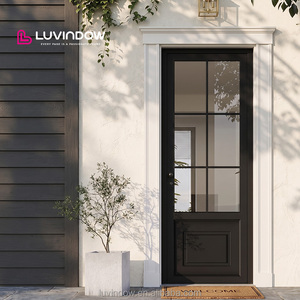
Custom Aluminum Swing Doors Energy Efficiency Double Glass Patio Door Factory Direct OEM ODM Supplier
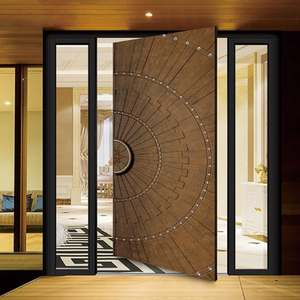
Customizable Aluminum Double Pivot Door with Smart Lock for Outdoor Entry Villa Exterior Main House Security
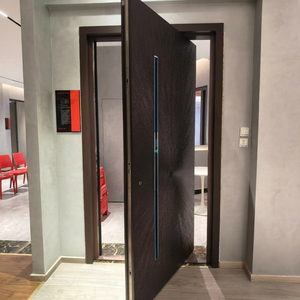
Custom Villa Entrance Door Modern Minimalist Cast Aluminum Side Swing Safety Door European Aluminum Art Carving Sound Insulation
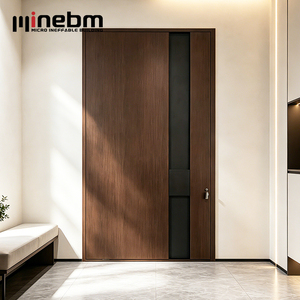
Italian Luxury Design Entrance Door Exterior Security Front Pivot Door Modern Entry Pivot Door

SODERFE Customized Oversized Steel Security Door, Luxury Villa Main Entry Door, Project-Ready Pivot Entrance Door with CAD
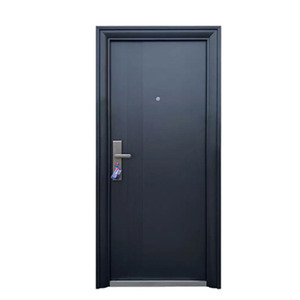
Custom Size Anti-Theft Galvanized Steel Security Front Entry Door Modern Exterior Steel Door For Villa Apartment House
1. Strategic Procurement Overview: Navigating China's Aluminium Entry Door Supply Chain
In the contemporary landscape of global architectural fenestration and structural envelope design, China aluminium entry door manufacturers occupy a pivotal role. The evolution from simple structural closures to highly engineered, energy-efficient, and security-rated main entrance systems has transformed global sourcing strategies. International project developers, general contractors, commercial importers, and luxury residential builders increasingly look to Chinese OEM/ODM exporters not merely for cost efficiency, but for advanced metallurgical expertise, automated precision manufacturing, and customized architectural compliance.
As a leading aluminium doors manufacturer and exporter in China operating out of a centralized 155,000 square meter smart manufacturing complex in Foshan, Guangdong, Grandor Door Industry Co., Ltd. exemplifies the vertical integration necessary to satisfy stringent global building codes. Understanding the full technical scope of aluminium exterior entrance systems requires an analysis of alloy compositions, thermal barrier engineering, multi-point locking physics, structural wind-load tolerances, and surface finishing durability.
Information Gain Key Insight: True vertical integration—combining raw aluminium billet extrusion, anodizing/powder coating lines, automated CNC machining, glass tempering, and multi-layer structural assembly within a single accountable facility—eliminates up to 94% of inter-vendor quality defects commonly found in fragmented supply chains.
2. Structural Engineering & Metallurgical Standards of Architectural Aluminium
The structural integrity of an exterior entry door relies fundamentally on the mechanical properties of its extruded aluminium profile. Industrial-grade entrance doors specified for high-traffic commercial hubs or luxury coastal villas utilize primary 6063-T5 or 6061-T6 architectural aluminium alloys. These alloys offer superior tensile strength, yield resistance, and exceptional surface finish qualities necessary for long-term atmospheric exposure.
Extrusion & Wall Thickness
Structural profile wall thicknesses range strictly between 2.0mm and 3.0mm for load-bearing entrance frames and pivot sashes. This heavy-duty wall structural profiling prevents frame twisting under high wind pressures and heavy glass panel weights exceeding 350kg.
Polyamide Thermal Break
Utilizing high-grade Technoform PA66GF25 (25% fiberglass reinforced polyamide) thermal strips. This effectively breaks the conductive metal pathway, achieving ultra-low U-factors compliant with North American NFRC and European CE energy performance codes.
Security & Lock Engineering
Integrated multi-point gearboxes engaging top, bottom, and lateral stainless steel deadbolts. Designed to meet RC2/RC3 European anti-burglar standards, combined with biometric, keypad, or RFID electronic smart lock capabilities.
Furthermore, exterior door frames undergo rigorous finite element analysis (FEA) to ensure structural deflection limits stay within $L/175$ or $L/240$ under design wind loads up to 5000 Pa (equivalent to Category 5 hurricane pressures). This structural stiffness prevents seal degradation, rain leakage, and binding operational failures over decades of intense usage.
3. Technical Product Recommendations & Architectural Applications
Selecting the optimal entry door configuration depends on architectural intent, spatial dimensions, environmental exposure, and security classification. Below is an engineering evaluation of key product recommendations featured in our wholesale export program:
A. Heavy-Duty Oversized Pivot Door Systems
Architectural entrance designs for modern luxury villas and flagship hotel foyers increasingly demand grand scale. Modern aluminium pivot entry doors utilize concealed heavy-duty hydraulic floor pivots or top-hung axial hinge setups capable of supporting sashes up to 2500mm wide and 4000mm high. By shifting the pivot axis inward (typically 300mm–500mm from the jamb), the operational weight is transferred directly down to the structural floor substrate, guaranteeing weightless fingertip operation despite massive sash masses.
B. Cast Aluminium Alloy & Art-Carving Security Doors
For high-security residential estates requiring classical or modern sculptural aesthetic value, solid cast aluminium panel doors offer unmatched ballistic resistance and impact protection. Unlike hollow stamped metal skins, cast aluminium panels feature solid core thicknesses from 8mm to 15mm integrated into insulated multi-layer cores. These sashes are impervious to moisture-induced corrosion, warping, or sun-exposure delamination, making them ideal for extreme desert thermal cycles or high-salinity coastal environments.
C. Thermal-Break Glass & Flush Panel Aluminium Exterior Doors
Blending contemporary minimalism with strict thermal envelope goals, thermal break aluminium swing doors feature double or triple-pane insulated glass units (IGU) equipped with Low-E coatings, argon gas fills, and warm-edge swisspacers. Combined with EPDM continuous weather stripping gaskets, these systems maintain airtightness and sound insulation ratings up to STC 42 dB, blocking urban ambient noise effectively.
4. Future Global Procurement Trends (2025–2035)
To assist real estate developers, procurement directors, and fenestration importers in future-proofing their supply chains, we have identified four structural trends reshaping the global entrance door market:
Smart Home & Seamless IoT Integration
Traditional mechanical keys are rapidly giving way to motorized multi-point locks connected via Matter, Zigbee, or Bluetooth protocols. Modern doors now feature fully integrated 3D facial recognition sensors, hidden biometric fingerprint scanners built into pull handles, and automated drop-bolt seals synchronized with access control systems.
Ultra-Low U-Value & Passive House Certification
Global energy transition directives (such as the EU Energy Performance of Buildings Directive and US Title 24) are pushing thermal performance requirements to historic lows. The market is shifting toward vacuum-insulated panels (VIP) embedded within door cores and multi-chambered polyamide thermal breaks reaching overall U-factors below $0.8\text{ W/m}^2\text{K}$.
Super-Durable Powder Coating & Fluorocarbon Finishes
Exterior doors must endure extreme UV radiation, acid rain, and coastal salt spray without chalking or fading. Sourcing standards are mandating Qualicoat Class 2 / Class 3 powders and AAMA 2605 70% PVDF fluorocarbon surface coatings, guaranteeing color stability and gloss retention for 20 to 30 years.
Modular Pre-Engineered CAD/BIM Integration
Architects and project engineers require digital twin integration before physical manufacturing. Factory-direct exporters are providing full parametric Revit BIM models and detailed 2D CAD shop drawings, enabling seamless structural coordination between door sub-frames and curtain wall or masonry rough openings.
5. Quality Assurance, Factory Compliance & Export Logistics
Executing overseas projects successfully requires complete confidence in regulatory compliance and protective shipping logistics. Grandor Door Industry Co., Ltd. enforces a strict quality control matrix compliant with international auditing standards:
Every production batch undergoes five critical inspection checkpoints: raw aluminium alloy spectrometer testing, surface coating thickness gauge verification (60–80 microns standard for powder coating), corner crimping shear strength tests, water-tightness chamber testing under static pressure (ASTM E547), and full pre-assembly operation checks prior to packaging.
For international transit, door sashes and heavy-duty frame assemblies are protected with multi-layer wrapping—including protective peel-off film, corner plastic guards, high-density EPE foam wrapping, and fully enclosed export-grade plywood crates. This eliminates transit abrasion, corner impact damage, and humidity exposure during multi-week ocean freight voyages.
Frequently Asked Questions for B2B Importers
Direct technical and commercial answers for architects, general contractors, wholesalers, and project specifiers sourcing from China.
What essential technical data is required to receive an accurate factory proposal? +
Why choose thermal-break aluminium entrance doors over non-thermal or wooden doors? +
Can Grandor manufacture custom sizes, colors, and hardware configurations for localized building codes? +
What are your minimum order quantities (MOQ) and production lead times for wholesale & project orders? +
How do you guarantee quality control and allow for pre-shipment inspections? +
Partner with China's Premier Aluminium Entry Door Manufacturer
Streamline your procurement process with direct factory pricing, certified architectural engineering support, and reliable global shipping logistics.