Engineering Weather-Resistant Entry Doors: Technical Procurement Standards
Understanding material science, structural load capacity, and thermal isolation mechanics when sourcing exterior entrance systems from China manufacturers.
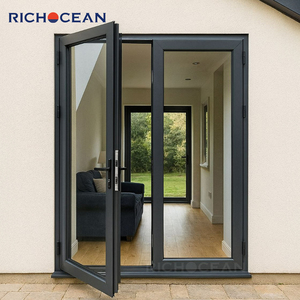
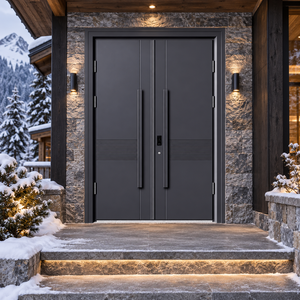
In modern architectural fenestration, the exterior entry door is no longer evaluated solely as an aesthetic barrier. It functions as a critical structural pressure boundary within the building envelope. As global climatic patterns intensify—ranging from Category 5 hurricane zones in coastal North America to extreme thermal swings in northern Europe and desert regions—commercial importers, residential developers, and structural engineers require higher technical performance from China wholesale weather resistant entry door factories.
Achieving true weather resistance requires overcoming three core physical failure points common in entry doors: frame deformation under wind pressure, water penetration across the bottom threshold, and thermal bridging caused by conductive metallic pathways. Premium Chinese manufacturing centers, such as Grandor Door Industry Co., Ltd. in Foshan, Guangdong, have re-engineered the entrance doorway using advanced metallurgy, precision extrusion, and composite thermal isolation technologies.
1. Advanced Profile Metallurgy & Thermal Isolation Engineering
Standard architectural aluminum possesses a high thermal conductivity rate (approx. 200 W/m·K), which leads to thermal loss, interior surface condensation, and frame sweating under extreme temperature differentials. To solve this, leading OEM factories implement multi-chambered polyamide (PA66 GF25) thermal breaks. These glass-fiber reinforced structural strips separate the outer aluminum profile from the inner skin, lowering the total frame U-factor down to ≤ 1.4 W/m²K when integrated with double or triple insulated glass units (IGUs).
| Performance Metrics | Standard Commercial Aluminum Door | Grandor Weather-Resistant Thermal Break Door | International Testing Standard |
|---|---|---|---|
| Structural Wind Load | 1.5 kPa – 2.0 kPa (P1) | 3.5 kPa – 5.0 kPa (Severe Hurricane Grade) | ASTM E330 / AS 2047 |
| Water Tightness | 250 Pa – 300 Pa static pressure | 600 Pa – 900 Pa (EPDM Dual-Cavity Seals) | ASTM E547 / EN 12155 |
| Thermal Transmittance (U-Value) | 3.8 – 4.5 W/m²K | 1.2 – 1.6 W/m²K (Low-E Triple Glazed) | NFRC 100 / EN ISO 10077-1 |
| Acoustic Attenuation (STC) | STC 28 - 32 dB | STC 42 - 48 dB (Acoustic Laminated Glass) | ASTM E90 / ISO 140-3 |
| Corrosion Resistance | 500-hour Salt Spray (Standard Powder) | 3000-hour Salt Spray (Fluorocarbon PVDF) | AAMA 2605 / ISO 9227 |
2. Hydrostatic Sealing and Threshold Mechanics
Water infiltration along the bottom door sills remains a primary liability during severe storms. Advanced factory designs incorporate dual-barrier EPDM (Ethylene Propylene Diene Monomer) gasket systems combined with concealed internal drainage channels. When wind-driven rain contacts the door face, water flows into pressure-equalized outer cavities and vents outward through one-way weeping valves, preventing pressure buildup from forcing water inward across the threshold barrier.
3. High-Security Multi-Point Locking Integration
Weather resistance and physical security are structurally interdependent. A door that flexes under wind stress breaks its weather-seal compression, leading to immediate water leakage. Modern entrance systems feature 3-point to 7-point automatic locking mechanisms. Upon closure, heavy stainless steel deadbolts and hook latches engage into the jamb profile at multiple elevation points, ensuring dynamic frame rigidity even under positive and negative wind pressures up to 5,000 Pascals.