Factory-Direct Custom Exterior Entry Door Systems
Precision-engineered aluminum glass doors manufactured under unified ISO 9001 quality controls in our 155,000 m² smart facility.
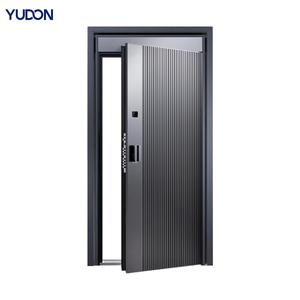
YUDON DOR Armoured Door Bulletproof Rust Proof For Modern Apartment Direct Factory Puertas De Seguridad Luxury Exterior Door
Send an Inquiry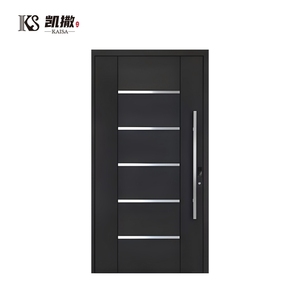
Modern Swing Opening Customized Size Front Entry Doors Aluminum Alloy Iron Exterior Security Doors Exterior Doors for House
Send an Inquiry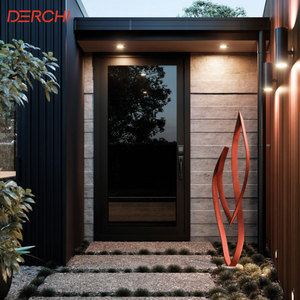
Energy Efficient Aluminum Entry Door Front Door Exterior Security Door for Homes and Commercial Use
Send an Inquiry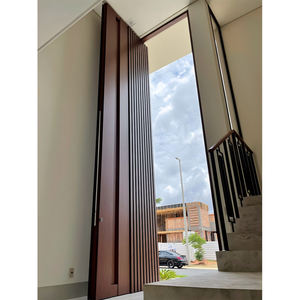
Heavy-Duty Extra Large Aluminum Pivot Door Modern Smart Lock Luxury Villa Apartment Exterior Entry Door Anti-Theft Waterproof
Send an Inquiry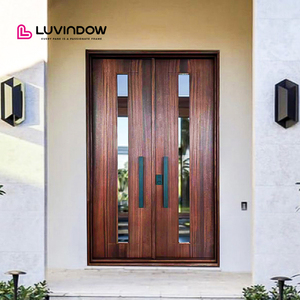
High Security Modern Energy Efficient Solid Wood Entry Door with Premium Hardware and Low-E Glass for Villa & Hotel Use
Send an Inquiry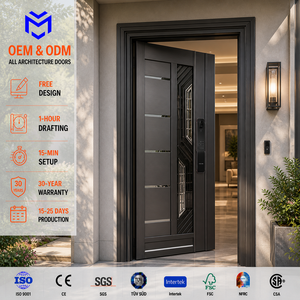
Custom French High Quality Exterior Interior Front Entry Gold Security 304 Stainless Steel Door for Houses with Smart Lock
Send an Inquiry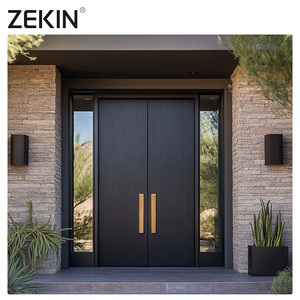
ZEKIN Custom Large Hous Metal Front Entrance Double Door Modern Security Design Armored Aluminum Exterior Door
Send an Inquiry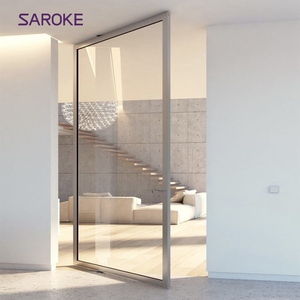
Largest Glass 2.5 Meters Oversized Custom Impact Rated External Electronic White Aluminum Pivot Door
Send an Inquiry1. The Technical Architecture of OEM/ODM Aluminum Glass Entry Doors
As modern architectural design moves toward expansive glass facades, structural minimal sightlines, and zero-energy building standards, the front entrance is no longer merely a point of egress—it is a complex structural node requiring precise mechanical engineering, thermal isolation, and high-level physical security. Selecting an established OEM/ODM aluminum glass entry door manufacturer guarantees that aesthetic architectural elevations align seamlessly with stringent building physics and structural wind-load performance.
At Grandor Door Industry Co., Ltd., our engineering methodology addresses the critical failure points common in generic off-the-shelf door systems. By extruding prime 6063-T5 and structural 6060-T66 architectural aluminum alloys in-house, we control profile wall thickness (ranging from 2.0mm to 3.5mm for heavy-duty pivot and double-swing assemblies). This structural baseline ensures long-term resistance to frame deflection under extreme wind loads up to 5000 Pa (ASTM E330), eliminating sashes sagging over multi-decade lifecycles.
Information Gain Insight: Standard aluminum entrance doors suffer from high thermal conductivity (K-value ~ 200 W/mK). Grandor’s thermal-break architectural entry doors integrate multi-chamber Polyamide PA66-GF25 reinforced structural strips, dropping total frame thermal transmittance to Uf ≤ 1.3 W/m²K, drastically reducing building HVAC loads in demanding extreme cold or desert climates.
Furthermore, air infiltration and water ingress are mitigated through dynamic multi-barrier weatherproofing. Utilizing continuous automotive-grade EPDM (Ethylene Propylene Diene Monomer) gasket seals co-extruded with sponge foam cores, our door systems maintain system seal compression even under thermal expansion and contraction cycles from -40°C to +80°C.
Advanced Engineering Features & System Mechanics
Custom OEM/ODM configurations engineered specifically to pass international compliance standards (AS2047, CE EN 14351-1, NFRC, ASTM).
High-Security Armored Locking
Integration of multi-point German-engineered stainless steel hook locks, anti-drill cylinders, biometric fingerprint readers, and motorized smart lock access control options.
Oversized Heavy-Duty Pivot Hinges
Concealed floor spring and ceiling-mounted pivot hardware engineered to carry glass panels up to 500 kg with effortless 360° fluid operation and adjustable self-closing control.
Thermal Isolation & Energy Efficiency
Double and triple-glazed Low-E insulated glass units (IGUs) filled with 90%+ Argon gas, featuring Warm-Edge spacer technology to reach total product Ug ratings down to 0.8 W/m²K.
Custom Surface Finishes
Qualicoat Class 2 fluorocarbon PVDF liquid spraying, high-durability architectural powder coating, anodizing, and Italian heat-transfer wood-grain finishes resistant to UV fading & salt spray.
Hurricane Impact & Soundproofing
Laminated security glass build-ups utilizing SentryGlas® (SGP) interlayers designed to pass Florida Dade County hurricane impact tests and acoustic isolation up to STC 45 dB.
Bespoke Architectural Flexibility
Full custom ODM capability for frameless glass pivots, arched entrances, sidelights, transoms, solid wood composite panels, and 304 stainless steel security grills.
2. OEM vs. ODM Technical Service Matrix for Commercial Buyers
Understanding the distinction between Contract OEM Assembly and Full ODM Engineering is vital for real estate developers, window & door brand owners, and procurement managers seeking custom market positioning.
| Specification Parameter | OEM (Original Equipment Manufacturing) | ODM (Original Design Manufacturing) |
|---|---|---|
| Design Authority | Client provides complete architectural CAD/BIM drawings & shop specs. | Grandor R&D engineers develop full profile extrusions & systems based on concept. |
| Profile Die Tooling | Custom dies extruded strictly according to client proprietary drawings. | Utilization of Grandor's 500+ pre-tested system dies or customized joint development. |
| Hardware Integration | Client specifies exact brand (e.g., Siegenia, HOPPE, GU, Dormakaba). | Grandor recommends tested hardware packages balanced for cost & structural load. |
| Certification & Testing | Testing performed on client's specific custom profile configurations. | Pre-certified system reports provided (AS2047, CE EN14351-1, NFRC energy ratings). |
| Ideal Buyer Profile | Established door brands, large-scale general contractors, architectural systems distributors. | Property developers, custom villa builders, boutique importers expanding product lines. |
3. Strategic Procurement & Future Architectural Trends (2025–2030)
The global architectural aluminum entrance sector is experiencing a paradigm shift driven by strict net-zero carbon building regulations, smart city IoT adoption, and high-end modern residential aesthetics. When sourcing aluminum entry doors from China, global procurement teams must align with the following micro and macro trends:
A. Extreme Scale & Oversized Glass Pivot Entrances: Architectural design increasingly favors floor-to-ceiling single-panel pivot doors exceeding 2.5 meters in width and 4 meters in height. Manufacturing these massive units requires structural internal steel or carbon-fiber reinforcement rods within aluminum profiles to prevent thermal warping caused by indoor-outdoor temperature differentials (the "bimetallic effect").
B. Biometric & Smart Home IoT Ecosystems: Mechanical key entry is rapidly being replaced by integrated electronic access. Future-proof procurement requires door sashes pre-wired with internal conduit lines for magnetic drop bolts, 3D facial recognition cameras, motorized locks triggered by home automation systems, and concealed electric transfer hinges.
C. Sustainable Carbon-Neutral Aluminum Manufacturing: Institutional developers in Western Europe and Oceania increasingly demand Environmental Product Declarations (EPDs). Grandor's in-house recycling loops re-melt 100% of clean aluminum scrap, reducing embodied carbon dioxide emissions to below 4.5 kg CO2e per kg of extruded aluminum profile.
D. Vacuum Insulated Glass (VIG) Integration: The next evolution past traditional Argon double glazing is VIG technology. Achieving thermal insulation equal to solid brick walls ($U \le 0.4 \text{ W/m}^2\text{K}$) within a slim 10mm glass profile, VIG allows ultra-slim entrance frame profiles without sacrificing thermal performance.
4. Why Grandor: Vertical Integration in a 155,000 m² Manufacturing Facility
Many door suppliers function as mere assembly workshops, outsourcing profile extrusion, anodizing, glass tempering, and powder coating to disparate sub-tier factories. This fragmented supply chain creates major quality variations, uncoordinated delivery schedules, and zero accountability when structural or finishing defects occur on site.
Grandor Door Industry Co., Ltd. operates a completely vertically integrated manufacturing matrix in Foshan, China. Spanning 155,000 m² and supported by over 16 years of export experience to 60+ countries, every manufacturing stage is controlled under one single roof:
Billet Extrusion
In-house extrusion lines casting prime 6063/6060 aluminum alloys into custom profile geometry.
Surface Treatment
Automated PVDF liquid coating, powder coating, and wood-grain thermal printing lines.
Glass Tempering
Robotic glass cutting, CNC edge grinding, tempering furnace, and Argon insulating gas filling.
Precision Assembly
German CNC corner crimping, gasket installation, hardware calibration, and 100% pre-shipment trial fit.
This single-source accountability model delivers unmatched buyer benefits: guaranteed color matching across frames and trim profiles, precise hardware machining tolerances within ±0.5mm, predictable 25-35 day production lead times, and robust export-ready plywood crate packaging designed to survive rough sea freight handling.
5. Frequently Asked Questions (FAQ) for Commercial Buyers & Importers
Essential practical answers compiled by our senior technical engineering team for real estate developers, architects, and door importers.
What technical data is required to get an accurate OEM/ODM aluminum door quotation?
To provide a detailed structural and financial proposal, our engineering team requires: (1) Architectural elevations or CAD shop drawings showing door opening dimensions; (2) Preferred opening configuration (Pivot, Inward/Outward Swing, Double French, Side Light integration); (3) System performance requirements including target U-value, wind pressure rating (Pa), and acoustic STC score; (4) Preferred frame finish (PVDF, Powder Coat, Wood Grain) and glass build-up (e.g., 6mm Low-E + 12Ar + 6mm Toughened); and (5) Destination seaport for freight estimation.
Why choose thermal-break aluminum profiles over standard non-thermal aluminum for front entry doors?
Standard aluminum conducts heat rapidly, leading to severe winter energy loss, thermal discomfort, and interior frame condensation that damages indoor wall finishes and flooring. A thermal-break system incorporates structural Polyamide (PA66-GF25) isolation strips that physically sever the metal connection between inner and outer profile skins. This barrier stops up to 70% of thermal conduction, prevents internal frost formation, and allows dual-color finishes (e.g., dark bronze exterior with white interior matching indoor decor).
How do your oversized aluminum pivot doors perform against air infiltration and heavy rainfall?
Oversized pivot doors historically struggled with sealing at floor level due to rotation dynamics. Grandor solves this using heavy-duty drop-down automatic acoustic/weather seals integrated into both the top and bottom door rails. When closed, mechanical plungers drop high-density EPDM gaskets against the floor sill, sealing gaps completely. Combined with concealed drainage channels and multi-stage perimeter compression gaskets, our pivot doors achieve water resistance performance up to 450 Pa (ASTM E547).
Can Grandor manufacture aluminum entry doors compliant with local building standards like AS2047 or CE?
Yes. Our systems are engineered specifically to satisfy regional building standards. We supply AS2047 and AS1288 certified window and door packages for Australia, CE EN 14351-1 compliant systems for the European Union, and NFRC thermal performance ratings for North America. Pre-production shop drawings and structural calculation reports are reviewed by our qualified engineering team prior to raw material extrusion.
What is the typical Minimum Order Quantity (MOQ) and lead time for custom OEM/ODM orders?
For standard architectural systems using existing profile dies, our standard MOQ starts at a single container project order or 20 units for custom residential projects. For fully customized proprietary profile extrusion dies (OEM), profile development requires 15 days for die tooling, followed by 25-30 days for mass production upon sample approval. Standard order lead time is 25 to 35 days from final CAD drawing sign-off.
How does Grandor guarantee product safety during long-distance ocean container shipping?
All finished door panels and frame sub-assemblies undergo 5-layer protective packaging: (1) Surface protective film covering powder-coated profiles; (2) Corner guard edge protectors; (3) Shock-absorbing EPE bubble wrap wrapping; (4) Heavy-duty corrugated cardboard boxing; and (5) Custom-built fumigated solid wooden crates or steel-frame A-frame racks for sea freight. Every crate is fitted with forklift lifting straps to ensure safe unloading on remote construction sites.
Ready to Engineer Your Architectural Entrance Project?
Direct factory pricing, custom CAD shop drawings within 48 hours, and dedicated technical support for global procurement managers and builders.
Send an Inquiry