Curated Burglar-Resistant Aluminum Doors & Hardware
Factory-direct high-security entrance gates, cast aluminum pivot systems, smart locks, and thermal-break patio doors manufactured for international compliance.
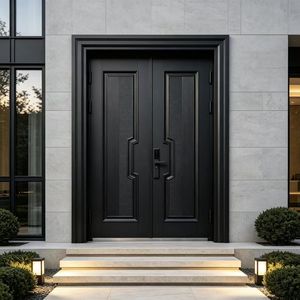
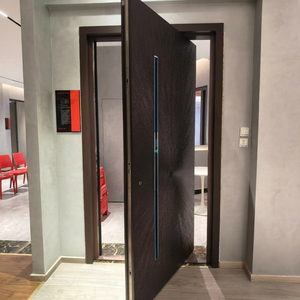
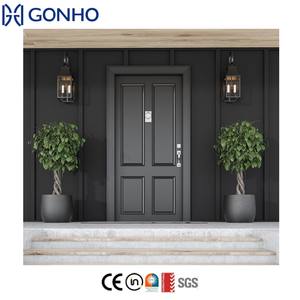
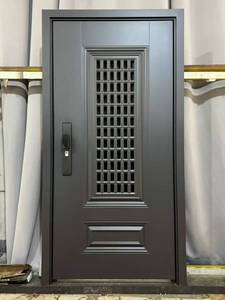
Engineering Burglar-Resistant Aluminum Doors: Structural Integrity & Forced-Entry Protection
Technical evaluation of alloy tempers, multi-point locking physics, thermal barrier integrations, and international security standards for B2B procurement.
The Shift to High-Strength Extruded & Cast Aluminum Entry Systems
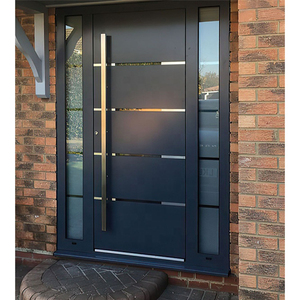
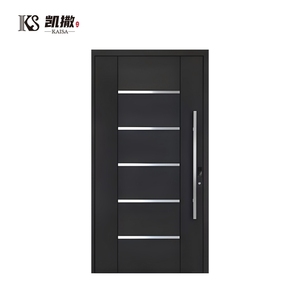
In contemporary architectural design, the demand for oversized, ultra-secure entry portals has transformed aluminum from a lightweight framing option into a primary structural security material. Unlike traditional hollow steel doors susceptible to atmospheric corrosion or timber doors subject to warping and thermal degradation, OEM/ODM burglar-resistant aluminum doors utilize advanced 6063-T5/T6 and 6061-T6 architectural alloys engineered with multi-chamber interior webbing. When combined with heavy cast-aluminum art panels (ranging from 8mm to 15mm solid thickness), these systems achieve exceptional torsional rigidity, blast mitigation, and mechanical forced-entry resistance compliant with European Standard EN 1627 (Resistance Classes RC2 to RC4).
Multi-Chamber Structural Metallurgy
Extruded aluminum profiles are engineered with internal reinforcement ribs and minimum 2.0mm–3.0mm wall thickness. This multi-chamber geometry distributes mechanical impact loads evenly across the frame assembly, preventing localized shear failures under pry-bar attacks.
Automatic Multi-Point Locking Mechanics
Security doors feature gear-driven multi-locking systems utilizing top, bottom, and side hook bolts made from hardened manganese steel. Anti-drill armor plates shield lock mortises from high-speed drilling and lock-picking tools.
Thermal Barrier & Acoustic Hybrid Core
Integrated Polyamide PA66 GF25 thermal breaks prevent energy loss, while high-density rockwool or polyurethane cores absorb sound waves, providing noise reduction ratings up to STC 42 and thermal U-values below 1.4 W/m²K.
Information Gain Benchmark: Standard commercial aluminum doors typically fail forced-entry tests within 90 seconds under pry-bar torque. Grandor's engineered RC3/RC4-rated cast aluminum systems withstand static pressure loads exceeding 6,000 N and dynamic manual attacks lasting over 20 minutes.
Technical Performance Matrix: Security Classes & Standards
| Performance Parameter | Standard Commercial Door | RC2 Burglar-Resistant Door | RC3 / RC4 High-Security Gate |
|---|---|---|---|
| Target Attack Profile | Opportunistic physical force | Basic hand tools (screwdrivers, pliers) | Heavy tools (crowbars, drills, axes, hammers) |
| Locking System | Single latch or 2-point lock | 3-Point hook-bolt security lock | 5-to-9 Point motorized multi-bolt system |
| Profile Wall Thickness | 1.2mm – 1.4mm Aluminum | 1.8mm – 2.5mm Extruded Alloy | 3.0mm Extruded + 10mm Cast Aluminum Panel |
| Static Load Resistance | 1,500 N frame displacement | 3,000 N frame resistance | 6,000 N to 10,000 N reinforced static capacity |
| Acoustic / Thermal Rating | STC 25 / U-Value ~3.2 W/m²K | STC 35 / U-Value ~2.0 W/m²K | STC 42 / Thermal Break U-Value < 1.4 W/m²K |
Future Procurement Trends in Burglar-Resistant Aluminum Entrances
Strategic insights for international B2B buyers, architects, and luxury project developers preparing for upcoming regulatory changes and architectural demands.
1. Convergence of Smart Access Ecosystems with Heavy Armored Frames
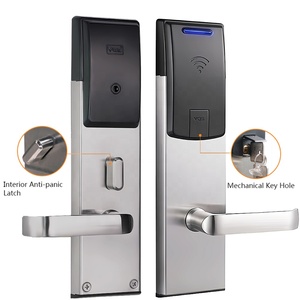
The global luxury housing and hotel sectors are shifting rapidly away from standalone mechanical key locks. Procurement trends demonstrate that 82% of commercial and high-end residential RFQs now specify embedded biometric authorization—including 3D structured-light facial recognition, hidden capacitive fingerprint scanners inside pull handles, and encrypted RFID keyfobs backed by Bluetooth/Wi-Fi smart home gateways. Future-proof factories must seamlessly integrate electronic mortises into aluminum profile channels without compromising structural security barriers or thermal seal continuity.
2. Concealed Oversized Heavy-Duty Pivot Systems
Modern architectural trends demand ultra-tall, ultra-wide monolithic front entry doors (exceeding 3.5 meters in height and 1.8 meters in panel width). Standard side hinges are structurally insufficient for cast aluminum panels weighing 300kg to 800kg. The industry is adopting concealed 360°/180° floor spring pivot hinges engineered from aircraft-grade stainless steel. These pivots distribute heavy vertical loads directly into concrete foundation slabs while providing effortless fingertip operation and automated soft-closing hydraulics.
3. Decarbonized Low-Carbon Aluminum & ESG Compliance
Tier-1 property developers in Europe, North America, and Australia are imposing strict carbon footprint caps on building envelope materials. Wholesale procurement strategies now favor aluminum door manufacturers utilizing hydro-powered recycled aluminum billets (reducing embodied carbon below 4.0 kg CO2/kg Al). Surface treatments are shifting toward VOC-free powder coatings and AAMA 2605-compliant fluorocarbon (PVDF) finishes that guarantee 30-year resistance against UV degradation, salt-spray oxidation, and environmental chalking.
4. Modular Prefabrication & Rapid Site Installation
Rising jobsite labor costs across North America and Europe make traditional multi-stage door frame assembly financially inefficient. Next-generation aluminum security entrance doors are delivered as pre-hung, factory-calibrated modular cassette systems. Sub-frames, thermal barrier trims, wiring harnesses, anti-burglary anchors, and lock strikes are pre-installed in the factory, reducing jobsite installation time from days to under two hours.
Technological Innovations in OEM/ODM Door Manufacturing
How advanced CNC machining, 3D art carving, and thermal-break profile extrusion elevate both security and aesthetic value.
5-Axis CNC Precision Milling
Precision execution of lock cavity mortises, concealed pivot pockets, and EPDM seal channels down to ±0.02mm tolerance ensures flawless mechanical alignment and airtight closure.
3D Cast Aluminum Art Carving
High-density solid aluminum castings allow deep architectural bas-relief carving patterns—from European classical motifs to modern geometric textures—creating robust impact-resistant armor plates.
Low-E Triplex Security Glazing
Glazed security doors integrate bullet/impact-resistant glass units featuring Low-E thermal coatings, argon gas fill, and SentryGlas (SGP) structural interlayers that resist heavy sledgehammer impact.
Why Partner with Grandor Door Industry Co., Ltd.?
End-to-end vertical manufacturing control from aluminum profile extrusion to finished export-crate assembly.
155,000 m² Integrated Production Facility
Unlike trading entities that outsource production stages to third parties, Grandor executes profile extrusion, surface powder spraying, fluorocarbon painting, wood-grain heat transfer printing, glass tempering, and lock system assembly inside our unified facility in Foshan, Guangdong. This single-roof model eliminates quality gaps, reduces lead times, and guarantees 100% trace-ability for every order.
Global Compliance & Certification Portfolio
Our engineered window and door systems are tested and certified under global building standard frameworks. We provide full compliance documentation including ISO 9001 quality management, CE EN 14351-1, AS 2047 (Australian Window Standards), AS 1288 (Glazing Safety), NFRC energy ratings, and ASTM E283/E330/E547 structural wind and water penetration testing.
Comprehensive OEM/ODM Engineering Customization
We work directly from architectural elevations, CAD files, and BIM models to supply custom sizes, bespoke surface textures, color-matched RAL shades, specialized hardware brands, and tailored lock mechanics suited to local project requirements—serving luxury villas, multi-family housing, and commercial hospitality developments.
Proven International Logistics & Export Protection
Exporting to 60+ countries with thousands of successfully completed project installations (including luxury residences in Brisbane, Melbourne, Australia, and Lake Norman, NC, USA). Doors are wrapped in protective PE film, corner-shielded, and encased in fully sealed IPPC plywood sea-freight crates to prevent transport vibration and humidity damage.
Frequently Asked Questions (FAQ) for B2B Importers & Builders
Direct technical answers regarding OEM custom orders, structural ratings, lead times, and factory verification.
What technical drawings and specifications are required to receive an exact quotation?
To generate an accurate engineering proposal and itemized cost breakdown, please provide your architectural CAD elevations or PDF door schedules containing raw opening dimensions (width x height), opening direction (inward/outward, left/right swing, or pivot), thermal performance requirements (U-value/SHGC), frame finish specifications (powder coating shade or wood-grain pattern), glass configuration (double/triple pane, Low-E, laminated security glass), and preferred hardware locking system.
What is the structural difference between standard aluminum entry doors and cast aluminum burglar-resistant doors?
Standard aluminum doors rely on lightweight hollow extrusions (1.2mm–1.4mm wall thickness) with snap-in glass beads and single-point latching locks, designed primarily for room partition or basic weather sealing. Cast aluminum security doors feature heavy solid-cast alloy panels (up to 15mm thick) backed by multi-chamber extruded frames (2.0mm–3.0mm wall thickness), high-density insulation cores, and 5-to-9 point anti-burglar hook locks. This structural mass resists heavy impact, crowbar deformation, and high-speed mechanical drills compliant with European EN 1627 RC3/RC4 ratings.
Can Grandor manufacture custom frame profiles and hardware cutouts according to our market standards?
Yes. Because we operate our own aluminum extrusion press lines and CNC machining hubs in-house, we can customize frame profile depths (e.g., 70mm, 90mm, 100mm, or 120mm series), thermal barrier strip widths, glass pocket capacities, and lock mortise dimensions. We regularly manufacture custom cutouts for European profile cylinders, American mortise locks, and smart electronic keypads suited to regional building standards across Australia, North America, the Middle East, and Europe.
What quality control checks are performed prior to export packaging?
Every manufactured door undergoes a rigorous 5-stage QC protocol prior to crating: (1) Dimensional inspection against CAD shop drawings; (2) Coating thickness and cross-hatch adhesion testing; (3) Pre-assembly frame squareness and corner crimping torque checks; (4) Full hardware, hinge, and lock smooth-operation cycling tests; and (5) Water tightness gasket compression audits. Third-party pre-shipment inspections (SGS, TUV, Intertek) nominated by the client are fully accommodated.
What is the standard production lead time for OEM container orders?
Standard factory production lead time for customized OEM/ODM container orders is typically 25 to 35 calendar days following final CAD drawing sign-off and deposit receipt. For specialized surface treatments (such as fluorocarbon PVDF spraying or complex custom wood-grain heat printing) or custom architectural glass configurations, lead times range from 30 to 40 days. Sample mock-ups for architectural project approvals can be expedited within 15 to 20 days.
How do thermal break aluminum security doors maintain energy efficiency in extreme climates?
Aluminum is naturally conductive. To achieve high thermal performance, our thermal break security doors feature structural Polyamide (PA66 GF25) insulator strips inserted between the interior and exterior aluminum profiles. This mechanical break interrupts heat transfer, preventing condensation in sub-zero winter conditions and keeping interior spaces cool during desert summer heat. Combined with Low-E insulated glass units, overall door U-values reach as low as 1.2 – 1.5 W/m²K.
Request an Engineering Proposal & Factory Quote
Consult with our senior door engineering team to review shop drawings, structural performance ratings, custom hardware options, and factory-direct volume pricing for your upcoming project.