Featured Modern Entry & Front Door Systems
Engineered to international structural standards with customizable thermal breaks, soundproof acoustic glass, and multi-point anti-theft security hardware.
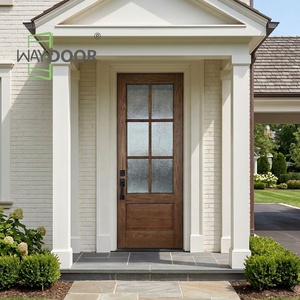
Fully Customized Soundproof Single Front Solid Wood Door With 6 Glass Panels For Houses Room Mahogany Oak Wooden Exterior Door
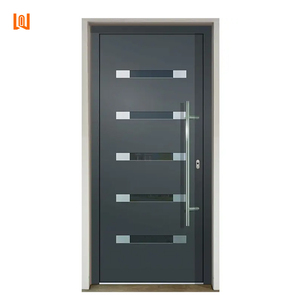
OEM/ODM Manufacturer Bulk Commercial Front Entry Door Modern Main Pivot Door Design Anti-theft Aluminum Door
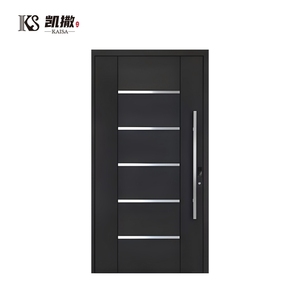
Modern Swing Opening Customized Size Front Entry Doors Aluminum Alloy Iron Exterior Security Doors Exterior Doors for House
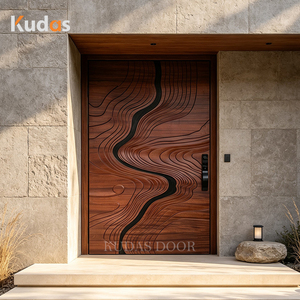
Luxury Villa 3D Carved Solid Wood Pivot Front Door Custom Modern Art Carving Pattern Exterior Main Entrance Entry Door for Home
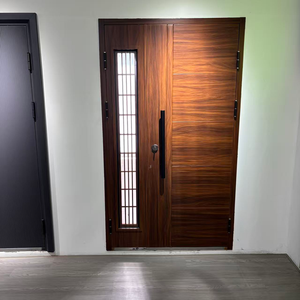
Stainless Steel Security Entry Door Multi Point Lock Anti Pry Structure Commercial Hotel Outdoor Safety Door OEM Available
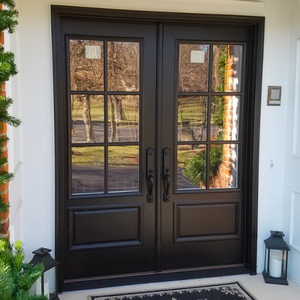
Custom Villa Main Entrance Door Aluminum Casement Door Double Tempered Glass Thermal Insulation For Front Entry Doors
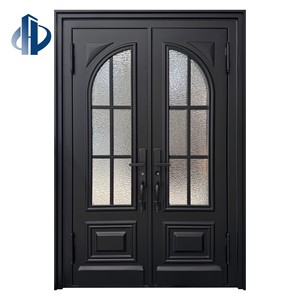
Classic French Double Doors Iron Arched Tempered Glass Villa Anti Theft Front Entry Doors for Houses Exterior Front Entry Doors
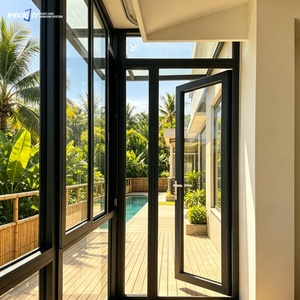
Modern Aluminium Casement Swing Door Triple Glazed Glass for Balcony Patio Front Entry Residential
Architectural Evolution of Modern Glass Front Doors in Global Construction
Over the past decade, the global architectural landscape has experienced a profound shift regarding building entrance design. Traditional solid timber and steel entryways—once favored solely for privacy—have rapidly given way to modern glass front doors. Today's luxury residential master plans, high-end villa developments, and boutique commercial headquarters demand entry systems that seamlessly blend high visual transparency, natural daylighting, and sleek modern aesthetic profiles with uncompromising structural integrity, thermal isolation, and burglar resistance.
As international energy conservation codes (such as ASHRAE 90.1, Australia's NCC/AS2047, and the European Union's EN 14351-1 directive) grow increasingly stringent, the engineering complexity of exterior glass entrance doors has escalated. Modern entryways must no longer be viewed merely as aesthetic focal points; they are high-performance structural envelopes engineered to withstand violent wind pressures, resist forced intrusion, prevent thermal bridging, and maintain acoustic quietude in dense urban settings.
Unlike standard interior decorative doors, high-spec modern front doors utilize structural aluminum alloy extrusions (specifically 6063-T5 or T6 metallurgical tempers) integrated with multi-chamber polyamide thermal barriers (PA66GF25). When combined with double or triple-glazed Low-E tempered safety glass, air penetration and thermal bridging are virtually eliminated, achieving overall U-factors as low as 0.8 to 1.2 W/m²K.
The Architectural Paradigm: Balancing Transparency and Structural Security
Architects and project specifiers frequently face a fundamental engineering dilemma: how to maximize glass sightlines without compromising physical security or thermal performance. Leading OEM/ODM manufacturers address this through five engineered layers of defense:
- Structural Profile Integrity: Utilizing heavy-wall architectural aluminum alloy profiles ranging from 2.0mm to 3.5mm in structural thickness, eliminating frame deflection under extreme wind loads (up to ASTM E330 ratings exceeding 3000 Pa).
- Multi-Point Locking Architecture: Replacing traditional single-latch deadbolts with 3-point, 5-point, or motorized mechatronic locking systems that engage heavy steel hook bolts along the full vertical length of the frame.
- Laminated Insulated Safety Glass (IGU): Incorporating toughened safety glass paired with PVB or high-stiffness SGP (SentryGlas®) interlayers, ensuring that even under severe impact, the glass unit resists penetration.
- Advanced EPDM Weather Seals: Multi-layer automotive-grade EPDM gaskets co-extruded around sash peripheries, providing airtight seals with zero air infiltration (ASTM E283 compliance).
- Heavy-Duty Bearing Pivot & Hinge Hardware: Precision-engineered stainless steel pivot hinges capable of supporting oversized single-panel leaves weighing up to 500 kg with effortless push/pull torque.
Why Overseas Importers & Developers Partner with Grandor
Vertical integration across 155,000 square meters eliminates middleman markups, reduces lead-time variance, and enforces 100% quality control from aluminum billet to final export packing crate.
In-House Aluminum Extrusion
We extrude high-purity 6063 architectural aluminum profiles directly on-site. This guarantees wall-thickness control, precise structural webbing, and superior mechanical tensile strength before profile assembly.
Advanced Surface Finishes
Equipped with vertical automated powder coating lines, PVDF fluorocarbon spraying plants, and 3D/4D thermal-transfer wood-grain sublimation lines that withstand harsh coastal salt spray and intense UV radiation.
Automated Glass Tempering
Our fully automated glass processing plant produces double and triple-glazed Low-E insulated glass units (IGUs) filled with 95%+ purity Argon gas, providing structural safety and acoustic isolation up to STC 42dB.
CNC Precision Assembly
Five-axis CNC machining centers handle corner crimping, mortise lock slotting, and hinge recessing to sub-millimeter tolerances (±0.5mm), ensuring flawless hardware alignment on-site.
Rigorous Factory QA Testing
Every batch undergoes water tightness, air permeability, thermal cyclic shock, and mechanical endurance testing over 100,000 continuous opening cycles prior to export sign-off.
Export-Grade Protection Packaging
Doors are wrapped in protective PE scratch film, fitted with corner guards, encased in moisture-proof vacuum wrapping, and secured inside fully enclosed plywood crates built for sea freight logistics.
Engineering Specifications & Performance Matrix
Objective technical data verifying how our thermal-break glass entrance systems perform against global building compliance standards.
| Performance Parameter | Grandor Thermal Break Glass Door | Standard Non-Thermal Aluminum Door | Test Standard / Certification |
|---|---|---|---|
| Thermal Transmittance (U-Factor) | 0.85 – 1.4 W/m²K (High Insulation) | 3.2 – 4.5 W/m²K (Poor Thermal Barrier) | NFRC 100 / EN ISO 10077-1 |
| Acoustic Sound Insulation (STC) | 38 dB – 44 dB (Acoustic Glass Package) | 22 dB – 26 dB (Standard Glazing) | ASTM E90 / ISO 140-3 |
| Air Infiltration Rate | < 0.10 cfm/ft² at 6.24 psf (Airtight) | > 0.50 cfm/ft² (High Draft Risk) | ASTM E283 / EN 12207 Class 4 |
| Water Penetration Resistance | 450 Pa – 700 Pa (No Leakage) | 150 Pa – 200 Pa | ASTM E547 / EN 12208 Class 9A |
| Design Wind Load Resistance | ± 3500 Pa (Hurricane Impact Rated) | ± 1200 Pa | ASTM E330 / AS 2047 (N6 Rating) |
| Forced Entry Security Rating | RC3 / WK3 Multi-Point Steel Locks | Basic Single Latch Lock | EN 1627 / PAS 24 Compliance |
| Surface Coating Durability | AAMA 2605 Fluorocarbon / Qualicoat Class 2 | Standard Electrostatic Spraying | AAMA 2604/2605 Accelerated Weathering |
Future Global Procurement Trends in Commercial & Villa Front Doors (2025–2030)
For international buyers, real estate developers, and wholesale importers, predicting market trends is critical for maintaining supply chain competitiveness. Based on extensive procurement data from North America, Europe, Australia, and the Middle East, four key macro trends are shaping the future of exterior front entrance doors:
1. Oversized Floor-to-Ceiling Pivot Glass Entrance Doors
Architectural preferences have shifted decisively toward grand, high-impact main entrances. Oversized pivot doors—reaching heights up to 4.5 meters and widths exceeding 2.0 meters—have become the preferred design language for luxury villas and modern corporate offices. Unlike traditional hinges that place structural stress on outer door frames, heavy-duty floor-mounted hydraulic pivot systems transfer door load directly to the finished floor substrate. OEM manufacturing must focus on precision counterbalance calibration, ensuring ultra-large sashes operate smoothly with fingertip pressure while retaining compression seals along perimeter head and sill tracks.
2. Integration of Smart Biometric Mechatronic Access Control
The global market for smart front entrance doors is expanding rapidly. Modern commercial and residential developments are phasing out mechanical keys in favor of fully integrated mechatronic mortise locksets. Key procurement specifications now require internal wire raceways pre-drilled through aluminum frames during factory fabrication. This enables seamless plug-and-play installation of 3D facial recognition cameras, biometric fingerprint scanners, encrypted RFID keycards, and smartphone-controlled Bluetooth/Wi-Fi smart hubs directly within the door stile.
3. Passive House (Passivhaus) & Ultra-Low Energy Envelopes
With global green building regulations enforcing net-zero energy targets, entrance doors can no longer remain thermal weak points in building facades. High-end procurement contracts now specify triple-glazed Low-E argon glass builds, warm-edge composite glass spacers (TPS or Swiss-spacer), and multi-chamber polyamide thermal breaks filled with expanded polyurethane insulation (PUR). These advancements prevent energy loss, lower heating and cooling loads, and completely eliminate glass surface condensation even in extreme sub-zero winter environments.
4. Resilient Hurricane-Impact & Coastal Corrosion Protection
Climate volatility and expanding coastal urban development have spurred demand for hurricane-impact certified entrance systems. Importers in coastal regions (such as the Southeastern US, Caribbean, Australia, and South East Asia) require doors tested to stringent impact codes (such as Miami-Dade NOA or ASTM E1996). This requires high-performance SGP laminated safety glass interlayers—which remain structural even if cracked—combined with marine-grade AAMA 2605 PVDF surface coatings designed to resist salt fog degradation for over 20 years.
Frequently Asked Questions for B2B Importers
Essential technical, logistic, and manufacturing answers to streamline your custom OEM/ODM ordering process.
Accelerate Your Project with Direct Factory Engineering Support
Partner with China's leading 155,000 m² thermal-break door and window manufacturer. Send us your architectural drawings or project schedule today to receive detailed CAD shop drawings and factory-direct pricing within 24 hours.