Featured Architectural Entry Door Systems
Engineered for high-end residential villas, commercial developments, and security-critical projects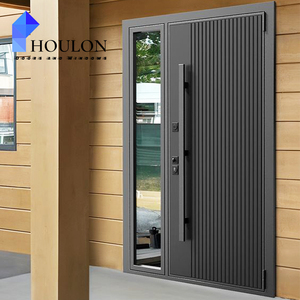
Wholesale Factory Direct Sale Modern Villa Apartment Security Front Entry Door With Anti-theft Steel And Aluminum Construction
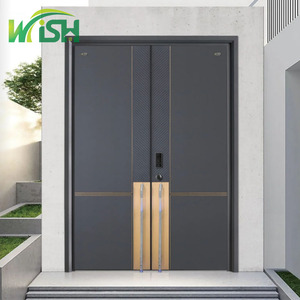
Modern Simple Design Exterior Doors for House Hurricane Proof Fire Insulated Aluminum Front Main Entrance Doors
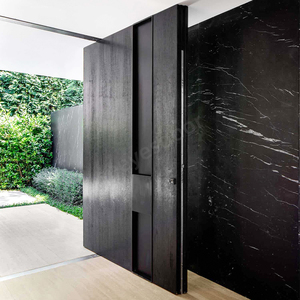
Seeyesdoor Luxury Design German Smart Locking System Thermal Insulation Solid Wood Pivot Entry Exterior Front Security Black
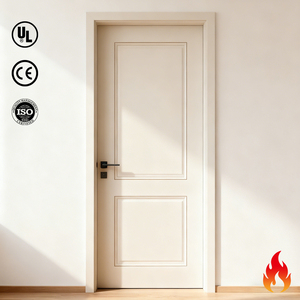
Modern Soundproof Wooden Fire Rated Hotel Security Door With Customized Size
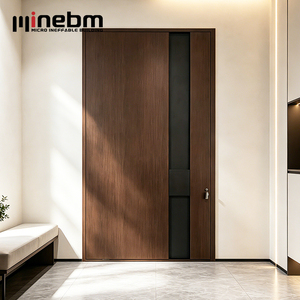
Italian Luxury Design Entrance Door Exterior Security Front Pivot Door Modern Entry Pivot Door
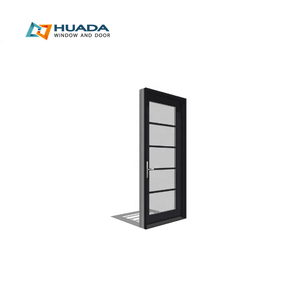
HuaDa CSA Approved Customized Casement Aluminium Alloy Glass Door Exterior Security Entrance Steel Main Doors
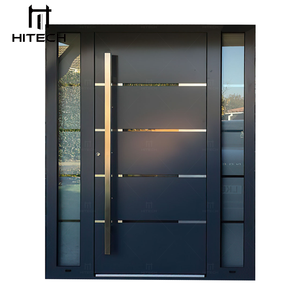
Hitech Main Entry Pivot Door Modern Front Exterior Pivot Door Aluminum Front Door For House
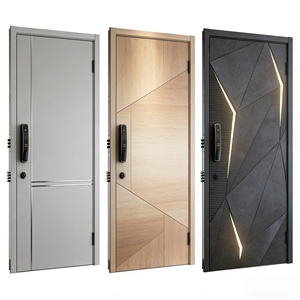
Modern Aluminum Security Door Residential Front Entrance Strong Outdoor Protection System Contemporary Minimalist Design
Enterprise Excellence & Manufacturing Ecosystem
Selecting a trusted aluminum entry door manufacturer requires evaluating not just aesthetics, but the structural integrity of the supply chain, factory capacity, quality assurance standards, and engineering capabilities. As a leading manufacturer operating out of Foshan, Guangdong—the global hub of architectural aluminum production—Grandor Door Industry Co., Ltd. represents the pinnacle of vertical manufacturing integration.
Spanning a massive 155,000 m² smart production base, our facilities unify every critical production step under one centralized quality management system. From raw aluminum billet extrusion and precision anodizing to automated thermal-break assembly, CNC hardware routing, double/triple glass tempering, and rigorous pre-shipment testing, we eliminate subcontracting vulnerabilities to ensure 100% component consistency across every batch.
Unlike assembly-only suppliers who purchase pre-fabricated profiles from third parties, our integrated mill process allows us to control profile wall thickness, alloy purity (utilizing premium 6063-T5/T6 architectural aluminum), and thermal barrier placement. This end-to-end oversight ensures that every front entry door system leaving our plant complies strictly with international structural, water-tightness, wind-load, and thermal insulation mandates.
Technical Engineering & Material Performance Analysis
Modern exterior aluminum doors must withstand aggressive environmental exposure—ranging from coastal salt-spray corrosion to extreme thermal expansion in desert climates. The baseline structural integrity of an aluminum security entrance door is governed by its extrusion profile engineering, thermal isolation technology, and hardware locking mechanics.
Polyamide Thermal-Break Technology (PA66GF25)
Decoupling internal and external thermal pathways to achieve passive house thermal efficiencyStandard aluminum is an effective conductor of heat, which traditionally led to energy loss and interior condensation. Our premium thermal break aluminum doors utilize high-grade PA66GF25 polyamide insulation strips (reinforced with 25% glass fiber for structural rigidity). This thermal barrier structurally separates the exterior aluminum skin from the interior profile, dropping system U-values significantly to meet stringent North American NFRC and European CE energy efficiency targets.
| Specification Feature | Standard Aluminum Entry Door | Grandor Thermal-Break Security Entry Door | Steel-Aluminum Hybrid Pivot Door |
|---|---|---|---|
| Profile Alloy Grade | Recycled / 6063-T5 Standard | Virgin Architectural 6063-T6 Alloy | Reinforced Steel Armor Core + 6063-T6 Cladding |
| Profile Wall Thickness | 1.2 mm - 1.4 mm | 2.0 mm - 3.0 mm Heavy-Duty Structural | 2.5 mm Aluminum + 2.0 mm Galvanized Steel Core |
| Thermal Insulation (U-Value) | > 3.5 W/m²K | 1.2 - 1.8 W/m²K (Low-E Double/Triple IGU) | 1.0 - 1.4 W/m²K (Injected PU / Thermal Core) |
| Locking Mechanism | Single Latch / Standard Deadbolt | German Multi-Point Auto-Locking System | 5 to 9-Point Smart Biometric Anti-Theft Lock |
| Air & Water Tightness | Basic Brush Seals | Continuous EPDM Triple Gasket System | Pressurized Magnetic + Perimeter EPDM Seals |
| Max Leaf Dimension | 1000 mm x 2200 mm | 1500 mm x 3000 mm (Pivot / Swing) | 2000 mm x 4000 mm (Ultra-Large Pivot) |
Future Sourcing & Procurement Trends in Aluminum Entry Doors
As commercial developers, architectural specifiers, and importers navigate evolving global building codes, several macro trends are reshaping the procurement landscape for residential and commercial entrance systems:
1. Rise of Oversized Architectural Pivot Doors
Modern luxury villas increasingly favor grand entrance openings reaching heights of 3 to 4 meters. Heavy-duty aluminum pivot doors featuring concealed floor springs, offset pivot hinges, and integrated steel bracing are rapidly displacing traditional narrow single-swing doors.
2. Smart Access & Biometric Integration
B2B buyers are demanding factory-prewired smart locking systems. Integrations now include German smart multi-point locks, 3D facial recognition, biometric fingerprint scanners, keypad entry, and IoT smart-home automation protocols concealed within the aluminum stile.
3. Extreme Climate & Hurricane Resistance
With extreme weather events on the rise, coastal markets across North America, Australia, and the Caribbean mandate impact-rated glass (SentryGlas® interlayers) and heavy-wall aluminum extrusions tested under ASTM E1886/E1996 and AS 2047 cyclic wind pressure standards.
International Compliance & Quality Control Protocol
Navigating cross-border procurement requires absolute verification of international performance standard compliance. Grandor maintains strict compliance documentation across key regional regulatory frameworks:
CE / EN 14351-1
European standard for external pedestrian doorsets, certifying air permeability, water tightness, and structural load capacity.
AS 2047 & AS 1288
Australian standards governing structural window/door performance, deflection testing, and architectural safety glass installation.
NFRC & ASTM
North American certifications evaluating thermal transmittance (U-factor), Solar Heat Gain Coefficient (SHGC), and structural air/water infiltration (ASTM E283/E330/E547).
Every export order undergoes a rigorous 5-stage quality gate prior to crating: raw material spectrum testing, surface coating thickness measurement (QUALICOAT standard), corner crimping shear testing, hardware cycle testing (minimum 100,000 cycles), and full-frame factory mock-up assembly.
Frequently Asked Questions (Procurement FAQ)
Below are authoritative engineering answers to the most common inquiries raised by international procurement managers, architects, and developers when sourcing custom aluminum entrance doors:
What engineering details are required to receive an accurate custom quote?
To prepare a complete engineering proposal and factory-direct price quotation, our technical team requires: (1) Architectural drawings or door schedule elevations with rough opening dimensions; (2) Preferred door operating configuration (hinged, pivot, sliding, bi-fold, or armored security entry); (3) Performance targets including required U-value, acoustic rating (STC), and wind load pressure; (4) Surface finish preference (fluorocarbon powder coating, anodized finish, or Italian heat-transfer wood grain); and (5) Glass build-up specifications (e.g., 6mm Low-E + 12Ar + 6mm Toughened).
Why are thermal-break aluminum doors superior to standard non-thermal aluminum doors?
A non-thermal aluminum door profile acts as a thermal bridge, allowing heat energy to pass freely between the exterior and interior environments. This results in high HVAC energy consumption and condensation forming on the inner frame. A thermal-break aluminum entry door incorporates a precision-extruded polyamide (PA66GF25) barrier between the outer and inner aluminum sections. This low-conductivity barrier breaks the thermal bridge, reducing heat transfer by up to 60%, lowering sound transmission, and eliminating interior frame condensation.
Can Grandor customize frame profiles, wood-grain aesthetics, and hardware brands for regional markets?
Yes. Because we operate an integrated 155,000 m² manufacturing hub with in-house aluminum extrusion and surface coating lines, we offer 100% custom OEM and ODM production. We can match any RAL color specification, formulate high-durability AkzoNobel powder coatings, apply 3D wood-grain finishes that replicate natural timber aesthetics without the maintenance drawbacks, and integrate preferred international hardware brands such as Siegenia, Hoppe, GU, Giesse, or custom German smart locks.
How does Grandor handle packaging and export protection for international container shipments?
To guarantee zero transit damage across ocean freight voyages, every door leaf and frame assembly is wrapped in a 4-layer protective system: (1) Surface protective film covering all exposed aluminum finishes; (2) Corner guard shock absorption jackets; (3) Multi-layer bubble wrap and EPE foam wrap; and (4) Fully enclosed, fumigation-free plywood crates equipped with internal steel strapping and foam cushioning.
Ready to Partner with a Leading Aluminum Entry Door Manufacturer?
Consult directly with our senior facade engineers to review your shop drawings, request certified test reports, or receive a fast, competitive project quote.
Contact Us