Featured High-Performance Aluminum Security Doors
Engineered for commercial developments, luxury residential villas, and international wholesale procurement. Every door system is custom-manufactured to precise architectural specifications.
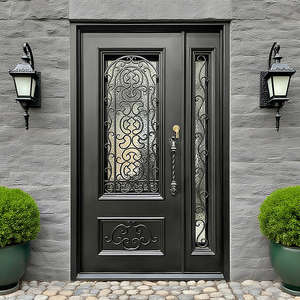
Classical Customized Metal Front Entrance Doors Exterior Security Door Wrought Iron Front Entry Doors For Houses Exterior Modern
- Reinforced structural core
- Anti-rust surface powder coat
- Multi-point safety locking
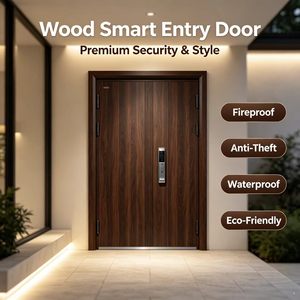
Steel Mother Son Security Door Villa Side Opening Anti-Theft Front Entry Multi Lock Sound Insulation Waterproof Custom Hotel
- Side-opening dual leaf
- Sound insulation rating 40dB+
- Waterproof perimeter sealing
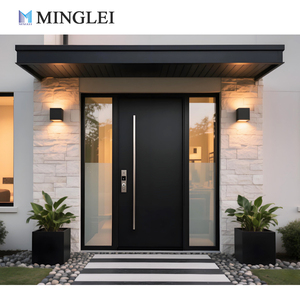
Residential Villa Home Luxury Entrance Double Entryways Doors Aluminum by MINGLEI
- Double-leaf entry statement
- 6063-T6 aluminum extrusion
- Custom wood-grain finish
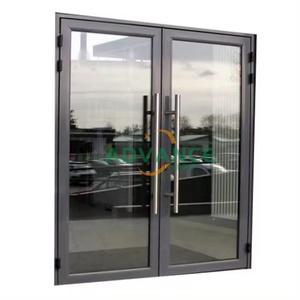
High-Performance Commercial Door with High-Impact Glass for Safety and Visibility
- Laminated safety glazing
- Heavy-duty commercial hinges
- High wind load resistance
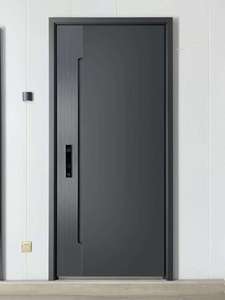
High-quality Custom Aluminum Entrance Doors, Safe, Soundproof And Fireproof, Suitable for Residential Villas
- Acoustic & fire retardant core
- PA66 thermal insulation strip
- Low-E insulated double glass
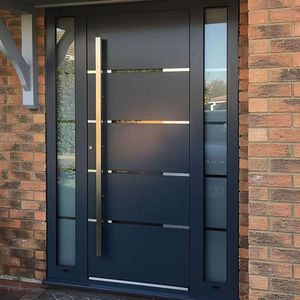
New Arrival Customize House Exterior Entrance Security Pivot Door Safety Front Main Gate Wrought Aluminum Slab Entry Doors
- Concealed hydraulic pivot system
- Over-height single slab structure
- Smart digital lock integration
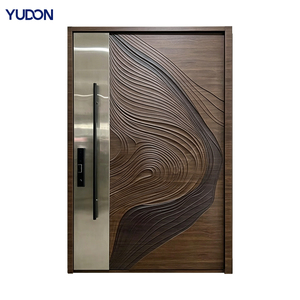
YUDON DOOR Aluminum Pivot Door Puertas De Seguridad Exterior Modern Entry Door Anti Rust Hidden Hinge Heavy Duty For Residential
- Corrosion-resistant anodized frame
- Hidden heavy-duty pivot bearings
- Multi-layer anti-pry design
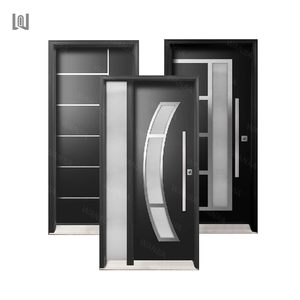
Anti-Theft Residential Home Renovation Main Entrance Entry Security Door Security Door Entrance Security Doors
- Burglary-resistant RC3/RC4 rating
- Stainless steel lock bolts
- EPDM weatherstripping seal
Whitepaper Analysis: Metallurgical Rigidity & Structural Engineering in Modern Security Doors
Selecting reliable aluminum security door suppliers and exporters requires understanding the structural metallurgy and engineering standards behind perimeter entrance systems. Modern residential and commercial architecture no longer accepts the trade-off between aesthetic slimness and burglar-resistant structural integrity. Premium aluminum entrance doors utilize high-tensile 6063-T6 architectural aluminum alloy profiles, extruded to profile wall thicknesses between 2.0mm and 3.0mm, and up to 4.0mm in critical load-bearing hinge pivot pockets.
Compared to conventional steel doors, high-grade aluminum profiles deliver an exceptional strength-to-weight ratio while retaining complete immunity to oxidation, rust, and salt-spray degradation. The structural rigidity of an aluminum security door leaf relies on internal multi-cavity reinforcement ribs paired with corner crimping technology using cast-aluminum corner keys and pneumatic epoxy injection. This eliminates frame racking, sagging, and torsional twisting under extreme thermal loading or physical forced-entry attempts.
| Technical Parameter | Standard Aluminum Door | High-Security Thermal Break Door (Grandor Spec) | International Test Standard |
|---|---|---|---|
| Aluminum Profile Alloy | 6063-T5 (1.4mm Wall) | 6063-T6 Primary Extrusion (2.0mm - 3.0mm Wall) | GB/T 5237 / ASTM B221 |
| Anti-Burglary Rating | Basic Latch (RC1 / Non-rated) | Class RC2 / RC3 / RC4 Multi-Point System | EN 1627 - EN 1630 |
| Thermal Transmittance (U-Value) | ≥ 3.5 W/m²K | 1.1 - 1.4 W/m²K (PA66-GF25 Thermal Break) | ISO 10077-2 / NFRC 100 |
| Acoustic Isolation (Rw/STC) | 28 dB - 32 dB | 42 dB - 48 dB (Dual-Chamber Acoustic Core) | ASTM E90 / ISO 717-1 |
| Salt Spray Corrosion Resistance | 500 Hours (Standard Powder Finish) | 3000+ Hours (AkzoNobel PVDF Coating) | ISO 9227 / ASTM B117 |
Core Architectural Engineering Pillars
Four essential technical pillars that differentiate professional export-grade security doors from generic residential door products.
Anti-Intrusion Hardware Mechanics
Multi-point gear-driven locking mechanisms engage 5 to 11 stainless steel hook bolts into hardened steel frame strike boxes, offering certified EN 1627 RC3 burglary resistance against crowbars and impact tools.
PA66-GF25 Thermal Barrier
Low-conductivity Polyamide 66 reinforced with 25% glass fiber (PA66-GF25) isolates outer and inner aluminum profiles, preventing thermal bridging, reducing condensation risk, and lowering building HVAC energy usage.
Smart Access & Biometric Integration
Concealed wiring channels and motorized mortise locks support biometric fingerprint sensors, 3D facial recognition, RFID, and encrypted Zigbee/Apple HomeKit smart building integration.
Weatherproofing & Acoustic Sealing
Continuous EPDM rubber gaskets combined with drop-down automatic floor seals ensure air permeability ratings conforming to ASTM E283 and water resistance exceeding 750 Pa under severe wind conditions.
Heavy-Duty Pivot Bearing Systems
Floor-recessed hydraulic pivot hinges support massive single-panel door slabs up to 400kg in weight and 4 meters in height with zero sagging and smooth, effortless 90-degree hold-open operation.
Qualicoat Certified Surface Finishes
Electrostatic fluorocarbon (PVDF) powder coatings and real-wood heat transfer finishes resist UV radiation, preventing chalking, blistering, and color fading over decades of intense sun exposure.
Grandor Enterprise Capabilities: In-House Precision Manufacturing
Grandor Door Industry Co., Ltd. operates a 155,000 m² smart manufacturing ecosystem in Foshan, Guangdong. Operating as a vertically integrated supplier allows total oversight across every critical phase of aluminum security door production: aluminum profile extrusion, automated surface anodizing/powder coating, glass tempering, precision CNC milling, and multi-point hardware assembly.
Unlike assembly-only suppliers that outsource profile extrusion or glass processing to third-party sub-contractors, Grandor guarantees structural consistency, exact shade matching, strict shop drawing compliance, and predictable lead times for large B2B shipments. Supported by a international retail supply network of over 800 stores and active export operations across 60+ countries, Grandor provides single-source accountability for builders, architectural specifiers, and importers worldwide.
The 4-Step In-House Production Quality Loop
1. Profile Extrusion & Heat Treatment: Raw aluminum billets are extruded through precision dies and heat-treated to T6 temper to reach optimal yield strength and dimensional tolerances.
2. Surface Treatment & Finish Application: Profiles undergo 9-stage chemical pretreatment followed by Qualicoat Class 2 fluorocarbon powder application or high-definition heat-transfer wood grain processing.
3. CNC Machining & Corner Crimping: Dual-head 5-axis CNC centers drill hardware recesses and lock cylinder cavities with ±0.1mm tolerance, followed by hydraulic corner key crimping.
4. Factory Assembly & Quality Control Inspection: Fully assembled doors undergo 100% cycling tests, weatherseal compression checks, lock engagement verification, and export crate packaging with steel-reinforced corner guards.
Global Procurement Trends: What B2B Buyers & Specifiers Need to Know (2025–2030)
The global security door market is evolving rapidly. Procurement managers, real estate developers, and international door importers must align their supply chains with key architectural and technological shifts:
Trend 1: Smart Biometric Access & Motorized Multi-Locking
Traditional mechanical key cylinders are giving way to integrated smart access ecosystems. Modern high-security aluminum doors are now pre-wired during factory assembly to accommodate 3D facial recognition cameras, biometric fingerprint readers embedded directly into pull handles, and motorized multi-point lock actuators. These locks automatically engage hardened deadbolts upon door closure and interface directly with home automation protocols such as KNX, Zigbee 3.0, and Matter.
Trend 2: Ultra-Large Slabs & Minimalist Pivot Architectures
Architects are specifying larger entrance spans to create striking building facades. Floor-to-ceiling single-panel aluminum pivot doors—reaching up to 4.0 meters in height and 2.0 meters in width—are replacing standard double doors. Achieving structural stability at this scale requires internal carbon-fiber tension rods inside the aluminum door leaf to prevent thermal bowing caused by interior-to-exterior temperature differentials (the "curling effect").
Trend 3: Strict Decarbonization & Low-Carbon Recycled Aluminum
Driven by European Union Green Deal regulations and global LEED carbon certification standards, developers are requesting Environmental Product Declarations (EPDs) for entrance systems. Sourcing aluminum doors produced using hydro-powered recycled aluminum billets significantly lowers embodied carbon footprints without sacrificing structural alloy strength.
Trend 4: Hurricane-Impact Resilience & Extreme Climate Testing
Coastal developments across North America, the Caribbean, and Australia require security doors certified to resist high-velocity hurricane impact (TAS 201/202/203 missile impact tests). Laminated impact glass combined with heavy-gauge aluminum profiles prevents structural failure under flying debris and cyclonic wind pressures exceeding ±5000 Pa.
Frequently Asked Questions for Door Importers & Builders
Technical clarity and procurement guidance directly from Grandor’s engineering and export operations team.
What technical information is required to prepare an accurate quotation?
To deliver a precise engineering proposal and bill of materials (BOM), please provide:
1. Architectural drawings or door schedule elevations detailing overall rough opening dimensions.
2. Required door configuration (Single swing, Double entry leaf, Mother-Son, or Pivot slab).
3. Specific performance targets: Anti-burglary rating (RC2/RC3/RC4), thermal U-value limits, or sound insulation targets (STC/Rw).
4. Desired surface finish (RAL powder coat color, PVDF fluorocarbon, or wood-grain texture) and glass specification (Double/Triple Low-E, Laminated Impact).
5. Destination port and target delivery timeline.
Why choose thermal-break aluminum security doors over standard non-break aluminum or steel?
Standard aluminum conducts heat rapidly, leading to significant HVAC energy loss and internal frame condensation ("sweating") in cold or humid climates. A thermal-break system incorporates a low-conductivity Polyamide (PA66-GF25) structural strip that physically separates outer and inner aluminum profile sections. This dramatically improves frame thermal efficiency, achieving door U-values down to 1.1 W/m²K while eliminating condensation risk. Compared to steel doors, aluminum will never rust, crack, or peel, making it superior for coastal environments.
Can Grandor customize door sizes, colors, and hardware brands for my target market?
Yes. Because profile extrusion, surface finishing, and assembly are performed completely in-house within our 155,000 m² factory, we provide full OEM and ODM customization. Frame colors can be matched to any RAL palette, wood-grain textures can be custom-matched, and lock pre-cutouts can be adapted to European sash locks, American standard mortise locks (ANSI/BHMA), or modern motorized smart locks.
How do you ensure safe international sea freight packaging for large orders?
All finished security doors undergo a multi-layer export protective wrapping process:
1. Surface protection: PE protective film applied across all coated aluminum surfaces.
2. Corner guards: Shock-absorbing EPE foam edge and corner bumpers.
3. Sealed wrapping: Moisture-proof shrink wrap enclosing the entire door leaf and frame.
4. Crating: Fumigated wooden crates with internal steel-strapping bracing, preventing movement, vibration damage, or glass breakage during sea container transit.
What international quality certifications and test reports are available?
Grandor products are engineered to comply with major international building standards, including ISO 9001 quality management system certification, CE marking under EN 14351-1 for European door assemblies, Australian standards AS 2047 (windows & doors) and AS 1288 (glass selection), North American NFRC energy ratings, and ASTM E283/E330/E547 air, water, and structural load performance test reports.
What is the typical manufacturing lead time for commercial or project orders?
Standard production lead time is 25 to 35 calendar days following shop drawing sign-off and deposit receipt. For custom profile extrusions or specialized custom color matching, lead times are approximately 35 to 45 days. Expedited production schedules can be arranged for large commercial project milestones upon consultation with our project engineering desk.
Ready to Upgrade Your Security Door Supply Chain?
Connect directly with Grandor's engineering team to request CAD shop drawings, technical specifications, and factory-direct wholesale pricing for your upcoming commercial or residential projects.
Get Catalog