Architectural Entry Door Solutions
Precision-engineered aluminum, glass, and steel entry systems certified for international building standards.
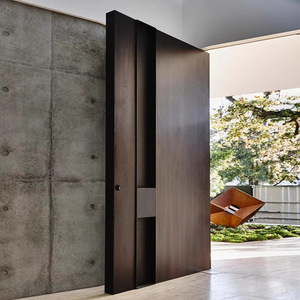
High Security Exterior Main Entrance Doors Customized Made Model Wooden & Aluminum Pivot Front Entry Door
Inquire Now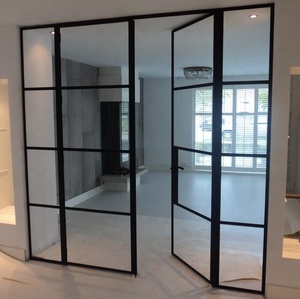
HOTIAN French Black Balcony Patio Door Wrought Iron Swing Crittall Door Steel Glass Saloon Windows And Doors
Inquire Now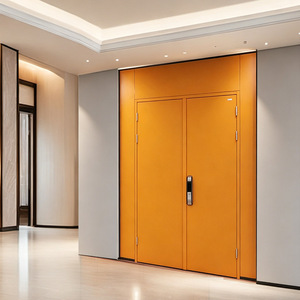
Modern Steel Entry Door Smart Lock 70mm Insulated Security Front Door Anti-Theft for Apartment Villa Manufacturer
Inquire Now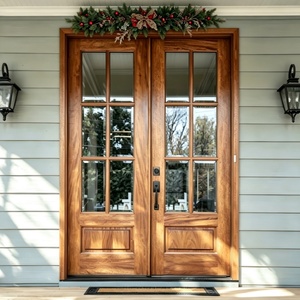
Direct Factory Modern Hinged Aluminum Solid Wood Doors Soundproof Triple Tempered Glass Custom Home Front Casement Door
Inquire Now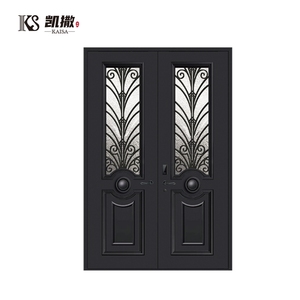
Residential Project Europe Aluminum Security Doors for Houses Exterior Front Villa Entry Doors
Inquire Now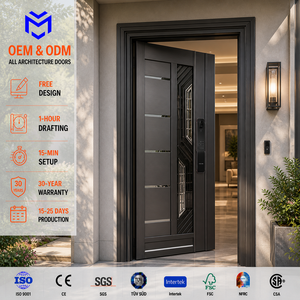
Custom French High Quality Exterior Interior Front Entry Gold Security 304 Stainless Steel Door for Houses with Smart Lock
Inquire Now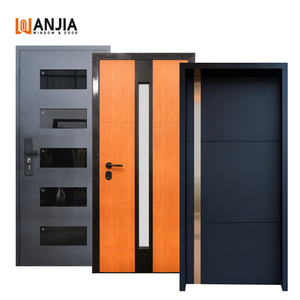
Contemporary Architectural Residential Exterior Entrance Door Sound Insulation Front Entry Doors Soundproof Security Door
Inquire Now
High Performance Modern Full Aluminum Security Door with Soundproof Thermal Insulation for Exterior Use in Villa & Apartment
Inquire Now1. Executive Engineering Summary: The Evolution of Frameless Entry Glass Systems
Modern architectural design is increasingly defined by visual transparency, continuous lines, and expansive structural daylighting. In luxury residential developments, corporate headquarters, and high-end commercial spaces, the entrance serves as both a primary design focal point and a critical perimeter barrier. Sourcing from top trusted frameless glass entry door manufacturers requires navigating complex engineering trade-offs between visual minimalism, structural deflection, acoustic dampening, and rigorous thermal performance.
Traditional framed entrance assemblies rely on heavy perimeter profiles to carry dead loads and transfer wind shear. Conversely, advanced frameless glass doors—including structural glass pivot doors, patch-fitting swing systems, and minimalist structural silicone assemblies—transfer mechanical stresses directly through high-specification tempered laminated glass units to heavy-duty floor pivots, overhead concealment closers, or top tracks.
When evaluating top trusted manufacturers, tier-one global buyers evaluate direct manufacturing depth—specifically whether extrusion, chemical glass tempering, heat soak testing (HST), structural insulating glass unit (IGU) assembly, and CNC hardware milling are consolidated within a single quality-controlled infrastructure.
2. Manufacturer Capabilities & Vertical Integration Standards
Grandor Door Industry Co., Ltd. operates a flagship 155,000 m² smart production base engineered specifically for international project export. Unlike assembly-only suppliers that outsource glass tempering or profile powder coating, full vertical manufacturing integration eliminates third-party quality variances and guarantees dimensional tolerances to within ±0.5mm across large-format panels.
In-House Profile Extrusion
Utilizing 6063-T6 and 6005-T6 architectural grade aluminum alloys to extrude high-wall-thickness profiles engineered for structural pivot loads up to 600kg.
Advanced Glass Processing
Horizontal glass tempering and heat soak testing (HST) lines eliminate nickel-sulfide (NiS) inclusions, preventing spontaneous glass breakage on site.
Polyamide Thermal Barriers
Precision crimping of Technoform® multi-cavity polyamide (PA66GF25) strips creates thermal breaks capable of achieving U-factors below 1.2 W/m²K.
3. Architectural Product Selection & Engineering Specifications
Selecting the optimal entry door configuration requires balancing opening height, wind load zone requirements, thermal isolation goals, and security access integration. Below is an engineering evaluation matrix comparing primary architectural door typologies for high-end projects:
| System Category | Structural Glass Specification | Max Panel Height / Weight | Thermal Transmittance (U-Value) | Acoustic Rating (STC / Rw) | Primary Hardware / Security |
|---|---|---|---|---|---|
| Frameless Glass Pivot Entry | 12mm + 1.52SGP + 12mm Ultra-Clear Low-Iron Tempered Laminated | 4,500 mm / 550 kg | 2.1 - 2.8 W/m²K | 38 - 42 dB | Hydraulic Floor Spring, Multi-Point Drop Bolt, Smart Biometric |
| Thermal-Break Minimalist Door | 6mm Low-E + 16Ar + 6mm Tempered Triple Glazed IGU | 3,800 mm / 350 kg | 1.0 - 1.4 W/m²K | 40 - 45 dB | Concealed German Siegenia / HOPPE Locks, Electric Strike |
| Heavy Steel Crittall Glass Entry | 8mm + 1.14PVB + 8mm Tempered Laminated Glazing | 3,200 mm / 280 kg | 1.8 - 2.4 W/m²K | 36 - 40 dB | Mortise Multi-Point Hook Locks, Brass Escutcheons |
| Reinforced Aluminum Security Entry | Insulated Aluminum Panel + Low-E Sidelight Glazing | 3,000 mm / 220 kg | 0.9 - 1.2 W/m²K | 42 - 48 dB | 3D Adjustable Hinges, Automatic Motorized Lock Cylinder |
For exterior frameless glass applications, structural glazing tape or high-modulus structural silicone (Dow Corning 995) is utilized along bottom rails to secure glass panels to stainless steel base shoes without inducing point-stress concentrations.
4. Global Procurement & Technological Trends (2025–2030)
As international energy codes tighten—such as California Title 24, Europe's EPBD directives, and Australia's NCC Section J—procurement parameters for entry door systems have shifted from purely aesthetic evaluation to comprehensive environmental lifecycle assessments (EPDs) and smart building integration.
A. Zero-Threshold Drainage Channels
Eliminating barrier steps for universal access (ADA compliant) while preserving water resistance up to 600 Pa requires integrated stainless-steel sub-floor trench drains. Hidden magnetic weather seals rise automatically when the door closes to create a continuous pressure-equalized seal.
B. Electrochromic & Smart Glass Integration
Frameless glass pivot doors are increasingly engineered with switchable Polymer Dispersed Liquid Crystal (PDLC) or electrochromic interlayers. Transmitting power through concealed wireless conductors inside pivot hardware allows instant transition from total transparency to opaque privacy.
C. Vacuum Insulated Glass (VIG) Units
By substituting the argon gas gap of standard double glazing with a 0.15mm vacuum cavity, VIG achieves center-of-glass U-values as low as 0.45 W/m²K in a profile thickness of just 10mm—drastically reducing dead weight on heavy pivot hardware.
D. Motorized Biometric Access Control
Modern entrance procurement favors invisible security. Multi-point motorized locks installed inside aluminum stiles or floor boxes interface directly with facial recognition, Bluetooth LE, and home automation systems (KNX/Control4) with backup battery supplies.
5. Crucial B2B Quality Control & Testing Specifications
When sourcing custom frameless glass entry doors from overseas manufacturers, project managers must verify compliance against standardized testing protocols to prevent structural failure or water infiltration after installation.
- Structural Wind Load Performance (ASTM E330 / AS2047): Verification that panel deflection does not exceed L/175 under maximum wind load pressure (e.g., Ultimate Limit State design pressure of ±3.0 kPa).
- Air Infiltration & Water Penetration (ASTM E283 / ASTM E547): Cyclic static air pressure differential testing confirming air leakage remains under 0.1 L/s·m² and zero water penetration at 450 Pa test pressure.
- Hardware Cycle Endurance (EN 1191): Heavy-duty pivot bearings and overhead hydraulic arms must complete a minimum of 200,000 open/close cycles under maximum design panel weight.
- Anodizing & Powder Coating Standards (AAMA 2605 / Qualicoat Class 2): Exterior metal surfaces must pass 3,000 hours of continuous salt spray testing to prevent corrosion in marine coastal environments.
6. Frequently Asked Questions (FAQ) for Global Buyers & Architects
Engineering Your Custom Entry Door Solution
Partner directly with China's leading window and door manufacturer. Get custom CAD shop drawings, factory-direct pricing, and technical compliance support within 24 hours.