Featured Architectural Pivot Door Systems
Engineered for luxury residential villas, high-rise penthouses, and commercial flagship entrances. Each system features custom offset hinges, multi-point locking integration, and advanced weatherproofing.
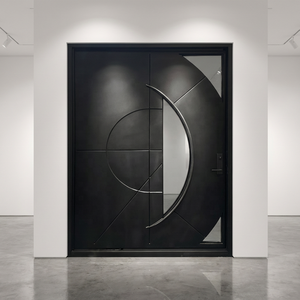
Custom Modern Matte Black Steel Full Height Pivot Door with Geometric Glass Cutouts C Shape Handle for Luxury Home
- Material: Heavy Galvanized Steel
- Glazing: Low-E Tempered Glass
- Hinge Capacity: Up to 500 KG
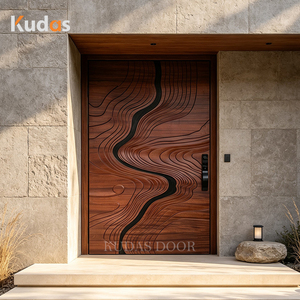
Luxury Villa 3D Carved Solid Wood Pivot Front Door Custom Modern Art Carving Pattern Exterior Main Entrance Entry Door for Home
- Material: Oak / Teak Solid Wood
- Finish: UV Weather Coating
- Security: 5-Point Mortise Lock
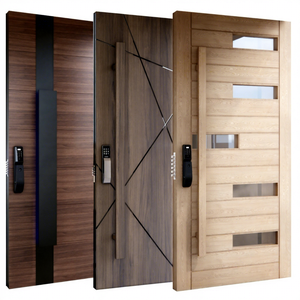
Manufacturer-direct Supply Waterproof Fire-resistant Security-rated Engineered Wood Pivot Doors for Modern Luxury Residential
- Fire Rating: 30 / 60 Mins UL/CE
- Core Structure: Steel-Reinforced Core
- Acoustics: STC 42 dB Insulation
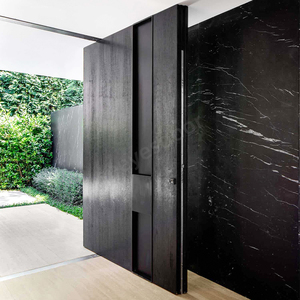
Seeyesdoor Luxury Design German Smart Locking System Thermal Insulation Solid Wood Pivot Entry Exterior Front Security Black
- Access Type: Biometric / Smart App
- Thermal Break: Polyamide PA66
- Wind Load: ASTM E330 Grade 60
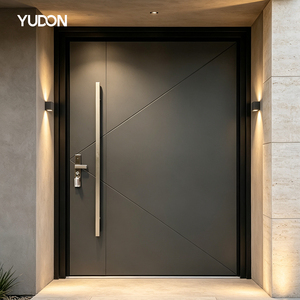
YUDON DOOR Main Entrance Pivot Door Entry Door Pivot Door with Frame Matte Gray Finish Custom Size Soundproof for Villa
- Frame Profile: 3.0mm Architectural Alum
- Surface: AkzoNobel PVDF Coating
- Sealing: Drop-down Automatic Seal
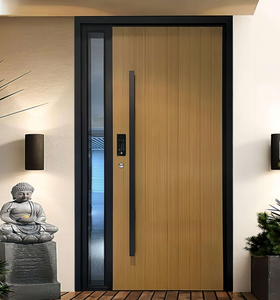
Luxury Villa Apartment Entry Anti-theft Aluminum Front Exterior Door Electric Side Opening Modern Design for Residential Use
- Automation: Motorized Hydraulic Drive
- Security Grade: Class 4 Anti-Burglary
- Finish Options: Anodized Metallic
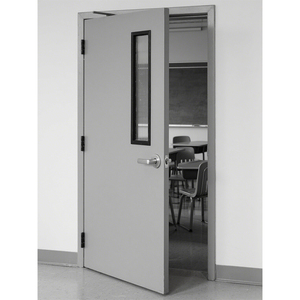
Factory Wholesale Modern Style Steel Security Door Durable Main Front Steel Door With Glass For Hospital School Office Door
- Application: Commercial & High Traffic
- Steel Gauge: 2.0mm Reinforced Steel
- Hardware: Heavy Duty Floor Closer
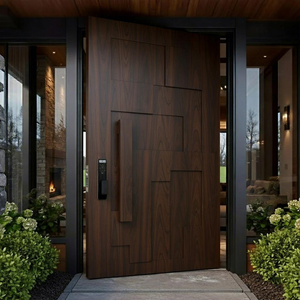
Modern Aluminum Pivot Entry Door Luxury Exterior Front Door Thermal Break Custom Size Double Glass OEM ODM Manufacturer
- U-Factor: 0.24 BTU/h·ft²·°F (High Perf)
- Glass Build: 6mm Low-E + 12Ar + 6mm
- Certification: AS2047 / NFRC / CE
Architectural Engineering Whitepaper: Sourcing Luxury Pivot Doors
Luxury architectural entryways have undergone a paradigm shift over the last decade. Modern high-end residential estates, luxury villas, and prestige commercial developments are increasingly abandoning traditional butt-hinged swing doors in favor of oversized architectural pivot door systems. Because pivot doors carry their weight on an offset vertical axis anchored into the subfloor and header beam—rather than hanging off the side door jamb—they empower architects and facade engineers to specify grand entrance apertures exceeding 3 meters in width and 6 meters in height without risking frame sag or hinge shear failure.
However, importing and specifying luxury pivot entrance systems presents complex technical challenges for B2B buyers, general contractors, and facade procurement specialists. Managing structural deflection under wind load, maintaining air tightness and water resistance across massive perimeter gaps, integrating heavy-duty floor springs, and implementing thermal breaks without sacrificing structural rigidity require rigorous engineering discipline. This whitepaper establishes a comprehensive procurement framework to assist international buyers in selecting top-tier luxury pivot door manufacturers and exporters.
1. Future Procurement Trends in Luxury Pivot Entrance Systems
As modern building envelope codes stringently mandate enhanced energy conservation and biometric security, the procurement criteria for architectural pivot doors are shifting rapidly toward high-tech hybrid engineering. Procurement teams should benchmark suppliers against five critical technological trajectories:
Thermal Isolation
Integration of multi-cavity Polyamide (PA66 GF25) thermal breaks inside aluminum extrusion profiles to achieve low U-factors below 0.24 BTU/h·ft²·°F, eliminating thermal bridging in extreme climates.
Mechatronic Access
Concealed motorized multi-point lock bars synchronized with biometric fingerprint scanners, facial recognition, and smart home automation protocols (KNX, Zigbee, Crestron).
Active Drop Sealing
Automated mechanical drop-down seals at the top and bottom rails triggered upon closure, ensuring water tightness (up to 750 Pa) and high sound transmission reduction (STC 42+ dB).
2. Material Science Comparative Selection Framework
Determining the core material matrix is the cornerstone of successful project execution. The table below outlines the performance trade-offs across the four primary materials used by global export manufacturers:
| Material Core Type | Structural Capacity | Thermal U-Factor | Weather Resistance | Maintenance Profile | B2B Target Application |
|---|---|---|---|---|---|
| Thermal Break Aluminum | Extreme (3.0mm+ Wall) | 0.22 - 0.28 W/m²K | Superior (PVDF Coating) | Zero Maintenance | Modern Coastal Villas & Commercial Flagships |
| Heavy Galvanized Steel | Maximum (Payload 1000kg+) | 0.32 - 0.45 W/m²K | High (Anti-Rust Powder) | Low Maintenance | High-Security Entrances & Industrial Luxury |
| Engineered Wood Core | High (Steel Skeletal Mesh) | 0.18 - 0.24 W/m²K | Moderate (Requires Canopy) | Periodic Polishing | Prestige Private Residences & Warm Aesthetics |
| 3D Carved Solid Wood | Moderate to High | 0.20 - 0.26 W/m²K | Vulnerable to Moisture | High Maintenance | Custom Artisan Villa Entrances (Inland) |
3. Engineering Benchmarks: Pivot Hardware & Floor Spring Physics
The operational longevity of a luxury pivot door relies entirely on its hardware geometry and floor hinge physics. Unlike standard butt hinges that exert high cantilevered rotational force on door frame jambs, high-end pivot hardware relies on a heavy-duty floor box mechanism embedded directly into the concrete foundation, paired with a top pivot pin mechanism anchored into the structural transom beam.
- Floor Spring Hydraulic Dampening: Top suppliers utilize fully adjustable hydraulic floor closers (such as Dormakaba BTS80 or proprietary heavy-duty hydraulics) supporting load capacities from 250 KG to over 800 KG. They must feature dual-zone speed control (180° to 15° closing phase, and 15° to 0° latching phase) alongside backcheck dampening to prevent wind gusts from slamming oversized doors.
- Offset Pivot Axis Point: The pivot spindle is typically offset between 100mm and 250mm from the door edge, allowing smooth 360° or 180° double-action rotation. Precision CNC machining of the top and bottom pivot sockets ensures axis alignment within 0.5mm tolerances, eliminating operational friction.
- Perimeter Air/Water Tightness Solutions: The traditional weakness of pivot doors—the continuous clearance gap around the rotational axis—is mitigated by top manufacturers using continuous EPDM triple-gasket seals combined with magnetic latching tracks and pneumatic bottom drop seals.
4. Quality Assurance & Manufacturing Superiority: Grandor Door Industry
As a global leader in high-end window and door fabrication, Grandor Door Industry Co., Ltd. operates a 155,000 m² state-of-the-art intelligent production facility located in Foshan, Guangdong—the epicenter of global architectural aluminum manufacturing. With over 16 years of dedicated engineering export experience, Grandor provides an integrated single-source supply chain for global distributors, real estate developers, and luxury homebuilders.
In-House 4-Step Production
Grandor handles raw profile aluminum extrusion, fluorocarbon PVDF surface coating, glass tempering/IGU assembly, and precision CNC framing under one roof to guarantee strict quality control.
Global Structural Compliance
Products are fully engineered and tested to satisfy major international standards, including ISO 9001, CE (EN 14351-1), Australian AS 2047 / AS 1288, and NFRC / ASTM wind-load standards.
Export Heavy-Duty Packaging
To safeguard large-format glass and coated aluminum during ocean freight, products are encased in fully sealed IPPC-stamped wooden crates with moisture-absorbent silica vacuum wrapping.
Frequently Asked Questions (FAQ) for Pivot Door Buyers
Q1: What technical drawings and specifications are required to receive an accurate factory quotation?
To issue a precise engineering proposal and structural shop drawings, our technical team requires: (1) Architectural floor plans and elevation callouts indicating rough opening sizes (width x height x frame depth); (2) Preferred frame thermal specification (Standard Aluminum vs. Polyamide Thermal Break); (3) Glass configuration requirements (e.g., 6mm Low-E + 12mm Argon + 6mm Toughened); (4) Desired locking mechanism (Mechanical 5-point mortise vs. Motorized Smart Biometric system); and (5) Destination port for shipping logistics evaluation.
Q2: How do aluminum thermal break pivot doors prevent water ingress and air leakage during severe storms?
Grandor thermal break pivot doors employ a multi-layered weatherproofing system. We utilize continuous perimeter EPDM weatherstripping coupled with dual concealed automatic drop-down bottom seals that extend when the panel latches into place. For wind-driven rain environments (such as coastal hurricane regions), we engineer recessed floor drainage channels equipped with one-way check valves that divert water away from the interior building subfloor under air pressure up to 750 Pa (ASTM E331 certified).
Q3: Can oversized luxury pivot doors be integrated into smart home automation systems?
Yes. Grandor luxury pivot entrance systems can be factory-fitted with German-engineered motorized multi-point lock actuators (e.g., Winkhaus or GU systems). These electronic locks integrate seamlessly with smart home automation networks via RS485, KNX, or wireless protocols (Zigbee/Z-Wave). Access methods include biometric fingerprint scanning, RFID keycards, smartphone app control, and facial recognition terminals with battery backup overrides in case of power failure.
Q4: What floor load-bearing capacity is required for installing a heavy pivot door?
Because the vertical deadweight of the door panel (which can range from 200 kg to over 800 kg depending on glass thickness and steel reinforcement) is transferred directly to the subfloor spindle, the installation site must feature a solid concrete slab or structurally engineered steel floor beam capable of bearing compressive loads of at least 15 MPa. The floor spring box is embedded 60mm to 90mm into the concrete slab prior to finished floor tiling.
Q5: What are the lead times and export packaging safety guarantees for overseas shipments?
Standard fabrication lead times range from 25 to 35 business days following shop drawing sign-off and color sample approval. All export orders undergo pre-shipment assembly verification and pass through strict QC inspection. To protect frame finishes and tempered glass during international container transit, components are wrapped in protective polyethylene scratch film, edge-sealed with foam corner armor, and packed into ISPM 15 compliant heat-treated fumigated wooden crates.