1. Executive White Paper: The Bangkok Fenestration Market Landscape
The Greater Bangkok Metropolitan Area—encompassing Sukhumvit, Sathorn CBD, Bangna-Trad luxury villa corridors, and the Chao Phraya Riverside development zone—is undergoing a profound architectural transformation. As real estate developers, building contractors, and architectural firms strive to satisfy rising consumer demand for contemporary aesthetic design, thermal comfort, and acoustic dampening, the selection of exterior entrance doors has emerged as a critical engineering decision.
Bangkok's unique geographic and meteorological conditions present intense challenges to building envelopes. Classified under the Köppen Aw (Tropical Savanna) climate, the region experiences year-round elevated temperatures (averaging 28°C to 38°C in peak summer), atmospheric humidity levels routinely exceeding 80%, severe monsoon precipitation (averaging 1,500 mm annually), and high exposure to solar ultraviolet (UV) radiation. Furthermore, the rapid growth of urban transit infrastructure (such as the BTS Skytrain and MRT networks) elevates ambient traffic sound levels to 75–85 dB along primary thoroughfares.
Historically, solid natural timber (such as Thai Teak) dominated high-end main entrances. However, natural wood installed in humid tropical conditions suffers from swelling, warping, moisture absorption, termite infestation, and finish deterioration within 3 to 5 years. Standard steel doors, while structurally rigid, are vulnerable to thermal bridging—transferring extreme solar heat directly into air-conditioned interior spaces and forcing HVAC compressors to work excessively.
Technical Insight: Architectural-grade extruded aluminium alloy fenestration systems (specifically 6063-T6 tempered profiles featuring Polyamide PA66GF25 thermal breaks) have captured over 65% of new commercial and luxury residential fenestration specifications across Bangkok. They provide structural longevity, zero moisture retention, complete immunity to termites, and exceptional thermal isolation.
Natural Timber Doors
Susceptible to moisture expansion & warping
Requires annual sand & seal maintenance
High risk of subterranean termite attack
Limited structural capacity for grand pivot sashes
Poor solar heat gain coefficient (SHGC) resistance
Standard Non-Thermal Steel
High thermal conductivity (causes thermal bridging)
Prone to joint oxidation under high air humidity
Heavy structural weight placing strain on hinges
Aesthetic finishes degrade under direct UV radiation
Limited architectural customization options
Thermal Break Aluminium (Grandor Standard)
Polyamide PA66GF25 thermal separation barrier
100% immune to termites, rust, rot, and fungi
Engineered for grand oversized pivot sashes (up to 500kg)
25-Year AkzoNobel PVDF fluorocarbon color stability
2. Localized Application Scenarios across Greater Bangkok Projects
Architectural fenestration requirement profiles vary significantly depending on the specific urban density, building height, and microclimate profile across different Bangkok sub-markets. Direct factory sourcing from leading Chinese exporters allows local contractors to customize door frame profiles, glass build-ups, and locking hardware tailored to specific project types.
Technical Challenge: High wind pressures above the 20th floor (exceeding 2.5 kPa to 3.0 kPa) combined with severe ambient city noise pollution (STC ratings mandatory above 40 dB).
Recommended Specification: Heavy-duty thermal break aluminium swing or pivot doors fitted with 6mm + 1.52PVB + 6mm double-laminated acoustic Low-E glass, multi-point lock rods, and EPDM dual-lip gaskets to withstand extreme wind-driven monsoon rain.
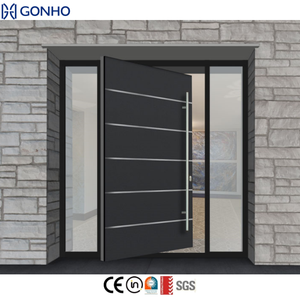
Technical Challenge: Achieving grand scale double-height entrances (up to 4.5 meters in height) while maintaining effortless opening force, thermal insulation, and aesthetic luxury matching tropical modern design.
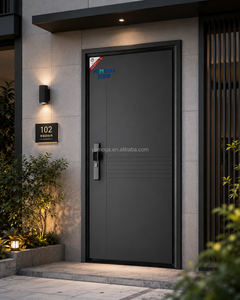
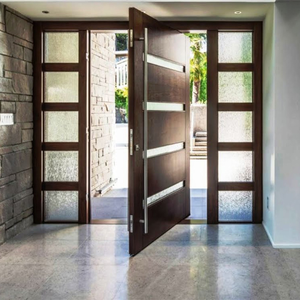
Recommended Specification: Architectural aluminium pivot entrance systems with concealed hydraulic floor springs, high-gloss micro-grained timber anodized finishes, integrated smart biometric access, and multi-locking security pins.
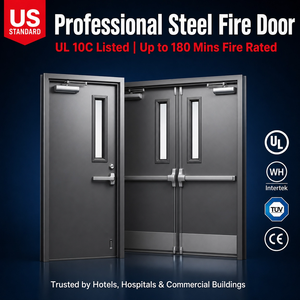
Technical Challenge: High frequency foot traffic durability, strict building fire code compliance (EN 1634-1 / UL fire ratings), and seamless keycard integration for hospitality guest management.
Recommended Specification: Double-leaf metal fire security doors or heavy-gauge aluminium commercial casement entries featuring continuous stainless steel piano hinges, electromagnetic hold-open connectivity, and panic crash-bar exit hardware.
3. Local Architectural Trends Driving Fenestration Sourcing in Thailand
Sourcing aluminium doors for the Thailand market requires an acute understanding of local design preferences and regional sustainability codes. Chinese exporting manufacturers who customize extruded profiles to match these emerging trends provide significant cost and time benefits to Bangkok developers.
1. Tropical Minimalist & Narrow-Frame Profiles
Thai architects are moving away from heavy traditional timber frames toward ultra-slim, sightline-minimized aluminium profiles. Concealed pivot hardware, hidden frame sashes, and flush subterranean threshold tracks ensure smooth transitions between outdoor pool decks and air-conditioned interior living zones while effectively channeling torrential monsoon runoff into external drainage channels.
Modern residential luxury buyers in Bangkok expect smart-home compatibility. Direct-export door factories now pre-engineer door leaves to house fully integrated motorized multi-point locks compatible with facial recognition, fingerprint biometrics, RFID keycards, and mobile app protocols (such as Tuya, Zigbee, and HomeKit) without compromising structural security.
3. Energy Efficiency & TREES Compliance
The Thai's Rating of Energy and Environmental Sustainability (TREES) guidelines created by the Thai Green Building Institute (TGBI) mandate lower Solar Heat Gain Coefficients (SHGC ≤ 0.22) and strict envelope thermal transmittance ratings (U-Value ≤ 1.8 W/m²K). Thermal-break aluminium profiles combined with double Low-E solar-control glass cut building air-conditioning energy consumption by up to 35%.
4. Marine-Grade PVDF Finish Resistance
Due to high ambient humidity and salt-laden air near the Gulf of Thailand, surface coating longevity is crucial. Leading Chinese exporters utilize AkzoNobel / Interpon PVDF fluorocarbon coatings and 25-micron anodic oxidation layers capable of passing 3,000-hour salt spray corrosion tests without peeling, chalking, or UV fading.
As one of China’s leading custom architectural fenestration manufacturers, Grandor Door Industry Co., Ltd. (ZEKIN) operates a state-of-the-art 155,000 m² integrated production base in Foshan, Guangdong—the world’s epicenter of aluminium profile extrusion and hardware innovation. With over 16 years of direct international B2B export expertise across 60+ countries, we eliminate the supply chain fragmentation typically associated with multi-vendor sourcing.
The One-Roof Advantage: From raw primary 6063 aluminium billet extrusion, vertical powder coating, and precision 5-axis CNC machining, to glass tempering, double-glazing unit assembly, and final door leaf packing—every single process takes place within our unified factory complex. This guarantees absolute quality control, predictable lead times, and single-source accountability for your Bangkok projects.
Practical guidance drawn from over 16 years of exporting architectural aluminium entrance systems to building developers, contractors, and trading partners across Thailand.
How does the ACFTA Form E certificate eliminate import duties for entrance doors into Thailand?
Under the ASEAN-China Free Trade Area (ACFTA) agreement, qualified aluminium and steel door products manufactured in China enter Thailand under preferential tariff rates. By issuing an official Form E Certificate of Origin along with the commercial invoice and packing list, the import tariff for your shipments at Laem Chabang Port or Bangkok Port (Klong Toey) drops from the standard 10–15% down to 0% duty, significantly reducing your landed cost.
How do aluminium pivot entrance doors prevent rain water leakage during intense Bangkok monsoons?
Our tropical-grade exterior pivot door systems incorporate a 3-tier defense mechanism: first, continuous perimeter multi-lip EPDM synthetic rubber gaskets; second, concealed internal water drainage channels that direct wind-driven rain away from the sash interior; and third, optional drop-down motorized bottom seals or subterranean recessed stainless steel drain tracks designed to manage sudden cloudburst volumes without pooling indoors.
Why is thermal break technology essential in Bangkok when outdoor temperatures exceed 38°C?
Standard aluminium is a high thermal conductor. Without a thermal break, extreme heat radiating onto the exterior door frame transfers directly into your interior foyer, creating a surface temperature on the inside frame of up to 45°C. A polyamide strip (PA66GF25) inserted between the outer and inner aluminium profiles isolates thermal conduction, lowering indoor frame temperatures to match your air-conditioned room and substantially reducing electricity bills.
Are Chinese manufactured aluminium entrance doors immune to tropical termite damage and high air humidity?
Yes, absolutely. Architectural 6063-T6 aluminium alloy is 100% immune to termites, subterranean wood-boring insects, mold, and fungal decay. Coupled with fluorocarbon PVDF powder coatings or 25-micron anodized surface treatments, our doors withstand high ambient humidity (80%+) and coastal salt-spray exposure without blistering, oxidizing, or requiring re-painting.
What is the standard production lead time and sea freight shipping timeline from Foshan to Bangkok?
Standard custom manufacturing takes approximately 20 to 25 calendar days following shop drawing confirmation and technical sign-off. Sea freight transit time from Foshan / Nansha / Shenzhen ports to Laem Chabang Port or Bangkok (Klong Toey) Port is remarkably fast—typically taking only 7 to 10 days. Total door-to-door lead time generally averages under 35 to 40 days.
Can smart biometric access locks and motorization be integrated into custom factory orders before export?
Yes. We offer fully integrated smart access pre-installation. Our CNC machining centers precision-cut keyways, wire conduits, and mortise lock pockets for top international brands (such as Dormakaba, Hafele, Yale) or supply our factory-standard 5-in-1 biometric smart locks (fingerprint, password, RFID card, physical key, and smartphone app) tested and configured prior to ocean shipment.
Accelerate Your Bangkok Fenestration Project Today
Partner directly with China's premier 155,000 m² door manufacturing facility. Request comprehensive CAD shop drawings, factory-direct wholesale pricing, and custom sample kits for your project.