Featured CE-Certified Aluminium Front & Entrance Security Doors
High-performance pivot, swing, and heavy-duty casement entry systems tailored for Eurasian residential developments and manufacturing facilities.
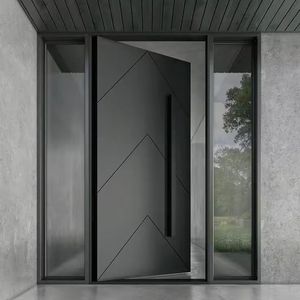
Modern Pivot Door Anti-Theft Minimalist Aluminum Finished Entry For Apartment And Villa Outdoor Use
Contact Us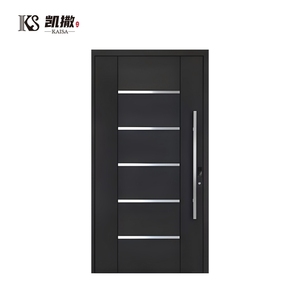
Modern Swing Opening Customized Size Front Entry Doors Aluminum Alloy Iron Exterior Security Doors Exterior Doors for House
Contact Us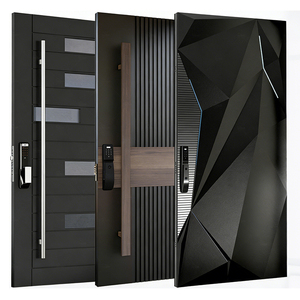
ZEKIN Modern Style Main Entrance Door Aluminum Entry Front Doors Against Theft Bulletproof Security Door
Contact Us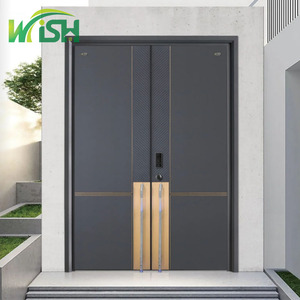
Modern Simple Design Exterior Doors for House Hurricane Proof Fire Insulated Aluminum Front Main Entrance Doors
Contact Us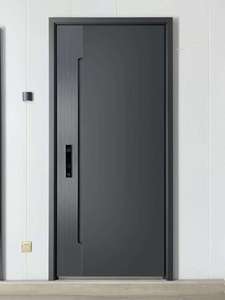
High-quality Custom Aluminum Entrance Doors, Safe, Soundproof And Fireproof, Suitable for Residential Villas
Contact Us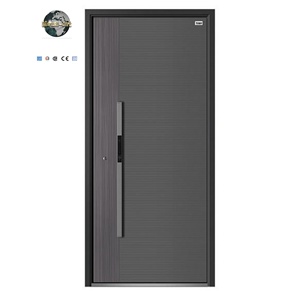
Modern Minimalist Anti-Theft Aluminum Alloy Door Security Entry Side Opening Sliding for Commercial Outdoor Garden for Apartment
Contact Us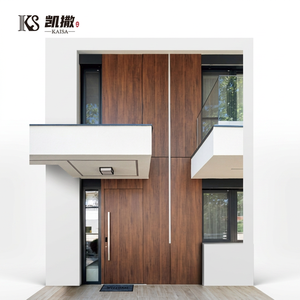
Villa Residential Modern House Entrance Exterior Casement Design Aluminum Alloy Front Pivot Entry Door for Houses
Contact Us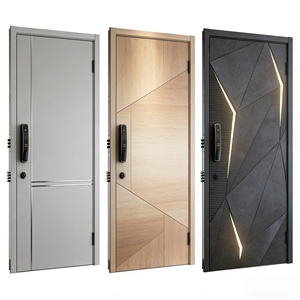
Modern Aluminum Security Door Residential Front Entrance Strong Outdoor Protection System Contemporary Minimalist Design
Contact UsEngineering Principles of CE-Certified Modern Aluminium Entry Systems for Extreme Climates
An analytical examination of structural integrity, thermal barrier physics, and anti-burglary engineering required for high-latitude Eurasian residential and industrial deployments.
The global architectural fenestration sector is undergoing a rapid transition toward high-performance metallic envelope solutions. Across modern residential master plans, private villa estates, and industrial production facilities, CE Certified Modern Aluminium Front Doors have emerged as the premier structural choice over legacy timber, standard PVC, or non-thermal steel assemblies. This shift is driven by stringent energy efficiency directives, escalating anti-burglary standards, and the necessity for zero-warpage dimensional stability across severe thermal cycles.
For procurement directors, civil engineering contractors, and industrial developers operating within the Russian Federation and neighboring CIS markets, door specification presents unique physics challenges. Operating under thermal gradients where outdoor temperatures plunge to -50°C in winter while indoor spaces maintain +22°C creates colossal mechanical and thermal stresses. Standard metal entrance doors suffer from severe thermal bridging, interior frost accumulation, seal degradation, and frame deformation caused by unequal expansion rates.
To meet European EN 14351-1 standards and satisfy Russian GOST 30971 thermal isolation criteria, modern aluminium entry systems utilize extruded 6063-T6 architectural alloys separated by glass-fiber reinforced polyamide strips. This structural design isolates the exterior metal skin from the inner profile, ensuring that heat loss via conduction is mitigated to values under Uf = 1.2 W/m²K.
6063-T6 Structural Alloy
High-tensile extruded aluminium profiles engineered for extreme wind pressure resistance (Class C5) and zero physical deflection over decades of high-frequency operation.
PA66-GF25 Thermal Isolation
25% glass-fiber reinforced polyamide thermal barriers prevent cold-bridge transmission, eliminating condensation, interior frost, and internal climate loss.
EN 1627 RC3 / RC4 Security
Integrated multi-point motorized perimeter locking mechanisms, anti-drill armor plates, and anti-tamper concealed hinges designed to withstand forced entry attempts.
Comprehensive Engineering Matrix: Residential vs. Industrial Entrance Systems
Comparing technical attributes, thermal transfer coefficients, and mechanical load tolerances between luxury villa pivot entrances and heavy-duty factory doors.
| Performance Standard / Specification | Residential Villa Pivot Systems | Factory & Industrial Entrance Doors | Testing & Compliance Standards |
|---|---|---|---|
| Thermal Transmittance (U-Value) | 0.85 – 1.1 W/m²K (Passivhaus standard) | 1.2 – 1.4 W/m²K (Energy saver grade) | EN ISO 10077-2 / GOST 26602.1 |
| Profile Alloy & Wall Thickness | 6063-T6 Aluminium / 2.5mm - 3.0mm | Heavy-Duty Alloy / 3.0mm - 4.0mm | GB/T 5237 / ASTM B221 |
| Burglary Resistance Rating | Class RC3 / RC4 (Multi-point locking) | Class RC4 / Industrial Keycard Control | EN 1627 – EN 1630 Verification |
| Acoustic Insulation (Rw) | 42 dB – 48 dB (Triple glass unit) | 35 dB – 40 dB (Acoustic core panel) | EN ISO 140-3 / ISO 717-1 |
| Wind Load Resistance | Class C5 (2000 Pa design load) | Class C5+ (Heavy industrial gusts) | EN 12210 / GOST 26602.5 |
| Surface Finish Technology | Fluorocarbon PVDF / AkzoNobel Powder | Anti-Corrosive Anodized / Industrial PVDF | QUALICOAT Class 2 / AAMA 2605 |
| Weather Gasket System | Triple-Continuous EPDM + Silicone foam | Dual Heavy-Duty EPDM Blade Seals | EN 12207 (Air) / EN 12208 (Water) |
Targeted Application Scenarios Across Russian Climatic & Economic Zones
From luxury suburban residential quarters in Moscow to heavy logistics hubs in Novosibirsk, discover tailored structural configurations.
1. Luxury Residential Villas in Moscow & Saint Petersburg Suburbs
In prestigious suburban developments such as Rublyovka, Novorizhskoye Shosse, and Kurortny District, architectural demand centers on ultra-large minimalist pivot doors. These residences require grand entry scales (up to 3.5m height) combined with seamless smart home integration (biometric facial recognition, motorized locking systems).
- Thermal Target: Aerogel insulated cores maintaining warmth during protracted -30°C freezes.
- Aesthetic Finish: Anodized metallic slate, textured oxidized finishes, or natural wood-grain powder coatings.
- Security Feature: Concealed heavy-duty pivot hinges supporting sashes up to 500 kg with zero sagging.
2. Industrial Parks & Logistics Hubs in Central Russia & Urals
For manufacturing plants, pharmaceutical facilities, and distribution centers in Yekaterinburg, Nizhny Novgorod, and Kazan, entrance doors must endure constant heavy foot traffic, forklift vibrations, and aggressive de-icing chemicals.
- Durability Spec: Reinforced 3.5mm aluminium profile extrusions with kick-plate protection.
- Access Control: RFID card readers, automated push-bar panic hardware, and high-cycle magnetic locks.
- Corrosion Proofing: QUALICOAT Class 2 PVDF coating designed to resist salt spray and industrial fumes.
3. Siberian Extreme Sub-Zero Operations (Novosibirsk, Irkutsk, Krasnoyarsk)
Deep Siberian winter conditions demand specialized entrance engineering where standard rubber gaskets turn brittle and snap. Grandor's specialized Russian export series integrates low-temperature silicone EPDM compounds and triple PA66 thermal breaks.
- Cryogenic Gaskets: Gaskets rated for flex resilience at -55°C without cracking.
- Heating Integration: Thermal break channels pre-fitted for low-voltage electric heat trace wire.
- Glazing Spec: Triple-pane Low-E insulated glass units filled with 90% Argon gas charge.
4. High-Humidity Port Facilities (Vladivostok, Murmansk, Novorossiysk)
Coastal marine atmospheres create severe galvanic corrosion risks for metallic doors. Aluminium's natural self-passivating oxide layer is augmented by specialized anodizing treatments for port administration buildings and marine facilities.
- Marine Coating: 25-micron anodized coating eliminating salt water pitting and oxidation.
- Hardware Alloy: 316-grade stainless steel locks, handles, and internal fasteners.
- Wind-Driven Rain Sealing: Class E1050 water tightness rating (no water penetration up to 1050 Pa pressure).
Local Procurement Drivers & Industry Trends in the Russian Federation (2025–2030)
Macro-economic shifts, regulatory changes, and architectural evolution transforming front door specifications for Russian B2B buyers.
1. Stricter Federal Energy Codes (SNiP 23-02-2003 & GOST Updating)
The Russian Ministry of Construction has systematically revised building thermal performance metrics. Modern commercial developments and federal residential housing initiatives now require strict adherence to heat loss reduction target matrices. Non-thermal-break doors are virtually banned in main entrance facades for new building permits. Importers and contractors are migrating exclusively to certified thermal-break aluminium systems that offer verifiable thermal calculations and factory compliance certificates.
2. Boom in Industrial Infrastructure & Factory Modernization
Driven by domestic production expansion and industrial park development across central Russia, there is unprecedented demand for robust, secure, and low-maintenance factory entrance doors. Facility managers prioritize aluminium over steel due to weight reduction—sparing wear and tear on automatic operators—and complete immunity to rust caused by wet winter vehicles carrying road salt into loading bays and personnel entrances.
3. Direct Sourcing from Direct Chinese Smart Manufacturers
Russian developers and door wholesalers are streamlining their supply chains by partnering directly with fully integrated Chinese manufacturers. By bypassing intermediate European traders, buyers secure direct OEM pricing, fully customized shop drawings, shortened production leads, and direct logistical routes via rail (Trans-Siberian / Western China–Western Europe freight corridors) or ocean freight through Vladivostok and St. Petersburg.
Why Grandor Door Industry is the Preferred Supply Partner for International Projects
Operating a 155,000 m² smart factory in Foshan, Guangdong, we control every manufacturing phase to ensure uncompromised quality.
155,000 m² Integrated Base
In-house profile extrusion, automated powder coating, glass tempering, and precision assembly lines eliminate subcontractor delays and quality variances.
Global Certification Compliance
Fully compliant with CE EN 14351-1, ISO 9001, Australian AS 2047, and North American NFRC standards for seamless international customs clearance.
Heavy-Duty Logistics Crating
Reinforced non-fumigation plywood crates with internal protective film and corner guards, designed for multi-modal rail and container transit to Russia.
Our 4-Step Quality Assurance Protocol for Russian Wholesale & Factory Orders
CAD Engineering Review
Architectural drawings and thermal requirements verified by senior engineers prior to extrusion batching.
In-House Extrusion & Coating
6063-T6 alloy extruded and finished with Swiss AkzoNobel electro-static powder or PVDF coating.
Precision CNC Machining
German 5-axis CNC routing for exact hardware pocket milling, multi-point lock alignment, and drainage slots.
Pressure Chamber Test
Sample doors subjected to air leakage, water spray, and static load testing before final protective packaging.
Frequently Asked Questions for Russian & CIS B2B Buyers
Essential technical, compliance, and logistical answers for contractors, developers, and door importers.
Why choose thermal-break aluminium front doors over traditional steel or PVC doors in Russia?
How do your entrance doors prevent freezing and condensation during -40°C Siberian winters?
What documentation do you provide for Russian customs clearance and building compliance?
Can you manufacture oversized pivot entrance doors for modern residential architectural projects?
What is the typical manufacturing lead time and logistics route for deliveries to Russia?
Partner with China's Premier Aluminium Door Manufacturer for Your Next Project
Whether you are sourcing high-security entrance doors for a residential villa development or outfitting an industrial manufacturing complex in Russia, our engineering team is ready to deliver tailored proposals, technical shop drawings, and competitive factory-direct pricing.
Contact Us