Modern Pivot
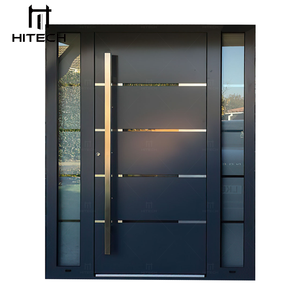
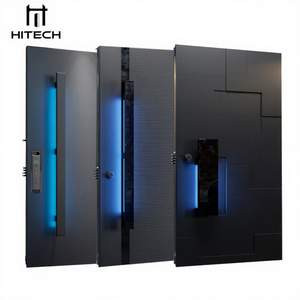
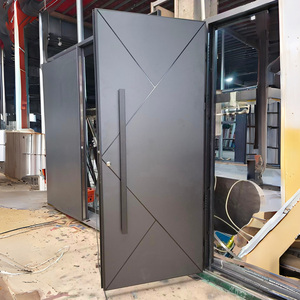
Hitech Main Entry Pivot Door Aluminum Exterior Front Door
- Material: Thermal Break Aluminum
- Acoustic Rating: STC 42 dB
- Locking: Multi-Point Smart Lock
Factory-direct high-performance front doors engineered with multi-point anti-theft locking, thermal-break cores, and structural anti-seismic frames.
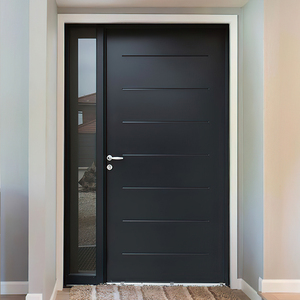
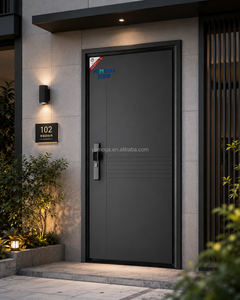
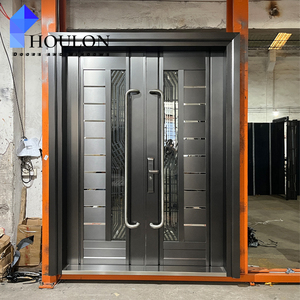
An engineering analysis of structural load compliance, seismic isolation, fireproofing, and acoustic dampening required for high-density Tokyo architectural developments.
Tokyo sits at the convergence of major tectonic plates, subjecting residential and commercial structures to frequent seismic motion. Standard rigid entry doors risk jamming during inter-story drift. Our OEM security front doors exported to Tokyo are precision-engineered with structural aluminum profiles (6063-T6) and galvanized zinc steel sub-frames. Designed to withstand relative story displacement up to 1/150 without frame binding, ensuring safe emergency egress under severe seismic loads while meeting JIS A 4702 structural grade S-5 / S-6 standards.
Due to dense urban zoning across Tokyo’s 23 wards (such as Shinjuku, Shibuya, and Minato-ku), strict fire-prevention codes govern external building openings. Front entrance doors facing narrow access roads or property boundaries must act as certified fire doors (B-type or A-type fire protection). We manufacture custom OEM doors featuring non-combustible rockwool cores (density 120 kg/m³), intumescent graphite fire seals that expand 25x under heat to seal smoke gaps, and high-temperature toughened glass panels that maintain integrity for 30 to 60 minutes.
Direct comparison highlighting structural, thermal, and security enhancements customized for Japanese architectural tenders.
| Performance Parameter | Standard Market Export Door | Grandor OEM Security Door (Tokyo Specification) | Tokyo Project Advantage |
|---|---|---|---|
| Seismic Deformation Resistance | Fixed frame; deformation risks lock jamming | Floating sub-frame with inter-story drift clearance | Guarantees emergency opening after M7+ earthquakes |
| Thermal Insulation (U-Value) | 2.5 - 3.2 W/m²K (Cold bridge present) | 1.0 - 1.4 W/m²K (Polyamide PA66 Thermal Break) | Exceeds Tokyo Zero-Energy House (ZEH) requirements |
| Sound Insulation (Acoustic) | 25 - 30 dB (Basic rubber gaskets) | 40 - 45 dB (Multi-chamber EPDM + Silent Laminated Glass) | Blocks urban traffic noise (Yamanote Line / Highway) |
| Anti-Corrosion / Salt Spray | Standard powder coating (300 hrs test) | Fluorocarbon (PVDF) coating (2,000+ hrs salt spray) | Resists salt air in Tokyo Bay coastal developments |
| Anti-Theft Locking System | Single latch or 3-point mechanical lock | 14-Point stainless steel active bolt system + IoT smart lock | Prevents forced entry via crowbar or mechanical bypass |
From ultra-luxury residential penthouses in Minato to compact infill modernizations in Taito, explore how our OEM door factory adapts designs to local architectural typologies.
High-end modern luxury residences in Akasaka, Roppongi, and Azabu require grand entrances that project prestige without compromising on tight security.
Narrow street residential plots (Kyosho Jutaku) require compact, high-utility entrance systems that optimize clear opening widths.
Properties adjacent to Tokyo Bay face extreme salt humidity, typhoon winds, and driving rain exposure from ocean currents.
Understanding buyer intent and architectural shifting priorities in Tokyo for Japanese General Contractors (Zenecon) and residential importers.
Tokyo Metropolitan Government has implemented stricter carbon reduction goals for new home construction. Developers now specify entrance doors with thermal-break aluminum profiles, aerogel-filled core cavities, and Low-E glass that lower energy loss by up to 40% compared to traditional non-insulated steel doors.
Japanese homeowners expect keyless convenience. Modern OEM manufacturing integrates concealed motorized multi-point locks compatible with Smartphone Bluetooth, Pasmo/Suica IC transport cards, biometrics, and home automation systems while maintaining mechanical manual override for power outages.
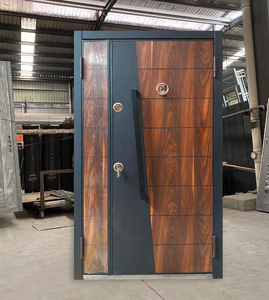
There is a growing demand for hybrid material engineering—combining heavy structural anti-burglary galvanized steel frames with lightweight architectural aluminum exterior skins finished in tactile heat-transfer wood textures (Sugi cedar, Hinoki cypress, or dark walnut).
Operating from our 155,000 m² smart production hub in Foshan, China, we control the complete manufacturing chain to guarantee zero defects for overseas shipments.
Unlike factories that outsource extrusion or surface treatment, Grandor performs aluminum profile extrusion, CNC machining, automated powder coating, glass tempering, and lock assembly inside our own 155,000 m² facility.
This vertically integrated approach eliminates subcontractor quality variations, guarantees tight dimensional tolerances (±0.5mm), and allows us to provide custom shop drawings (CAD/BIM) tailored precisely to Japanese architectural blueprints.
Verification of project elevations, JIS structural load parameters, and opening dimensions with technical shop drawings.
In-house profile extrusion and PVDF / wood-grain surface treatment engineered to withstand coastal humidity.
Integration of thermal cores, 14-point anti-theft locking bars, EPDM gaskets, and 100% pre-shipment fitment testing.
Heavy-duty wooden crate packaging with moisture barrier film, shipped directly to Tokyo Port (Aomi / Shinagawa container terminals).
Answers to common technical, shipping, and regulatory questions from Japanese developers, contractors, and door distributors.
Our engineering team designs entry door profiles specifically according to JIS A 4702 structural criteria. We utilize high-tensile 6063-T6 aluminum alloys and 2.0mm galvanized steel sub-frames that are tested for wind pressure resistance (Grade S-5 to S-6), water tightness (Grade W-4 to W-5), air tightness (Grade A-4), and sound insulation (Grade T-2 to T-3). Full test certificates and factory test reports are provided prior to mass production.
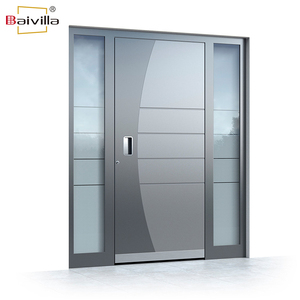
Yes. Because we operate full in-house extrusion, cutting, and welding lines, every order is customized to millimeter precision. Whether your project calls for extra-narrow single doors for high-density Tokyo urban lots or 3.5-meter tall luxury pivot doors for Roppongi villas, we build custom frames, transom windows, and side-lite panels according to your exact architectural CAD drawings.
We integrate Japanese-compatible smart lock mortises (such as Miwa or Goal mechanical keyway configurations) as well as advanced electronic systems supporting FeliCa / IC transit cards (Suica, Pasmo), PIN keypads, 3D facial recognition, fingerprint sensors, and Tuya/Zigbee smart home network integration. All electronic lock cutouts are CNC-machined in the factory for clean, seamless fitment.
For standard OEM security door orders, manufacturing and assembly require 25 to 35 days from finalized shop drawing approval. Direct ocean shipping from Guangzhou/Foshan or Shenzhen to Tokyo Port (Aomi, Shinagawa, or Oi Container Terminals) takes approximately 5 to 8 days, making the total lead time fast and highly predictable for construction scheduling.
Every door leaf and frame is wrapped in PE protective film, wrapped with bubble wrap, fitted with heavy foam corner guards, and enclosed inside a fully sealed plywood crate with steel banding. For glass-panel doors, double-tempered or laminated glass is fitted with shock-absorbing rubber spacers to resist transit vibration and moisture during maritime shipment.
To prepare a comprehensive proposal, please provide: (1) Architectural drawings or rough opening dimensions; (2) Door operation type (pivot, single swing, mother-son, double door); (3) Desired frame material and finish (powder coat, PVDF, wood-grain texture); (4) Security and glass specifications; and (5) Project location or target destination port.
