Certified Egress Product Catalog
Engineered Panic Hardware & Architectural Door Systems
Direct-factory emergency exit doors, thermal-break entry pivot doors, and high-security anti-burglary solutions compliant with EU building safety standards and PN-EN codes.
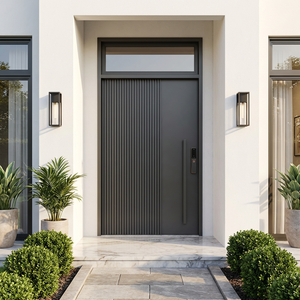
Modern Large Wrought Iron Pivot Door Entry Custom Design Exterior Front Security Anti-Theft for Apartment Outdoor Hall Villa
Contact Us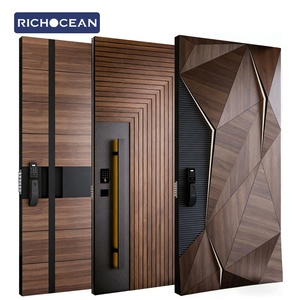
Richocean Luxury Bulletproof Lamborghini Front Entry Door Aluminum Storm Security Voordeur Residential Doors
Contact Us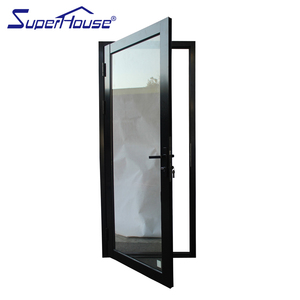
Miami NOA Approved Modern Hurricane Proof Impact Resistance Triple Glazed Aluminum Alloy Hinged Patio Door With Finished Surface
Contact Us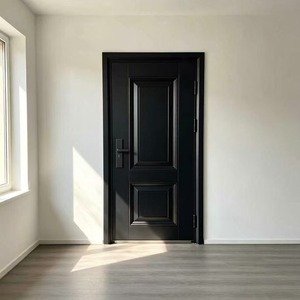
Double Steel Security Entry Door Multi Point Lock Anti Pry Structure Commercial Office Warehouse Outdoor Burglar Proof Door
Contact Us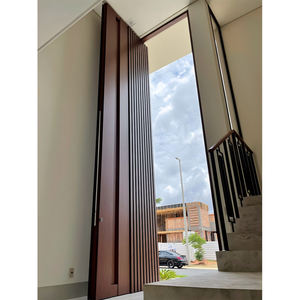
Heavy-Duty Extra Large Aluminum Pivot Door Modern Smart Lock Luxury Villa Apartment Exterior Entry Door Anti-Theft Waterproof
Contact Us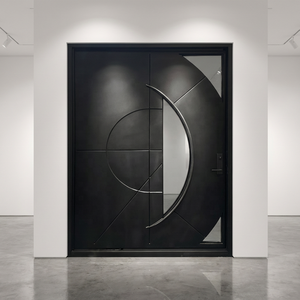
Custom Modern Matte Black Steel Full Height Pivot Door with Geometric Glass Cutouts C Shape Handle for Luxury Home
Contact Us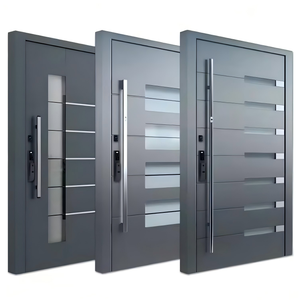
Luxury American Design External Pivot Entrance Door Steel Front Door Double Aluminum Anti-Theft Door For Residential
Contact Us
Technical Standard Whitepaper
Navigating Panic Hardware & Emergency Egress Regulations in Poland
In modern European commercial architecture, life safety systems are dictated by rigorous normative benchmarks. In Poland, emergency egress design is strictly regulated by the Polish Building Law (Prawo Budowlane) and the technical standards set forth by the Ministry of Economic Development and Technology regarding the Warunki Techniczne (WT) for buildings. As a premier direct manufacturer and global exporter of high-grade architectural door assemblies, Grandor Door Industry Co., Ltd. provides specialized panic exit assemblies engineered to satisfy EN 1125 and EN 179 compliance parameters.
Architects, general contractors, and procurement engineers across Polish industrial hubs—such as Warsaw, Katowice, Poznań, and Kraków—face unique challenges when matching life-safety egress speed with severe thermal insulation requirements ($U_w$ values $\le 0.9 \, \text{W/m}^2\text{K}$) and robust anti-burglary resistance (RC2 to RC4 grades according to PN-EN 1627). Grandor solves this conflict by integrating heavy-duty panic push bars and touch bars into thermal-break aluminum and steel composite door systems manufactured inside our 155,000 m² smart facility.
PN-EN Compliance Matrix: Panic vs. Emergency Exit Hardware
Understanding the mechanical and architectural distinctions required under Polish national building codes.
| Regulatory Standard | Target Application & Occupancy | Hardware Mechanism Type | Operation Pressure Limit | Grandor Structural Integration |
|---|---|---|---|---|
| PN-EN 1125 (Panic Exit Devices) |
Public buildings, shopping centers, hospitals, sports arenas where panic situations can arise (uninformed public). | Horizontal Touch Bar or Push Bar spanning at least 60% of door width. | $\le 80 \, \text{N}$ (Unloaded) $\le 220 \, \text{N}$ (Under 1000 N lateral force) |
Integrated into extruded 6063-T6 aluminum profiles with multi-point stainless steel panic latches. |
| PN-EN 179 (Emergency Exit Devices) |
Commercial offices, private industrial facilities, non-public workplaces (occupants trained on exit routes). | Lever Handles or Push Pads with single mechanical movement exit. | $\le 70 \, \text{N}$ manual release force. | Concealed vertical rod hardware engineered for heavy-duty thermal break double sashes. |
| PN-EN 16034 / EN 14351-1 (Fire & Smoke Control) |
Fire-rated egress routes, boiler rooms, industrial stairwells requiring EI30 to EI90 thermal integrity. | Automatic drop seals, electromagnetic hold-open integration, fire-proof intumescent cores. | Self-closing action with mechanical override priority. | Multi-layer steel-reinforced core with intumescent fire gaskets and fire-rated ceramic glass options. |
| PN-EN 1627 (RC2/RC3) (Burglar Resistance) |
Exterior perimeter panic exits requiring high security from outside, instant escape from inside. | Anti-pry hook latches, hardened drill plates, anti-tamper panic bar escutcheons. | Single-push egress overrides multi-locking pins instantaneously. | Multi-point mechanical dogging locks connected to high-grade alloy cylinder defenses. |
Localized Architectural Integration
Panic Hardware Applications in Polish Commercial Projects
Tailored structural door solutions deployed across Poland's primary economic regions, optimized for harsh sub-zero winters, intense operational traffic, and stringent safety codes.
Logistics Hubs & Warehouses in Katowice & Silesia
The Upper Silesian industrial corridor demands massive multi-point steel and thermal aluminum emergency egress doors capable of handling extreme cyclic usage. Grandor’s heavy-duty double steel security entry systems feature EN 1125 panic bars coupled with EPDM weather stripping to maintain structural seal integrity against freezing winter drafts down to -20°C.
- Insulated core thermal conductivity $U_d \le 0.85 \, \text{W/m}^2\text{K}$
- Heavy-duty grade 7 durable hinges (200,000 cycles test)
- Floor drop-down automatic weather seals
Corporate Office Towers in Warsaw (Wola & Center)
High-rise office buildings in Warsaw demand sleek, modern architectural aesthetics without compromising fire panic codes. Our ultra-slim thermal break doors and contactless smart RFID panic hardware allow seamless Integration with Building Management Systems (BMS), permitting electronic access control during normal operation and instant mechanical push-bar egress during emergency alarms.
- Electrified latch retraction (ELR) for access control
- Concealed vertical panic locking rods for zero visual clutter
- Acoustic dampening rating up to Rw 42 dB
Healthcare & Public Buildings in Kraków & Poznań
Hospitals, clinics, and educational complexes require hygienic, low-resistance exit solutions. Grandor supplies EN 1125 panic hardware coated with anti-bacterial powder finishes. Combined with impact-resistant triple-glazed vision panels, these assemblies withstand aggressive cleaning agents while providing maximum light transmission into emergency corridors.
- Anti-microbial surface treatment options
- Vision panels using EN 12600 Class 1(C)1 safety glass
- Low-threshold ADA/PN-EN barrier-free designs
Maritime & Coastal Facilities in Gdańsk & Gdynia
Coastal environments along the Baltic Sea expose door hardware to elevated humidity and atmospheric salt spray. Grandor utilizes architectural-grade extruded aluminum coated with 60-80 micron Qualicoat Class 2 powder finishes and Qualanod anodized treatments, paired with C4/C5 marine-grade 316 stainless steel panic hardware components to resist corrosion.
- C5 corrosive environment salt-spray resistance
- High wind-load resistance rating (EN 12210 Class C5)
- Triple-sealed frame-to-sash compression gaskets
Polish Construction Insights
Emerging Trends Shaping Emergency Door Procurement in Poland
Key technical vectors transforming specified door systems in the Polish commercial, industrial, and multi-family real estate sectors.
≤ 0.9
Target U-Value (W/m²K) Polish WT 2021 Norm
RC3
Anti-Burglary Egress Demand Grade
200K
Mechanical Panic Cycle Reliability Test
EI 60
Fire Integrity Benchmark Requirement
1. Convergence of Energy Efficiency (nZEB) with Life Safety
Under Poland's updated Warunki Techniczne guidelines, commercial entrance and exit doors must achieve ultra-low thermal transmittance without sacrificing mechanical emergency opening capabilities. Standard non-insulated hollow steel panic doors are rapidly being phased out in favor of polyamide thermal break aluminum assemblies engineered with multi-chamber profiles (PA66GF25 reinforced glass-fiber strips). Grandor’s thermal break egress doors achieve combined thermal transmission coefficients ($U_w$) as low as $0.82 \, \text{W/m}^2\text{K}$, aiding developers in achieving BREEAM and LEED "Excellent" or "Outstanding" green building certifications.
2. Electrified Access Control & Smart Building Integration
Polish general contractors increasingly mandate "Smart Egress" door systems. Modern installations integrate motor-driven panic hardware capable of receiving signals from access control systems (RFID, biometric readers, face recognition) while guaranteeing immediate mechanical override under EN 1125 when fire alarms activate or power outages occur. Grandor manufactures pre-wired conduit channels inside door sashes to simplify installation for Polish electrical integrators.
Why Partner With Grandor
Grandor Enterprise Advantage: Full In-House Manufacturing
Over 16 years of direct factory export excellence, serving architects, importers, and building contractors in over 60 countries from our Foshan industrial complex.
155,000 m² Integrated Production Ecosystem
Unlike trading entities or assembly-only workshops, Grandor Door Industry Co., Ltd. conducts every critical industrial phase within our own facility in Foshan, Guangdong. This vertically integrated manufacturing model eliminates subcontractor lead time delays, guarantees rigorous Quality Control (QC), and drastically lowers wholesale procurement overhead for Polish partners.
- In-House Aluminum Extrusion: Custom profile matrix tooling and precise wall thickness control up to 3.0mm structural grade.
- Automated Surface Finishing: Vertical powder coating, anodizing, and Italian heat-transfer timber wood-grain lines.
- Glass Tempering & Insulating: Automated double/triple glazed glass processing with Argon gas filling and Low-E soft coating capabilities.
- CNC Precision Machining: Automated multi-axis milling for panic hardware recessing, hinge pocketing, and locking cylinder alignment.
Global Quality Certifications
Our factory quality control operates under international standard frameworks to ensure friction-free customs clearance and building code sign-offs in European ports.
ISO 9001:2015
CE EN 14351-1
NFRC Rated
ASTM E283/E330
Contractor & Distributor FAQ
Frequently Asked Questions for Sourcing in Poland
Direct technical and commercial answers for Polish importers, architects, project developers, and building suppliers.
Are Grandor panic hardware door assemblies compliant with Polish ITB (Instytut Techniki Budowlanej) and EU CE requirements?
Yes. Grandor door systems intended for export to Poland are manufactured in accordance with European Standard EN 14351-1 (for exterior pedestrian doorsets) and EN 16034 (for fire resistance characteristics). Our emergency egress hardware options fully meet PN-EN 1125 (panic exit devices operated by a horizontal bar) and PN-EN 179 (emergency exit devices operated by a lever handle or push pad). We provide factory declaration of performance (DoP) documents, test reports, and technical data sheets required by Polish building inspectors and ITB compliance reviewers.
What information is required to receive an accurate factory quotation for a Polish construction project?
To prepare an exact engineered proposal and pricing estimate, please provide:
- Architectural elevations or CAD drawings indicating rough opening dimensions (RO).
- Door Schedule specifying opening directions (inward/outward, left/right hand) and single vs. double leaf configuration.
- Panic hardware specification (e.g., rim panic bar, surface-mounted vertical rod, or concealed multi-point panic latching).
- Performance requirements: Target U-value ($U_w$), wind load rating, acoustic insulation rating (dB), or fire rating (EI30, EI60).
- Finish requirements (RAL color code, textured powder coating, or anodized shade) and target destination port (e.g., Gdynia, Gdańsk, or Hamburg).
How do Grandor panic hardware doors address Poland's winter climate and thermal insulation laws (Warunki Techniczne)?
Poland experiences significant winter freezing conditions. Standard non-thermal panic doors suffer from severe thermal bridging, condensation, and frost buildup. Grandor utilizes thermal-break aluminum profiles equipped with high-performance polyamide (PA66GF25) insulation strips and double or triple insulated glass units (IGUs) filled with 90% Argon gas and Low-E coatings. Combined with multi-grade EPDM perimeter seals and automatic drop-down bottom weather seals, our door assemblies restrict air infiltration and deliver total $U_w$ values down to $0.85 \, \text{W/m}^2\text{K}$, exceeding WT 2021 standards.
Can I integrate electronic access control (smart card/biometric) with your mechanical panic hardware?
Absolutely. Grandor specializes in electrified panic hardware options, including Electrified Latch Retraction (ELR) panic bars and solenoid-operated trim locks. This configuration enables seamless integration with RFID card readers, keypad escutcheons, or centralized Building Management Systems (BMS). During regular hours, the door manages access control externally while keeping the mechanical panic exit bar functional internally at all times for unhindered emergency egress.
What are the standard shipping timelines and container freight arrangements for delivery to Poland?
Factory production typically takes 25 to 35 days from the approval of shop drawings and technical sign-off. Maritime transit from our Foshan facility/Shenzhen ports to Polish sea freight terminals such as Gdańsk or Gdynia takes approximately 28 to 35 days. For urgent project phases, rail freight via the New Silk Road (Chengdu/Chongqing directly to Małaszewicze, Poland) is available with transit times of 14 to 18 days. Every door package is shipped in reinforced, export-ready steel-framed plywood crates to prevent transit damage.
Does Grandor support custom dimensions and bespoke architectural CAD drawing generation?
Yes. Every door system we export is custom-engineered to match the precise structural opening and architectural drawings of your site. Our in-house structural engineering department generates full 2D production shop drawings and 3D BIM models for sign-off prior to profile extrusion and CNC cutting, ensuring zero on-site fitting discrepancies for your installation team in Poland.
Partner with China's Premier Egress & Panic Door Manufacturer
Get direct factory pricing, certified shop drawings, and tailored technical support for your upcoming commercial or public infrastructure project in Poland.
Contact Us