Featured High-Security Aluminum Entry Door Systems
Explore our factory-direct architectural door systems configured specifically for Austrian thermal insulation criteria, wind-load resistance, and multi-point break-in security.
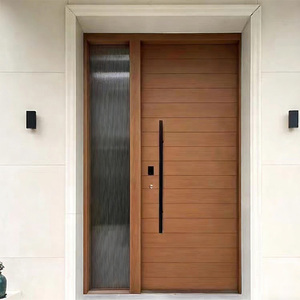
Main Entrance Aluminum Alloy Safety Door Customized with Pictures
- High-tensile aluminum alloy sash & frame
- Multi-chamber thermal barrier insulation
- Reinforced perimeter multi-point locking hooks
- Dual EPDM weather-seal dampening
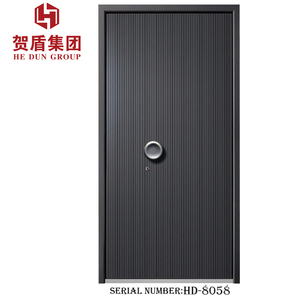
Cast Aluminum Security Door Embossed Relief Carving Sound Insulation
- Solid cast aluminum panel with moisture barrier
- Acoustic insulation core rated Rw ≥ 42 dB
- Alpine corrosion & frost protective coating
- Heavy-duty 3D adjustable security hinges
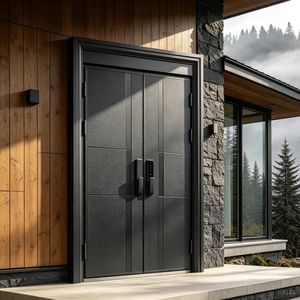
High-End Aluminum Armored Security Door Modern Minimalist Villa Entry
- Internal steel-reinforced armor composite plate
- Anti-pry deadbolts & drill-resistant cylinder
- Anti-bullet ballistic options up to FB4 class
- Triple-barrier watertight bottom sill design
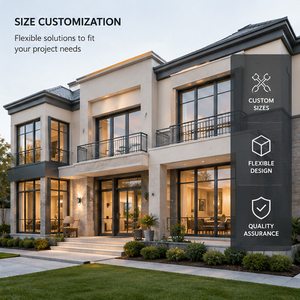
Bespoke Aluminum Entrance Doors & Window Systems Commercial Hospitality
- High-frequency cycling rated (≥ 1,000,000 cycles)
- Automated access control & panic hardware ready
- Narrow sightlines with structural glazing integration
- Compliant with Austrian public egress regulations
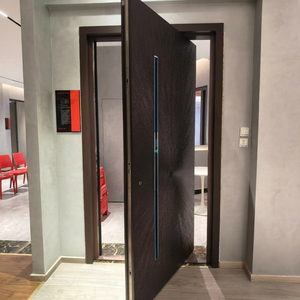
Custom Villa Entrance Door Cast Aluminum Art Carving Sound Insulation
- Precision sculptural cast relief paneling
- Polyamide thermal breaks prevent thermal warping
- Resistant to high mountain UV radiation & freezing
- Concealed European multi-point security lock
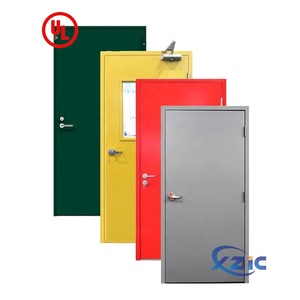
Customized Apartment Fireproof Security Doors Steel-Aluminum Hybrid
- EI30 / EI60 / EI90 certified fire-barrier core
- Intumescent perimeter fire & smoke containment seals
- Reinforced multi-point apartment entrance latching
- Acoustic rating up to 44 dB for quiet urban living
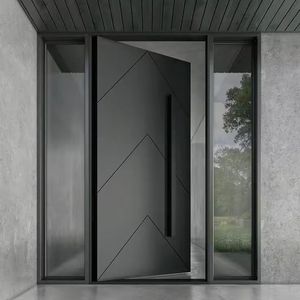
Modern Pivot Door Anti-Theft Minimalist Aluminum Finished Entry
- German-engineered heavy-duty concealed floor pivot
- Integrated electro-mechanical smart biometric entry
- Large grand-format leaf capacity up to 2200 x 3200 mm
- Flush architectural exterior leaf with perimeter seals
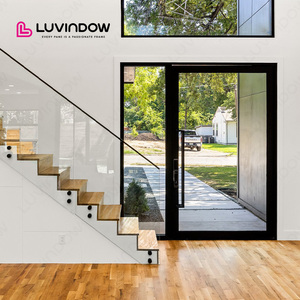
Heat Insulated Aluminum Double Glazed Glass Pivot Entrance Door
- Argon-filled laminated Low-E safety glass panels
- Multi-chamber polyamide thermal break system
- Achievable Ud values down to 0.78 W/(m²K)
- Full perimeter magnetic & brush wind draft barriers
Engineering Entrance Portals for Austria's Extreme Climatic and Regulatory Demands
An in-depth technical analysis for Austrian architects, property developers, general contractors, and door distributors seeking certified, high-yield exterior doors.
The Austrian market for exterior residential and commercial entry doors represents one of the most stringent and technically rigorous operating environments in Europe. Straddling the high-altitude weather conditions of the Central Eastern Alps and the continental climate cycles of the Danube river basin, building envelopes in cities like Vienna (Wien), Salzburg, Innsbruck, Linz, and Klagenfurt require fenestration and entryway systems that combine high structural integrity with thermal insulation performance. Standard imported doors consistently fail in this geography due to the "bi-metal effect"—an acute physical phenomenon where extreme temperature differentials between winter exteriors (-20°C) and conditioned interior environments (+22°C) cause outer aluminum panel faces to contract while inner skins remain stable, resulting in sash curvature, seal detachment, and locking mechanism binding.
Technical Imperative: In accordance with Austria's OIB-Richtlinie 6 (Energieeinsparung und Wärmeschutz) and ÖNORM B 5338 burglary guidelines, exterior doors installed in new Austrian residential developments are required to deliver verified whole-door thermal transmittance coefficients (Ud values) below 1.10 W/(m²K), with forward-looking Passive House (Passivhaus) builds mandating threshold performance below 0.80 W/(m²K). Achieving this requires engineered composite profiles with multi-tier polyamide thermal insulation chambers, anti-distortion split-bar bars, and heavy-duty multi-point hook locks that withstand thermal expansion while preventing forced entry.
The Architectural Dichotomy: Urban Modernity vs. Alpine Regionalism
Austrian procurement intent is bifurcated into two distinct structural styles: urban contemporary luxury within major metropolitan areas, and rugged timber-hybrid architectural builds across Alpine valleys. In urban centers such as Vienna's Döbling and Hietzing districts, Graz, and Linz, the architectural consensus favors oversized, flush-faced minimalist pivot doors with concealed hinges, integrated biometric recognition (such as ekey fingerprint scanners or Kaba systems), and clean architectural colors (predominantly DB 703 micaceous iron ore and RAL 7016 Anthracite Grey). Conversely, high-elevation projects throughout Tyrol, Vorarlberg, and Salzburg require heavy cast aluminum relief facades or ultra-durable textured powder coatings capable of resisting intense ultraviolet radiation, heavy snow drift loads, and de-icing road salts without blistering or mechanical degradation.
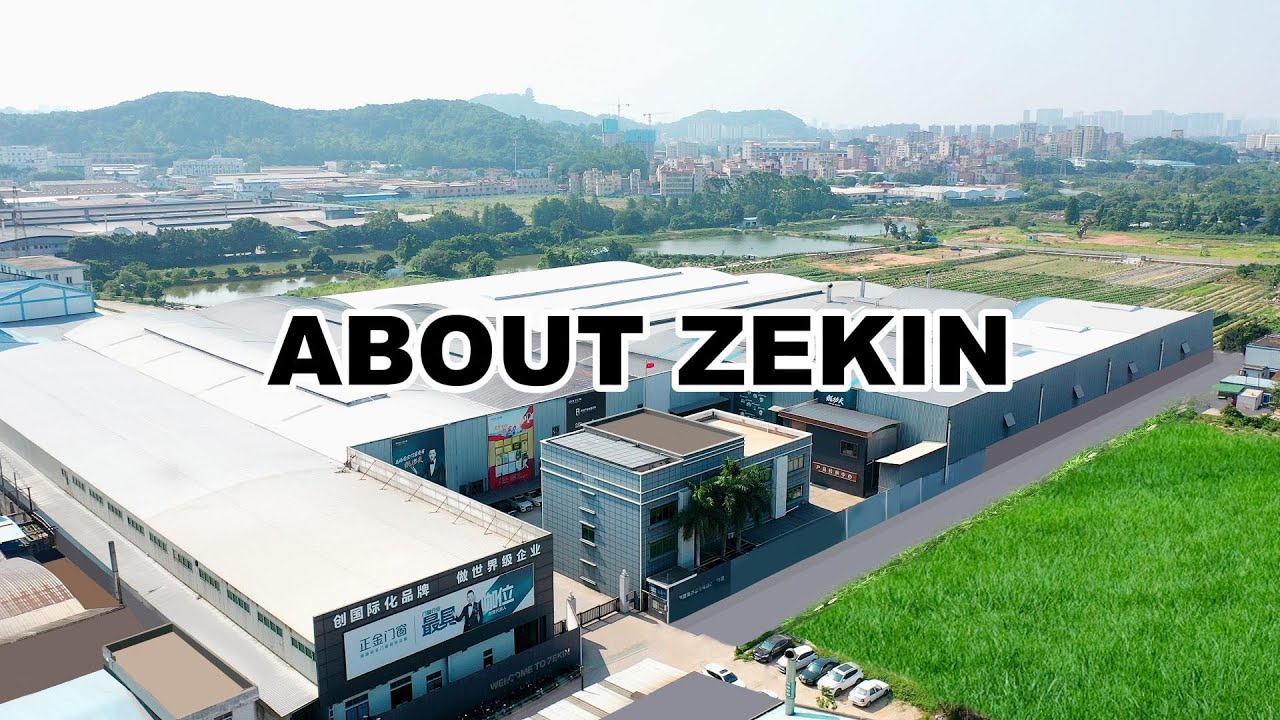
As a vertically integrated door manufacturer with over 155,000 square meters of smart manufacturing facilities, Grandor engineers entry door systems from raw aluminum ingot extrusion and thermal-break lamination to CNC corner-crimping, vacuum powder coating, and pre-hung frame assembly under one roof. By controlling every stage of profile extrusion and thermal barrier integration in-house, we eliminate the structural inconsistencies, joint tolerances, and thermal bridging issues that often arise from multi-tiered supply chains.
Thermic-Break & Bi-Metal Warpage Control
Specially formulated 34mm to 48mm polyamide PA66 GF25 thermal insulating strips isolate interior and exterior aluminum profiles. Patented anti-distortion sliding tabs allow differential thermal expansion during Austrian sub-zero winters, ensuring the door sash stays true and lock tolerances remain smooth.
EN 1627 / ÖNORM B 5338 RC3 & RC4 Security
Equipped with solid alloy hook bolts, anti-drill manganese plates protecting European DIN profile cylinders, continuous interlocking hinge dog-bolts, and laminated P5A/P6B safety glass build-ups. Certified resistance class engineering stops opportunist and experienced break-in attempts with crowbars.
Airtightness & Alpine Weather-Tightness
Three-tier vulcanized EPDM continuous gasket lines combined with thermally broken, barrier-free sub-floor thresholds (under 20mm height per ÖNORM B 1600 accessibility codes) provide driving rain tightness up to Class 9A (600 Pa) and airtightness Class 4 per EN 12207 against relentless driving snow.
Austrian Compliance Benchmark: Grandor Door Engineering
Comparing Austrian statutory building requirements against our heavy-duty aluminum entry door manufacturing specifications.
| Performance Parameter | Austrian Standard (ÖNORM / OIB) | Grandor Factory Standard | Architectural & B2B Value Benefit |
|---|---|---|---|
| Thermal Transmittance (Ud) | OIB-6: Ud ≤ 1.10 W/(m²K); Passivhaus: ≤ 0.80 | Ud = 0.76 - 0.84 W/(m²K) | Qualifies projects for Austrian KfW/Wohnbauförderung green energy subsidies. |
| Burglary Resistance | ÖNORM B 5338 / DIN EN 1627 Class RC2 minimum | EN 1627 RC3 / Optional RC4 | Multi-point automatic hook locks with hardened anti-cut steel pins and 3D security hinges. |
| Driving Rain Tightness | EN 12208 Class 4A to 7A | Class 9A / E1200 (600 - 1200 Pa) | Guaranteed zero water ingress during severe Alpine mountain summer thunderstorms. |
| Air Permeability | EN 12207 Class 3 for standard residential builds | Class 4 (Airtight Envelope) | Essential for Austrian blower-door airtightness tests (Blower-Door-Messung n50 ≤ 0.6 /h). |
| Sound Insulation (Rw) | ÖNORM B 8115: Rw ≥ 33 to 38 dB | Rw ≥ 42 dB - 47 dB | Eliminates urban street noise in Vienna, Graz, or close proximity to railway corridors. |
| Surface Protection | Qualicoat Class 1 / GSB Standard | Qualicoat Seaside Class 2 | Super-durable architectural powder coating resistant to UV embrittlement and road salt. |
| Barrier-Free Threshold | ÖNORM B 1600 Barrier-Free Construction (≤ 20mm) | 15mm Thermally Broken Step | Seamless accessibility for elderly or wheelchair transit without creating thermal bridge leaks. |
Engineered Applications Across Austria's Diverse Topography
From luxury penthouses in Vienna to rugged high-snow-load chalets in Kitzbühel, our doors provide verified performance where standard entries fail.
Modern High-End Villas in Vienna (Wien) & Mödling
Austrian urban luxury builds require monumental openings with clean flush details. Grandor's 100mm frame depth pivot series integrates seamlessly with architectural facades, supporting sash weights over 350 kg while maintaining flawless fingertip glide and smart home KNX access integration.
Alpine Chalets & Ski Lodges in Tyrol, Vorarlberg & Salzburg
Properties in Lech, St. Anton, and Zell am See face extreme snow drifts and freezing thaw cycles. Our dual cast-aluminum sashes feature high-density polyurethane and aerogel core insulation, anti-freeze magnetic weatherstripping, and structural reinforcement against horizontal wind gusts.
Multi-Family Residential Apartments in Graz & Linz
Austrian developers prioritizing lifecycle cost benefit from our standardized apartment entrance line. Combining EI30 fire containment, certified RC3 break-in security, and 42 dB acoustic noise attenuation, our products fulfill Austrian building code requirements on one schedule.
Commercial Head Offices & Boutique Hospitality
High-traffic commercial entrances in Salzburg and Klagenfurt require tested continuous duty hardware. Heavy-gauge extruded 6063-T6 aluminum alloy sections are paired with German concealed door closers, motor-driven multi-point locks, and emergency exit hardware compliant with EN 179 and EN 1125.
Market Trends Transforming Austrian Entrance Door Procurement
Emerging design preferences, technical specifications, and sustainability directives governing building projects across Austria.
1. Deep Ecosystem Integration with Austrian Access Tech (ekey & Kaba)
Austrian consumers and architects show a strong preference for domestic, high-security smart access hardware. The prevalence of traditional physical keys is rapidly diminishing in new Austrian residential architecture, replaced by seamless flush-integrated biometric systems. Grandor factory-engineers door leafs with recessed, pre-milled wire channels and stainless-steel escutcheons engineered specifically for ekey d&Line and ekey xLine fingerprint scanners. Working in tandem with motor-driven multi-point automatic latches (such as Roto Safe E or Winkhaus blueMotion), the system deadbolts automatically the microsecond the sash meets the magnetic frame sensor, satisfying Austrian property insurance standards without requiring manual key turning.
2. Stringent Passivhaus Thermal Integrity (OIB-6 Directives)
With Austria's aggressive climate neutrality benchmarks under the European Green Deal and domestic OIB-Richtlinie 6 mandates, thermal envelope specifications have tightened dramatically. The market is shifting from dual-chamber profiles to triple- and quadruple-chamber polyamide configurations filled with custom CFC-free insulating foams. Thermal simulation reports (finite element analysis per EN ISO 10077-2) must be supplied directly to building physicists (Bauphysiker) before construction approvals are granted. By offering factory-certified isothermal calculations and verified Ud values starting at 0.76 W/(m²K), Grandor allows Austrian developers to achieve Passivhaus certification and secure regional green housing subsidies (Wohnbauförderung).
3. Low-Carbon Aluminum & Closed-Loop Cradle-to-Cradle (C2C) Mandates
Austrian commercial developers and public sector municipal housing entities (such as Wiener Wohnen) are increasingly factoring Environmental Product Declarations (EPDs) into procurement scoring. The emphasis is on low-carbon aluminum billets smelted using renewable hydro-electric power, achieving an embodied carbon footprint below 4.0 kg CO2 per kg of extruded aluminum. Combined with durable, non-toxic powder coating chemistries certified Qualicoat Seaside Class 2, these architectural assemblies deliver 50+ year operational lifecycles with near-100% material recyclability upon decommissioning.
4. Flush Frameless Aesthetics with Organic Wood-Grain & Textures
A major design trend across Vorarlberg and Tyrolean alpine modernism is the fusion of warm, natural timber textures with the structural resilience of heavy aluminum. Traditional timber front doors in high-altitude environments require frequent staining, sealing, and warp realignment due to snow exposure. Austrian builders increasingly specify Grandor's 3D sublimated tactile wood-grain finishes (such as Alpine Larch, Weathered Oak, and Swiss Stone Pine) and rough cast textures. These mimic the tactile depth and visual warmth of authentic alpine timber while delivering the maintenance-free dimensional stability of 6063-T6 aluminum alloys.
Why Austrian B2B Importers Partner Directly with Grandor
One fully integrated 155,000 m² smart factory, end-to-end quality assurance, zero subcontractor delays.
For overseas B2B purchasers in Austria, the biggest risks in sourcing exterior joinery from abroad are quality variance between batches, unvetted subcontractors, and damage during international containerized transit. Grandor Door Industry Co., Ltd. resolves these systemic risks through comprehensive vertical integration.
Unlike trading intermediaries or assembly-only workshops, every core phase of door manufacturing occurs directly inside our proprietary 155,000 m² smart manufacturing complex located in Foshan, Guangdong. Backed by 16+ years of international custom engineering and an active export footprint covering 60+ countries, we provide Austrian partners with direct factory-floor control.
- In-House Aluminum Extrusion: Custom profile extrusion tooling ensuring precise wall thicknesses (≥ 2.5mm - 3.0mm structural webs) and reliable alloy composition.
- Vertical Robotic Powder Coating: Automated Swiss Gema powder application lines delivering flawless 80-120 micron finishes with 30-year resistance against flaking and UV fading.
- On-Site Glass Tempering & Lamination: Certified insulating glass fabrication producing triple-glazed Low-E argon assemblies with warm-edge composite spacers.
- Full CAD/BIM Shop Drawings: Austrian architectural elevations translated into millimeter-accurate fabrication shop drawings prior to cutting, with full coordination of lintels and floor build-ups.
- Heavy-Duty Export Crating: Moisture-barrier shrink wrap, edge-corner armor, and ISPM 15 fumigated plywood crates engineered for seamless rail/ocean transport to European hubs.
Alloy Extrusion & Aging
6063-T6 billet preheating and precision hydraulic extrusion with T6 heat treatment for maximum tensile yield strength.
Thermal Insertion
CNC knurling of profile pockets and multi-roller rolling of polyamide PA66 GF25 insulating barriers with shear-force testing.
CNC Precision Machining
Five-axis double-mitre cutting and automated milling of lock mortises, hinge pockets, cable passages, and drainage channels.
Assembly & Testing
Epoxy corner crimping, continuous vulcanized gasket insertion, laser-aligned hardware calibration, and pre-packing QC sign-off.
Frequently Asked Questions for Austrian Importers, Architects & Developers
Everything you need to know regarding technical certification, custom fabrication, lead times, logistics, and on-site Austrian building compliance.
Do Grandor aluminum entry door systems satisfy Austrian ÖNORM and CE standards? +
Yes. All Grandor exterior door systems intended for the European Union and Austrian markets are engineered in full compliance with EN 14351-1 (Windows and external pedestrian doorsets) and carry verified CE marking. Our factory testing protocols align with ÖNORM B 5338 for burglary resistance (Classes RC2, RC3, and RC4), EN 12207 for airtightness (Class 4), and EN 12208 for driving rain tightness (Class 9A). We supply full factory Declaration of Performance (DoP) certificates and laboratory testing data packages for seamless submission to local Austrian municipal building inspectors (Baupolizei) and project certifiers.
How do your entry systems prevent the "bi-metal effect" during Alpine winters? +
The bi-metal effect occurs when sub-zero outdoor mountain air (-15°C to -25°C) causes the exterior aluminum face of a door to contract, while interior heating (+22°C) maintains the interior face's dimensions, exerting bending forces that cause unengineered doors to bow outward by 4mm to 8mm. Grandor counteracts this by utilizing patented anti-distortion sliding polyamide bars within the thermal break assembly. These allow controlled differential expansion without transferring shear forces to the structural sash frame. Combined with four-sided compression gaskets and heavy-duty 3D adjustable hinges, the door remains straight and locks engage smoothly in any season.
Can Grandor doors achieve the Austrian Passivhaus standard (Ud ≤ 0.80 W/(m²K))? +
Yes. Our flagship Passive House aluminum entry series utilizes an 85mm to 100mm sash thickness featuring multi-chamber polyamide thermal barriers filled with custom aero-polyurethane insulating foam. When combined with continuous triple-rebate EPDM weatherseals and triple-pane or quadruple-pane argon-filled laminated insulated glass units (Ug = 0.5 - 0.6 W/(m²K)) with warm-edge spacers (such as Swisspacer Ultimate), our complete doorset achieved whole-assembly Ud values starting at 0.76 W/(m²K). This comfortably satisfies the Austrian OIB Richtlinie 6 Passivhaus standard and qualifies projects for federal and state green housing subsidies.
What smart access hardware and multi-point locking brands do you integrate? +
We work directly with major European hardware systems. For locking systems, we integrate heavy-duty multi-point automatic hook locks from Roto, Winkhaus, and GU (Gretsch-Unitas). For biometric and keyless smart access, our factory provides precision CNC pre-machining and factory wiring for Austrian ekey biometric fingerprint scanners (including the ekey d&Line and finger scanner sLine) and Kaba electronic locking cylinders. Smart hardware can be powered via concealed leaf-to-frame continuous cable conduits (Kabelübergang) or wireless induction loops, and is fully compatible with KNX and Loxone smart home building automation systems.
What is the typical production lead time and shipping duration to Austria? +
Following final sign-off of architectural shop drawings (Freigabepläne) and hardware specifications, manufacturing typically requires 25 to 35 business days depending on custom architectural powder finishes or cast relief details. Shipping to Austria can be handled via two proven routes: ocean container freight to European ports (such as Hamburg, Rotterdam, or Koper) with rail transit to Vienna/Linz (approx. 28 to 35 days transit), or direct express China-Europe freight rail to Austrian rail hubs (approx. 18 to 22 days transit). We support flexible Incoterms including FOB, CIF, and full DDP (Delivered Duty Paid) to your project site or distribution warehouse in Austria, including customs clearance and import VAT handling.
How are bespoke custom dimensions, finishes, and side-lights handled for individual projects? +
Every order is custom-engineered to your exact structural rough opening schedule (Rohbaumaße). We manufacture single sashes, double sashes, and oversized configurations up to 2.2 meters wide by 3.4 meters tall, complete with integrated transom sidelights (Oberlichter and Seitenteile). Finish options include Qualicoat Class 2 architectural powders (Tiger Drylac, AkzoNobel) in all standard RAL and DB textured shades, anodized finishes, and realistic sublimated wood grains. Before any metal is cut, our engineering office generates comprehensive 2D and 3D CAD shop drawings detailing profile cross-sections, wall anchor positions, and floor threshold connections for architect sign-off.
Do your threshold systems comply with ÖNORM B 1600 barrier-free accessibility guidelines? +
Yes. Austrian standard ÖNORM B 1600 (Barrierefreies Bauen) dictates that door thresholds on accessible paths must not exceed a maximum height of 20 mm. Grandor offers specialized, thermally broken aluminum-composite step thresholds with a profile height of only 15 mm. For high-end architectural villas requiring a 0 mm completely flush transition, we offer mechanical drop-down perimeter seal systems (such as Athmer or Planet seals) combined with concealed stainless steel drainage channels to maintain driving rain resistance (Class 9A) while providing zero-barrier passage.
Request an Architectural Proposal & Factory Price Schedule
Partner directly with an established 155,000 m² aluminum door manufacturer. Send us your project door schedule, architectural elevations, or target specifications. Our dedicated technical engineering group will deliver a detailed CAD proposal, isothermal performance analysis, and direct B2B pricing within 24 hours.